What Is SEO Copywriting? How It Works in 2027, Skills & Benefits


SEO copywriting shapes how people discover information, evaluate brands and make decisions across search platforms in 2027. Search has moved far beyond typing short phrases into a box. People now speak full questions, skim AI-generated previews, and expect useful answers without effort. Writing that supports visibility must reflect these habits.
Why does SEO copywriting services still matter now? Search drives 68% of online experiences. Organic leads close at 14.6%, far better than paid options. You get lasting results without ongoing costs.
What’s More?
At its core, SEO-focused writing blends clarity with purpose. It helps content appear where people search and keeps them engaged once they arrive. This balance still matters in 2027. Search engines reward pages that respect user intent and provide direct value. Pages built only to attract clicks fail to hold attention for long.
The biggest shift in SEO copywriting services has come from intent-led thinking. Writers no longer chase isolated keywords. They study what people need at a given moment and write with that context in mind. Experience now matters as much as structure. Readers expect practical insight, not surface-level summaries.
AI systems play a growing role in search evaluation. Voice queries and zero-click results reduce visible space. Every paragraph must earn its place. Copy that explains clearly and flows naturally performs better across formats.
This guide breaks down how SEO-focused writing works today. We will explain the process, skills, and benefits that matter in 2027. You will see how thoughtful writing supports visibility, trust, and steady growth across search-driven channels.
Key Highlights
- SEO copywriting blends creativity with keyword strategy
- Helps improve search engine visibility and user engagement
- Focuses on ranking, traffic, and conversions together
- Balances human-friendly writing with algorithm needs
- Involves keyword research and natural integration
- Builds brand authority through valuable content
- Drives organic traffic without paid promotion
- Enhances readability and boosts dwell time
- Converts visitors into leads or customers
- Essential skill for digital marketers and businesses
What is SEO copywriting?
SEO copywriting refers to writing content that supports search visibility without losing readability or purpose. It focuses on helping the right people find the right information at the right moment. The goal stays simple. Match intent. Explain clearly. Guide action without pressure.
This form of writing differs from traditional copywriting in one key way. Traditional copy often aims straight at persuasion. SEO-focused copy begins earlier in the decision cycle. It attracts people who search with questions, comparisons, or early interest. The writing earns attention before asking for commitment.
Within digital marketing funnels, SEO-driven copy plays a steady role. It brings awareness through helpful articles. It supports evaluation through detailed service or comparison pages. It assists conversion through structured product or landing pages that answer doubts clearly. Each stage relies on clarity rather than hype.
Balancing search systems and human readers takes discipline. Search platforms read structure, relevance, and context. Readers respond to tone, flow, and usefulness. Good SEO-led copy respects both. Keywords appear naturally. Headings guide scanning. Explanations stay direct and grounded.
Common formats include blog posts that address questions in depth, landing pages built around clear intent, product pages that explain features and value, service pages that speak to real needs, and category pages that help people explore options without friction. Each format serves a different search purpose, yet all rely on the same principle. Write for people first. Structure for search visibility second.
How Does SEO Copywriting Work?
Search Intent Comes First
In 2027, intent defines every successful piece of search-led content. Writers start by identifying why someone searches, not what they type. Some people want clear explanations. Some want directions. Others want to compare options or move closer to a purchase. Each intent requires a different approach.
Informational intent needs depth and clarity. Navigational intent needs accuracy and structure. Commercial intent needs balanced comparison. Transactional intent needs confidence and reassurance. Mixing these signals weakens performance. When content aligns with the user’s stage, it feels relevant and respectful.
Mapping content to the user journey creates flow. Early-stage readers learn. Mid-stage readers evaluate. Late-stage readers decide. SEO-focused writing supports each stage with the right tone and detail. This alignment keeps people engaged longer, which search platforms recognise as satisfaction.
Topic Clusters and Entity-Based SEO
Keyword lists no longer guide strategy alone. Writers plan topic clusters that cover a subject fully. A main page introduces the core idea. Supporting pages explore related angles, questions, and applications. Internal links connect these pieces naturally.
Entity-based SEO strengthens this structure. Search platforms identify people, places, concepts, and relationships within content. When writing reflects these connections, it signals depth. Content feels complete rather than fragmented.
Building topical authority takes consistency. Each piece supports another. Over time, this structure shows expertise. Readers benefit because they find answers without jumping across unrelated pages.
AI-Influenced Search and Content Evaluation
AI systems now assess content quality at scale. They evaluate clarity, originality, and usefulness. Generic explanations perform poorly. Content that reflects experience and practical insight performs better.
Human-first writing acts as a quality signal. Clear examples, thoughtful explanations, and accurate detail show effort. EEAT appears through how content explains concepts, not through labels. Writers demonstrate knowledge by how they solve problems on the page.
AI summaries and previews reduce visible space. Content must answer key questions quickly and support deeper reading for those who want more.
Optimisation Beyond Keywords
Keywords still matter, yet placement feels natural. Headings guide scanning. Subheads clarify intent. Meta titles and descriptions support clicks by matching expectations.
Featured snippets reward concise answers. Answer-style formatting improves visibility. Zero-click optimisation focuses on clarity rather than persuasion. Even when users do not click, brand visibility grows through accurate summaries.
User Experience Signals
Structure matters more than ever. Short paragraphs improve readability. Clear spacing supports scanning. Depth matters, yet fluff harms trust.
Engagement signals reflect satisfaction. Time on page, scroll depth, and interaction patterns guide ranking adjustments. When content respects attention, performance follows.
How Does It Help Search Engines Understand Content?
Search engines read your content differently from humans. They scan for signals, keywords, heading structure, meta tags, and how well the text aligns with user intent. When you use the right keywords in the right places, title, headings, introduction, and throughout the piece, you help Google know what your page is about.
But that’s just one part. True SEO Copywriting goes beyond keywords. It’s about creating topical relevance by using related terms, internal links, and a natural flow of ideas. Search engines love clarity and depth. If your article comprehensively answers a query, it has a better chance of ranking.
How Does SEO Copywriting Persuade Readers to Take Action?
Ranking is useless if your visitors bounce off after reading two lines. The power of SEO Copywriting lies in persuasion. Great copy speaks directly to the reader’s problem, builds trust, and ends with a gentle nudge toward a solution, whether it’s a purchase, sign-up, or download.
The emotional pull, benefit-driven writing, storytelling, and clear calls-to-action turn casual visitors into engaged audiences. You’re not writing for robots; you’re writing for humans who make decisions. SEO Copywriting bridges the gap between the two.
Core Elements of Effective SEO copywriting
Effective SEO-led writing rests on a few practical elements that work together rather than in isolation. Each element supports clarity, relevance, and trust. When one weakens, the entire piece feels uneven.
· Headlines carry the first responsibility. They must reflect search intent and promise real value. A strong headline signals what the reader will gain without exaggeration. It sets expectations clearly, which reduces early exits and builds confidence.
· Introductions decide whether readers stay. In 2027, people skim quickly. An introduction should explain purpose within a few lines and show respect for time. It should confirm that the content understands the reader’s problem and plans to address it fully.
· Keyword use still supports relevance, yet strategy matters more than repetition. Writers place primary and related terms where they fit naturally. Synonyms and contextual phrases help search platforms read meaning without forcing structure. This approach keeps language smooth and readable.
· Internal linking strengthens flow. Links guide readers toward related ideas and deeper explanations. They help search systems see content relationships. When links feel helpful rather than promotional, engagement improves across pages.
· Credibility signals add weight. Real examples, clear explanations, and accurate details show effort and knowledge. Data supports claims when used sparingly and clearly. Overloading statistics distracts rather than convinces.
· Calls to action work best when they feel supportive. Instead of pressure, they offer a logical next step. Good SEO copy invites readers to continue the journey without breaking trust. When every element supports the reader’s needs, content performs steadily over time.
What Skills Does an SEO Copywriter Need?
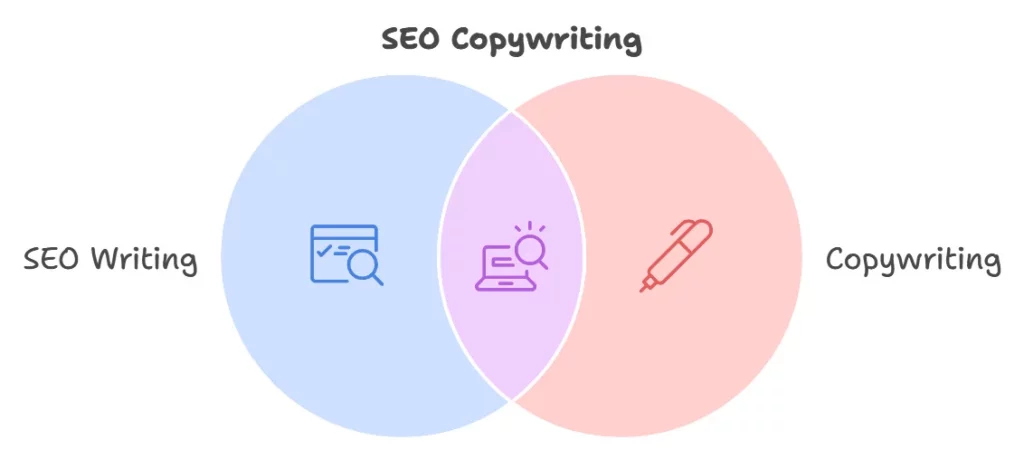
An effective SEO copywriter wears many hats: researcher, strategist, storyteller, and analyst. Here are the essential skills that matter.
1. Keyword Research and Intent Understanding
Before typing a single word, you need to know what your audience is searching for and why. Are they looking to learn, compare, or buy? That’s called search intent. Tools can give you keywords, but only understanding intent can guide you to the right approach.
A well-written article doesn’t chase random keywords; it answers the why behind the search.
2. Content Structuring and Flow
Readers don’t want a wall of text. An SEO copywriter structures content with clear headings, bullet points, and logical flow. The right hierarchy (H1, H2, H3) makes content scannable and easy to digest, something both users and Google appreciate.
3. On-Page SEO Knowledge
You can’t talk about SEO Copywriting without mentioning on-page SEO. It includes optimising title tags, meta descriptions, URLs, image alt text, and internal linking.
Also, placing your primary keyword naturally within the first 100 words gives a strong signal to search engines about your topic.
4. Strong Writing and Storytelling
While SEO ensures visibility, copywriting ensures connection. Your words must resonate, not sound robotic. Use conversational tone, relatable examples, and emotions that inspire trust. Neil Patel-style writing thrives on simplicity, short sentences, clarity, and direct engagement with the reader.
5. Analytical Thinking
An SEO copywriter should read data as easily as words. Tracking rankings, click-through rates, and user engagement tells you what works and what doesn’t. Then you refine. That’s how consistent growth happens.
6. Editing and Optimisation
The first draft is never the final one. Editing ensures that your writing flows smoothly, your keywords appear naturally, and your message stays consistent. Each revision should make the piece sharper and more reader-focused.
7. Adaptability and AI Collaboration
AI tools support research, outlines, and early drafts. Writers add judgement, clarity, and nuance. Editing shapes voice and accuracy. Collaboration with tools improves efficiency without losing originality.
What Are the Benefits of SEO Copywriting?
You might wonder, is all this effort really worth it? The short answer is yes. Let’s look at why.
1. Consistent Organic Traffic
When done right, SEO Copywriting brings long-term visibility. A well-optimised article can generate traffic for months, even years, without ongoing ad spend. It’s like planting a tree that keeps giving shade.
2. Higher Conversions
SEO Copywriting isn’t only about getting clicks; it’s about what happens after the click. Because you blend optimisation with persuasion, readers are more likely to take action, subscribe, contact, or buy.
3. Builds Brand Authority
High-quality content positions you as an expert. When your articles appear in top search results, people start trusting your brand more. Over time, that trust converts into loyalty.
4. Cost-Effective Marketing
Unlike ads that stop working the moment you pause your budget, good SEO content keeps delivering. It’s an investment that compounds over time, giving you better ROI than most marketing channels.
5. Enhanced User Experience
SEO Copywriting encourages clear structure, short paragraphs, and value-driven writing, all of which improve user experience. And when readers stay longer on your page, Google notices and rewards you with higher rankings.
6. Competitive Advantage
Most businesses either over-optimise (making text robotic) or under-optimise (writing without strategy). Mastering SEO Copywriting gives you the perfect middle ground, content that ranks and converts.
7. Long-Term ROI Compared to Paid Ads
Paid campaigns stop when budgets pause. SEO-driven pages keep working. Over time, returns compound as authority grows and content ages well.
8. Support for Omnichannel Digital Strategies
Search content supports email, social, and sales efforts. Teams reuse insights across channels. Messaging stays consistent and grounded.
What Are the Common Challenges in SEO Copywriting?
Even experienced writers face hurdles. Here are some common ones and how to deal with them.
- Balancing creativity with SEO: You need to sound human while meeting search engine requirements. The trick is to write naturally first, optimise later.
- Avoiding keyword stuffing: Keywords should fit like puzzle pieces, not be jammed in. Focus on user intent instead of frequency.
- Keeping up with algorithms: Search engines evolve. Stay updated with trends and adjust strategies regularly.
- Standing out in crowded niches: Everyone’s writing about the same topics. Find unique angles, case studies, or examples.
- Time and consistency: SEO Copywriting demands patience. Building authority through consistent content is a marathon, not a sprint.
How To Execute SEO Copywriting Step by Step
Let’s break down the actual process.
Step 1: Research and Audience Understanding
Start by identifying what your readers care about. Use keyword tools, social media, and forums to see what questions they’re asking. Good research saves time and makes writing effortless.
Step 2: Keyword Strategy
Select one main keyword (here, SEO Copywriting) and supporting phrases like SEO writing, SEO web writing, or writing for search engine optimization. Map them naturally into your headings and body text.
Step 3: Outline Creation
Plan your article before you write. Use question-based subheadings. It not only makes your piece structured but also increases your chance of appearing in featured snippets.
Step 4: Writing with Intent
Begin with an engaging introduction. Add your primary keyword early. Then write in a conversational tone, as if you’re talking to one reader. Keep sentences short, avoid jargon, and always deliver value.
Step 5: Add Persuasive Elements
Use storytelling, data, examples, and emotions. Mention benefits more than features. Add clear calls to action. Remember, you’re not just informing, you’re guiding readers to act.
Step 6: On-Page SEO Optimisation
Optimise your title, meta description, slug, and images. Use internal links to connect related content and external links to authoritative sources. Ensure your article is mobile-friendly and fast-loading.
Step 7: Review and Edit
Check readability, grammar, flow, and keyword placement. Read it aloud; if it sounds unnatural, rewrite it. Remove fluff and ensure every line serves a purpose.
Step 8: Publish and Promote
Once your content is ready, promote it through social media, newsletters, and outreach. High-quality content deserves to be seen. Backlinks, shares, and mentions will follow naturally.
Step 9: Monitor and Improve
After publishing, track metrics: impressions, clicks, rankings, and engagement. SEO Copywriting doesn’t end when you hit publish; it evolves. Update content periodically to keep it relevant.
What Are the Real-World Applications of SEO Copywriting?
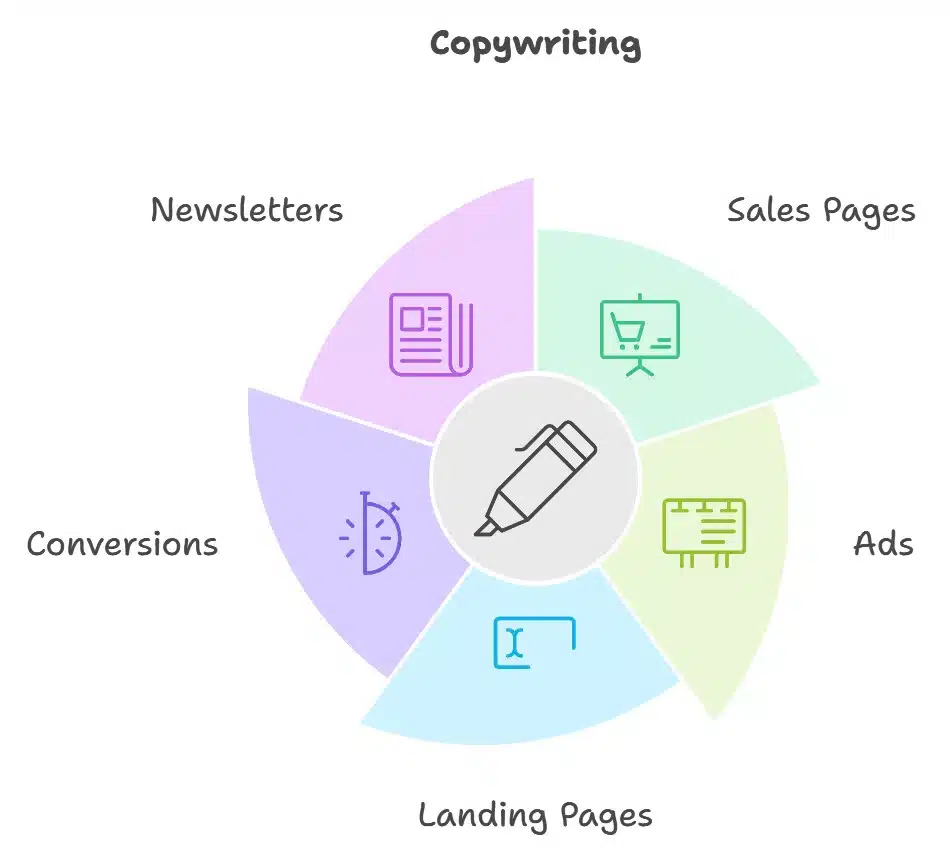
SEO Copywriting isn’t limited to blogs. It applies to multiple content types across industries.
- Websites: For service and product pages, where conversion is crucial.
- E-commerce: For product descriptions that attract organic traffic.
- Blogs: For educational and authority-building content.
- Landing Pages: For campaigns focused on sign-ups or sales.
- Press Releases and Articles: To expand brand visibility.
This is why many businesses hire SEO copywriting services or collaborate with an SEO copywriting agency that understands both marketing and technical SEO. It ensures every word is strategically aligned with the business goal.
Common SEO copywriting Mistakes to Avoid
· Writing for Keywords Instead of Users
While writing for search engine optimization, forced repetition harms readability. Readers notice unnatural phrasing. Search platforms detect dissatisfaction through behaviour.
· Over-Optimisation and Unnatural Phrasing
Excessive optimisation disrupts flow. Content should read smoothly and explain clearly.
· Thin Content and AI-Generated Fluff
Shallow pages fail to answer real questions. Generic output lacks depth and insight.
· Ignoring Search Intent
Mismatched content leads to quick exits. Intent guides structure and tone.
· Not Updating Old Content
Outdated pages lose relevance. Regular review keeps content aligned with current needs.
What Are the Future Trends in SEO Copywriting?
Search engines are becoming smarter, and readers are more selective. Here’s what to expect with SEO copywriting services in 2027.
- AI tools with human editing: AI may speed up research, but only human emotion and creativity can make content memorable.
- User intent-driven content: Focus will shift even more towards understanding what the searcher really wants.
- Voice search optimisation: Writing in natural, conversational language will help content rank for spoken queries.
- E-E-A-T principles: Expertise, Experience, Authoritativeness, and Trustworthiness will define rankings.
- Content refresh cycles: Updating old articles will be as vital as creating new ones.
The takeaway? Stay adaptable, stay human, and always prioritise value.
Final Thoughts
Mastering SEO Copywriting isn’t about gaming algorithms; it’s about understanding people. When you combine technical SEO knowledge with human psychology, you create content that truly performs.
In a crowded digital world, writing that connects emotionally while ranking effectively is what sets winners apart. Whether you handle your own SEO in writing strategy or partner with professionals, remember: words are your brand’s most powerful tool.
When done right, SEO copywriting services turn content into an engine for growth, attracting, engaging, and converting your audience, one perfectly crafted sentence at a time.


FAQs About SEO copywriting

An SEO copywriter uses SEO copywriting techniques to craft content that ranks high on search engines while engaging readers through clarity, value, and persuasion. They combine keyword research, strategic placement, and storytelling to attract organic traffic and drive conversions effectively.
An example of SEO writing is a blog post that naturally integrates target keywords to explain a topic in-depth while keeping it engaging and easy to read. It aligns with search intent, improves visibility on SERPs, and encourages users to take desired actions such as signing up or making a purchase.
Copyright in SEO refers to the legal ownership of SEO copywriting content, protecting it from being copied or used without permission. It ensures that original, keyword-optimised work remains the rightful property of its creator or brand, maintaining both credibility and authenticity.
To become an SEO copywriter, you must learn how to balance keyword optimisation with compelling, user-focused storytelling. Mastering keyword research, content structure, and conversion-focused writing helps you create content that both ranks and resonates with readers.
SEO copywriting involves creating content that matches user intent, fits modern search behaviour, and stays easy to read. Writers plan structure, context, and depth carefully so pages gain visibility, build trust, and support decisions without forced keyword use.
Search systems now measure usefulness, engagement, and clarity. Writers organise content around topics and intent rather than isolated keywords. The focus stays on complete explanations, logical flow, and relevance that satisfies readers from the first interaction.
AI helps with research, outlines, and early drafts. Human writers add judgement, accuracy, tone control, and context. These elements shape credibility and connection, which automated tools cannot replicate consistently across competitive search environments.
SEO writing usually shows progress over several months. Visibility improves as pages gain trust and engagement signals. Regular publishing and refinement support steady growth rather than immediate spikes tied to short-term tactics.
Long content works only when it answers questions fully and stays clear. Length alone does not improve performance. Focused explanations, logical structure, and relevance matter more than word count for both readers and search systems.
Yes. Writing for search engine optimization helps small businesses reach people actively looking for solutions. It reduces reliance on ads and builds steady visibility over time, which supports growth without requiring large ongoing marketing budgets.
Most content benefits from review at least once a year. Updates may happen sooner if search intent shifts, information changes, or performance declines. Regular refresh keeps pages accurate, relevant, and competitive.
Yes. Content written around intent answers doubts and explains value clearly. Readers feel informed rather than pushed. This clarity supports decisions naturally, which improves enquiry rates, sign-ups, and sales across many industries.
Any industry with search demand gains value from SEO-focused writing. Service businesses, ecommerce brands, education providers, and local companies rely on clear search visibility to reach people during research and decision stages.
Costs depend on depth, competition, and expertise required. The value comes from long-term visibility and reduced reliance on ads. Over time, well-written pages often deliver stronger returns than repeated short-term campaigns.