What Is a Good Engagement Rate and How to Calculate It

Have you ever thought what is a good engagement rate? If you have, you’re not the only one searching for the answer. Many marketers and creators think about it often. They notice others getting more likes and comments.
Your engagement rate shows how your audience connects. It tells you who truly cares about your content. It’s not just about who scrolls past your post.
A 2025 Rival IQ study shared key findings. Engagement dropped on most major platforms last year. TikTok fell 34%. Facebook dropped 36%. Instagram fell 16%. It’s getting harder to hold people’s attention online.
A good engagement rate changes by platform and niche. Anything above 1.5% to 2% is solid. Top brands often reach 4% or even higher. Visual platforms like Instagram and TikTok perform best.
Here are some ways to measure your engagement rate and see how your numbers compare.
Table of Contents
- Why engagement rate matters in social media marketing
- How is engagement rate calculated?
- What is a good engagement rate for each platform?
- What affects your engagement rate?
- How to improve your engagement rate?
- Key takeaways and TL;DR
Why Does Engagement Rate Matter in Social Media Marketing?
Let’s face it, follower count is vanity. Engagement rate is sanity.
When someone likes, comments, shares, or saves your post, it signals a real connection. Platforms such as Instagram, LinkedIn, and X (formerly Twitter) reward this with more visibility.
That’s why top marketers should know what is a good engagement rate and benchmark it regularly. It’s not about chasing numbers; it’s about measuring how your content performs against your competitors and industry norms.
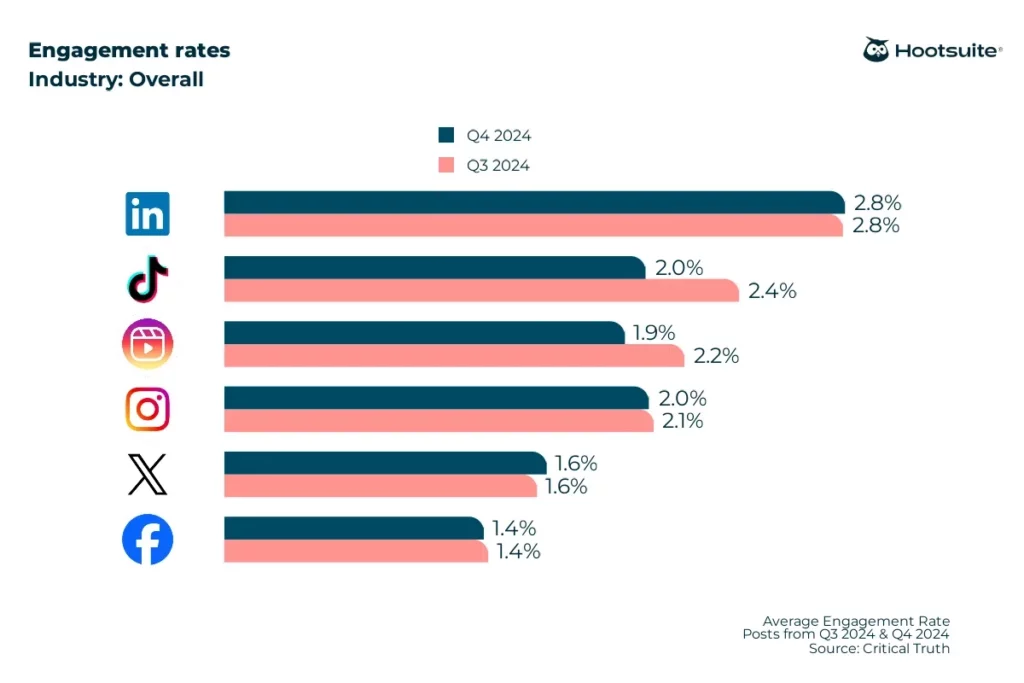
The average engagement rate across all major social platforms is about 1.2% to 1.6%. But this can vary widely depending on audience size, niche, and content style. For instance, micro-influencers often outperform large pages because they maintain tighter community relationships.
How Is Engagement Rate Calculated?
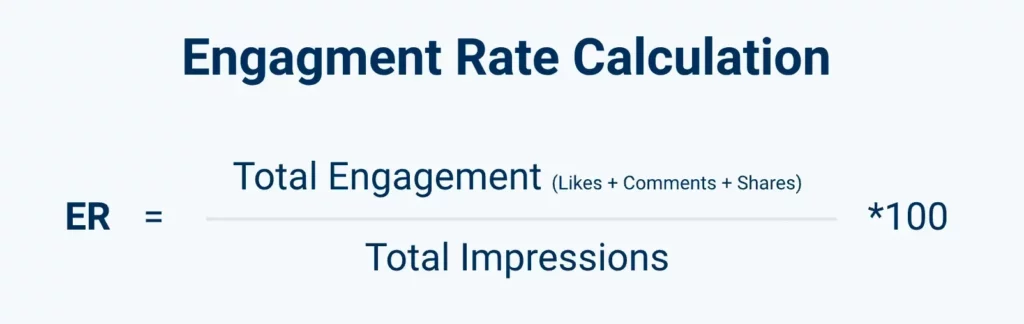
You can calculate your engagement rate in a few different ways, but the classic formula most marketers use is:
Engagement Rate = (Total Interactions ÷ Total Followers) × 100
Interactions usually include likes, comments, shares, saves, clicks, and sometimes story replies, depending on the platform.
However, there are two other methods you might come across:
- By Impressions:
(Total Engagements ÷ Total Impressions) × 100
This shows how your content performed among those who actually saw it.
- By Reach:
(Total Engagements ÷ Total Reach) × 100
Ideal if you want to know how your unique audience responded to each post.
When learning the answer to what is a good engagement rate, consistency is key. Don’t switch formulas every week. Pick one and stick to it for apples-to-apples comparison.
What Is a Good Engagement Rate for Each Platform?
Here’s where things get interesting, because “good” isn’t the same everywhere.
Let’s look at platform-specific benchmarks to understand the full picture.
1. Instagram
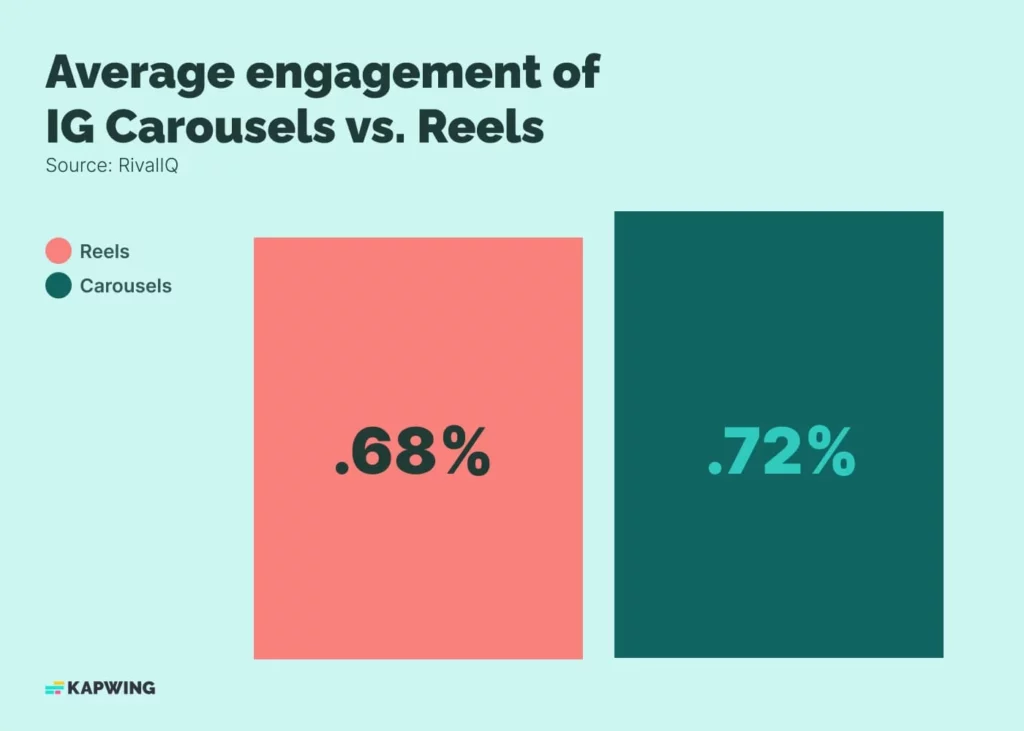
When it comes to visuals and storytelling, Instagram remains the engagement king. The average engagement rate for Instagram across industries hovers between 1.5 and 3 percent, though smaller creators often exceed 5 percent.
In Hootsuite’s Q1 2025 data, Instagram’s average engagement is about 3.4%, while Reels average around 2.6%, showing short-form videos continue to drive strong performance.
Reels and carousel posts typically perform best. The average IG engagement rate for Reels alone can hit 2.5 percent, especially in lifestyle and fashion niches.
2. Facebook
Facebook’s engagement has dipped over the years, averaging 0.06 to 0.15 percent. But community-based content, polls, and short-form videos still deliver solid engagement in niche groups.
3. LinkedIn
For B2B brands, LinkedIn engagement rates can be surprisingly strong, between 2 and 3 percent for company pages, and up to 5 percent for personal profiles that post consistently.
4. X (formerly Twitter)
The average Twitter engagement rate has settled around 0.05 to 0.15 percent. That might look low, but given the platform’s fast-moving nature, anything above 0.2 percent is impressive. Short, conversational posts and timely reactions usually perform best.
5. TikTok
TikTok continues to dominate for organic engagement. Rates between 4 and 9 percent are common, especially for short, emotionally resonant videos.
6. YouTube
Engagement here goes beyond likes and comments; watch time is king. If you maintain > 50% average view duration and 3–5% click-through rate on thumbnails, you’re outperforming most creators.
So, what is a good engagement rate? It depends on your platform and your audience behaviour. But across the board, if you’re hitting or exceeding these averages, you’re doing great.
What Are Social Media Engagement Benchmarks by Industry?
Different sectors attract different user behaviour. Here’s a quick look at social media engagement benchmarks that brands often use as reference:
| Industry | Average Engagement Rate | Top Content Type |
| Fashion | 2.9 % | UGC & Reels |
| Education | 1.4 % | Infographics |
| Technology | 1.2 % | Product Demos |
| Food & Beverage | 2.6 % | Short Videos |
| Finance | 0.9 % | Tips & Guides |
| Healthcare | 1.3 % | Explainer Posts |
Use these as benchmark engagement rate ranges, not hard rules. The most important thing is to monitor your own trends over time.
What Makes These Industries Stand Out
- Fashion: Thrives on creativity and authenticity. Reels and user-generated content (UGC) dominate because they show real people styling real looks.
- Education: Wins with infographics, short, snackable visuals that simplify complex ideas.
- Technology: Does best with product demos. People love to see innovations in action before committing.
- Food & Beverage: Shines with short videos, mouthwatering visuals that make audiences crave more.
- Finance: Performs well when brands share practical “how-to” guides or money-saving tips.
- Healthcare: Engages best through explainer posts that build trust and clarify misconceptions.
What Factors Affect Your Engagement Rate?
Once you know what is a good engagement rate, the next step is understanding what actually drives it.
1. Content Relevance
If your content doesn’t speak directly to your audience’s pain points, no amount of hashtags can save it. Always align your message with what your followers genuinely care about.
2. Timing and Frequency
Posting when your audience is online can boost engagement by 20–30 percent. Tools like Hootsuite or Later can show your best posting windows.
3. Visual Appeal
High-quality images, videos, and carousels naturally get more attention. Visuals should stop the scroll.
4. Call-to-Action (CTA)
Prompt interaction: “Tag a friend,” “Vote below,” or “Share your thoughts.” A well-placed CTA can significantly lift engagement.
5. Community Interaction
Reply to comments and DMs. When people feel heard, they return the love.
6. Consistency
Posting 1–2 times a day (or 3–4 times a week on LinkedIn) creates familiarity and builds trust.
How to Improve Your Engagement Rate
Knowing what is a good engagement rate is one thing; maintaining it is another. Here’s how you can consistently stay above the curve.
1. Post More Human Stories
People don’t engage with logos; they engage with people. Share behind-the-scenes moments, customer journeys, or founder insights.
2. Leverage Trends Mindfully
Hop on trending sounds or formats, but adapt them to your niche. Relevance > virality.
3. Use Data to Decide
Study which posts got the most likes, shares, or saves. Double down on those patterns.
4. Collaborate with Micro-Influencers
These creators often have engagement rates 3× higher than macro ones.
5. Refresh Old Content
Re-edit or repurpose past top-performing posts with a new hook or updated data.
6. Use Platform Analytics
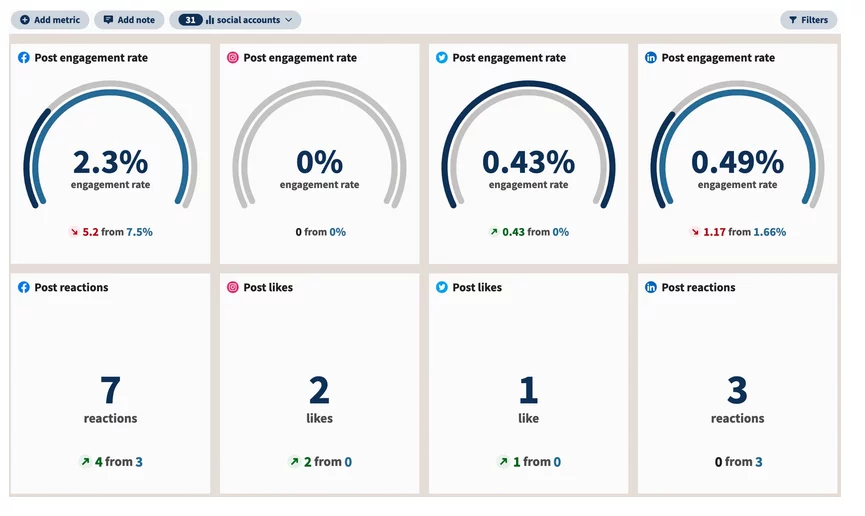
Most platforms provide detailed post-level metrics. Analyse reach, impressions, and engagement side by side to see where performance drops.
Key Takeaways and TL;DR
- The simple definition of what is a good engagement rate is the percentage of your audience interacting with your content
- The average engagement rate on Instagram is 1.5–3 %, but Reels and carousel posts can exceed 5 %
- Track the average engagement rate across all platforms, but set your own benchmark engagement rate for internal progress
- The average Twitter engagement rate is under 0.15 %, so don’t compare it directly with Instagram or TikTok
- Keep an eye on your average engagement rate for Instagram over time, steady improvement > instant virality
- Use industry-specific social media engagement benchmarks to gauge your performance
- Optimise every post with meaningful CTAs, community interaction, and clear visuals
In short, there’s no universal “perfect number.” The best approach is to keep testing, tracking, and tweaking until your engagement curve moves steadily upward.
Final Thought
Engagement is about relationships, not algorithms. When your audience feels something, curiosity, trust, laughter, or inspiration, they respond.
And that response is exactly what fuels growth.
So, the next time you measure what is a good engagement rate, remember: numbers matter, but meaning matters more.


FAQs What Is a Good Engagement Rate

The best way to calculate engagement rate is (Total Engagements ÷ Total Followers or Impressions) × 100. It shows how often people interact with your posts through likes, comments, shares, or clicks.
A good engagement rate is typically between 1% and 5%, though it varies significantly by platform and industry. Higher percentages usually indicate a more actively involved audience that connects well with your content.
Yes, a 7% engagement rate is excellent and well above average for most industries. It means your audience is highly engaged and your content is performing exceptionally well.
A 0.5% engagement rate is on the lower end of the average range but can still be normal for platforms like X (formerly Twitter). Since engagement varies by niche and audience size, it’s best to compare this to your own past performance and industry benchmarks.