Website Structure for SEO: How to Organize Your Site for Better Rankings

An organized website structure can decide whether your brand gets seen or gets buried. When visitors or search engines struggle to understand your layout, they leave. They also might not discover your pages at all. That’s why a strong website structure SEO approach is now a foundation for high rankings. The way you group, link, and present your pages has a measurable impact on search visibility. A recent study shows that 93 percent of digital experiences still begin on a search engine, which raises the stakes even higher.
Your strategy needs to combine user experience with a search-friendly website. It helps with smooth navigation, improves the crawlability, and impacts long-term business growth positively.
What Is Website Architecture?
With increasing use and reliance on mobile devices, almost 58% to 64% of traffic is from devices. This accounts for almost 62.54% of global traffic, which further impacts the website architecture.
Each page must be well-optimized for mobile devices and search intent. Website architecture is the blueprint that defines how your pages connect.
A strong site structure SEO model brings together uninterrupted navigation, use of quality and relevant content, and technical clarity on the website. All these strategies ensure the users’ journey remains smooth.
When this structure is built well, your site becomes scalable, easier to update and fully accessible to both users and crawlers.
Why Is Website Structure Important for SEO?
Think of your SEO friendly website structure as a silent ranking engine. It may not be visible, but it works behind every keyword you target.
Improves Search Engine Discovery and Indexing
Your pages may not go unnoticed if the website structure is unclear. Over 15 percent of pages on poorly structured sites never get indexed, according to SEMrush, which means they can’t rank at all. A well-designed website structure SEO approach ensures no page is isolated. Studies show that almost 75% of orphan pages are not recognized due to poor organic traffic and proper internal links.
Supplies Extra Context for Each Page
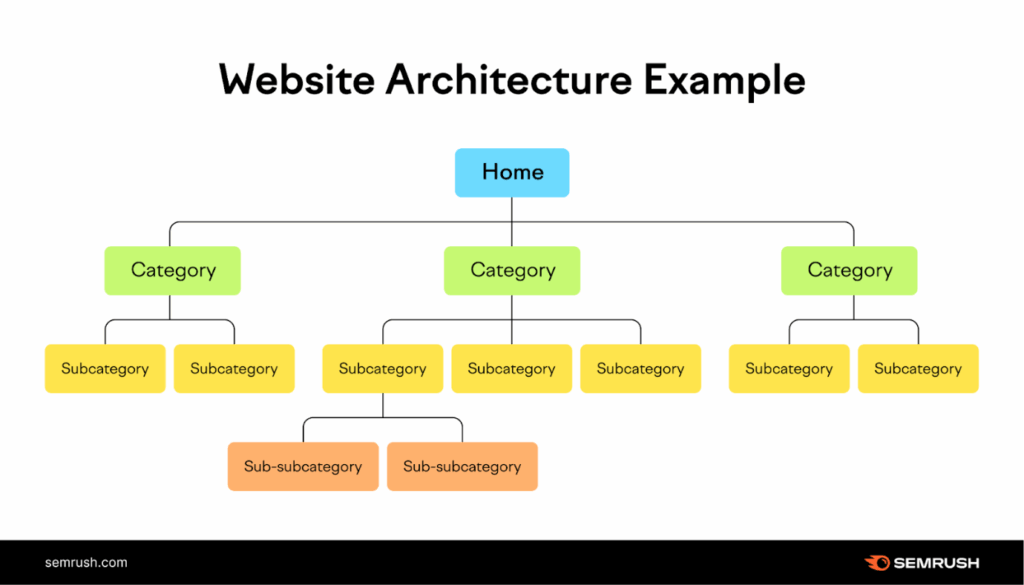
By organizing content using parent and subcategory logic, search engines gain deeper context about relationships between your pages. This supports topic authority and improves relevance for keyword clusters. Site structure SEO isn’t just about being found; it’s about being understood.
Distributes Authority Across Pages
Internal links help gain authority throughout a website. A balanced SEO-friendly structure strengthens deep pages that usually struggle to rank, helping them bring in more website traffic.
Enhances User Experience and Lowers Bounce Rates
A well-planned website structure helps visitors find their search results faster. Clean navigation can lower bounce rates by up to 50 percent, which directly supports stronger rankings. Research shows how a lucid website structure and optimized links can reduce bounce rates by almost 20% to 50%.
Optimizes Your Website for Crawlers
Crawlers use your website structure SEO layout to understand topic coverage and page depth. A clear layout speeds up indexing and reduces crawl waste, which helps important pages surface faster. This is when the structure determines how effectively website crawlers can find the website.
Supports Intuitive Internal Linking Structure
When you structure your content well, you use more internal links that are relevant. It eventually makes the website far-reaching.
The sitelinks can boost visibility by the click-through rate to a great extent, improving visibility across multiple pages.
What Does a Good Site Architecture Look Like?
A winning website architecture is organized and easy to navigate. Users and bots should understand your structure instantly. A site that has the right site architecture loads faster, and every feature on the site makes sense. The report shows how this instantly boosts the user satisfaction level. This is how proper page indexing can bring in a positive website page response from users.
Organize with a Shallow, Flat Structure
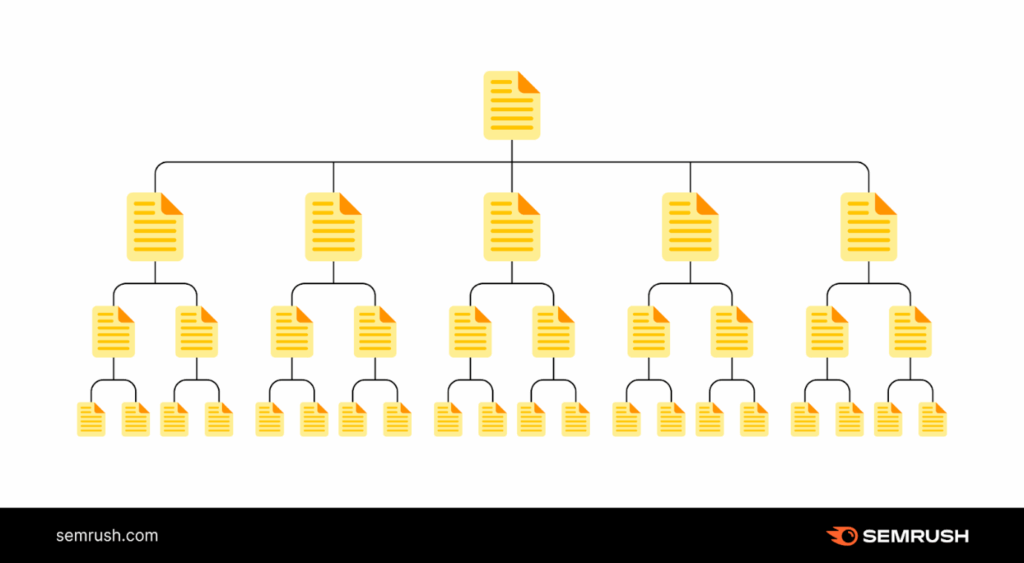
Flat structures perform best because they minimize click depth. Every high-value page should be reachable within three clicks, improving both engagement and crawl efficiency. Users and Google only pick the website options that add value and have user intent.
Group Related Content With Intent
Organize your pages using theme categories or topic clusters. This is the basis of site architecture SEO and helps visitors land exactly where their search intent leads them.
Avoid Orphan Pages and Dead Ends
Orphan pages disrupt your SEO site structure. Use internal links, menus, and sitemaps to keep everything interconnected on a website.
How to Structure Your Website for SEO: Step-By-Step
1. Plan site hierarchy
The site hierarchy is the structure of how content and features are organized on a web page. A clear hierarchy easily makes up for an SEO friendly website structure and helps both users and crawlers move smoothly from general to specific content.
2. Optimize your URLs
Short, descriptive URLs support easy website crawling, and users start to build trust in the site. URLs with clean, keyword-focused slugs can improve click-through rates by 39 percent. Keep URLs short, accessible, and keyword-rich as effective ways to scale the website for successful optimization.

3. Create shallow navigation
Fast navigation reduces drop-offs. Users often abandon a site if they need more than three steps to find key content. Confused website navigation is a big turn-off for visitors, who often visit the competitor’s website instead. This is the least a website owner wants to experience, and so, set the website structure properly to ensure a smooth user experience.
4. Establish header and footer
Headers guide the website pathways, while footers reinforce them. Consistent navigation boosts usability, and thus, the header and footer are a crucial step on long-scroll pages.

5. Use internal links
Internal links guide visitors to related content, boosting the website’s authority effectively. It also helps search engines understand the context and, accordingly, set the website’s authority. It also decides the website’s ranks when using relevant keywords in the links.

6 Website Architecture Best Practices
1. Choose a suitable structure for your website
Take time to plan the site architecture depending on its size and the layout. Small sites benefit from simple hierarchies, while large sites need layered categorization. It will determine the accessibility of the website.
2. Map out your information hierarchy
If it looks confusing on paper, it will confuse search engines. So, properly categorize, topics and sub-topics so that users can easily glide through the options. This is where the SEO site structure is the roadmap.
3. Leverage internal linking
Internal links build relationships between sections and improve the browsing experience. It is through internal links that more content on a website experiences better reach and often gets a chance to rank higher than usual.
4. Keep pages within easy Reach
Every important page should be easily accessible and can be reached with only by few clicks from the home page of a website. It ultimately lowers the bounce rate and ensures users can easily reach the important pages without having to struggle much to get to their destination on the website.
5. Use clear categories, tags, and filters
Optimize content with relevant filters and tags, and put it under the suitable category. Such elements improve both usability and search understanding. The website structure clarifies to the search engine regarding the sections covered and thus makes the content and website authoritative.
6. Optimize URLs
Readable URLs prevent confusion and support clarity. It further increases the click-through rates and makes the website structure logical.
Therefore, simple and predictable designs make navigation easier, and that’s the least users expect when they visit a website for the first time. The site structure and optimization level are the flow of the web page. Also, include a detailed HTML roadmap to guide users, and it boosts accessibility.
Common Mistakes to Avoid in Website Structure
When planning the site structure, try to avoid these mistakes for optimal site performance:
- Burying the vital pages too deep
- Publish new pages without linking to relevant sections
- Give an inconsistent category name
- Overload the navigation with many items
- Create unclear URLs and site hierarchy
- Ignore having mobile-optimized web pages
Therefore, the search experience analyst comments that a clear structure indicates the importance of your website pages. Further professional website strategist also suggests that internal links are essential to boost the significance of a website page. If left unnoticed, valuable website content often gets lost in the crowd.
In Summary
Ranking well and standing out is not just a matter of luck. A mindfully structured website SEO creates a strong foundation that boosts web visibility. So, try to have a clear, logical website layout that results in fast loads, better ranks, and engaged visitors on the website. It is the technicalities that contribute to a website ranking effectively in the search engines and among users.


FAQs on Website Structure for SEO

Internal links help search engines understand how the website page wants to connect and who the target audience is that it caters to. A relevant internal link makes the structure accessible, and automatically, the important pages receive more visibility, boosting the overall visibility of the website.
A slow-loading website lowers the user experience and eventually impacts the rank in the search engines. That’s where there is a need for a streamlined structure, as heavy navigation paths or cluttered page elements will make you lose your potential visitors.
A flat structure is a preferable choice for most websites, provided the vital content is easily accessible from a website’s homepage. When crawlers reach any page using a few clicks, engagement is high and search engines index effectively than usual.