Subdomains for SEO: Should You Use Them? Why & Why Not


Using subdomains for SEO has been debated for years yet it continues to matter in 2026. It is because search engines now analyze structure, purpose and user intent with much more precision. Many brands still rely on subdomains to manage content that needs its own identity, and Subdomains are only common in top rankings in multilingual markets and make up about 3% of domain structures in SERPs.
This shift shows how teams handle scalability, global operations, and audience segmentation. The topic deserves a grounded explanation because subdomains behave differently based on your goals, your site size, and your content structure. You’ll see how each choice shapes visibility, tracking, authority signals, and long-term growth.
In this guide, we’ll break down the more about what subdomains for SEO entails.
What Is a Subdomain
A prefix applied to a website’s domain name to create a distinct portion for a particular purpose is called a subdomain. Subdomains enable websites to divide and arrange their material for a specific purpose, such as an online store or blog. Teams use it to organize content that needs its own layout or purpose.
Many brands choose this route for support centers, community forums, language-specific content, and product hubs that run with distinct systems. You can treat a subdomain as an extension of your main identity, yet it holds its own technical setup and performance patterns.
Search engines read it as related but independent, which affects how Subdomain SEO signals form, how content clusters build relevance, and how pages earn trust across topics.
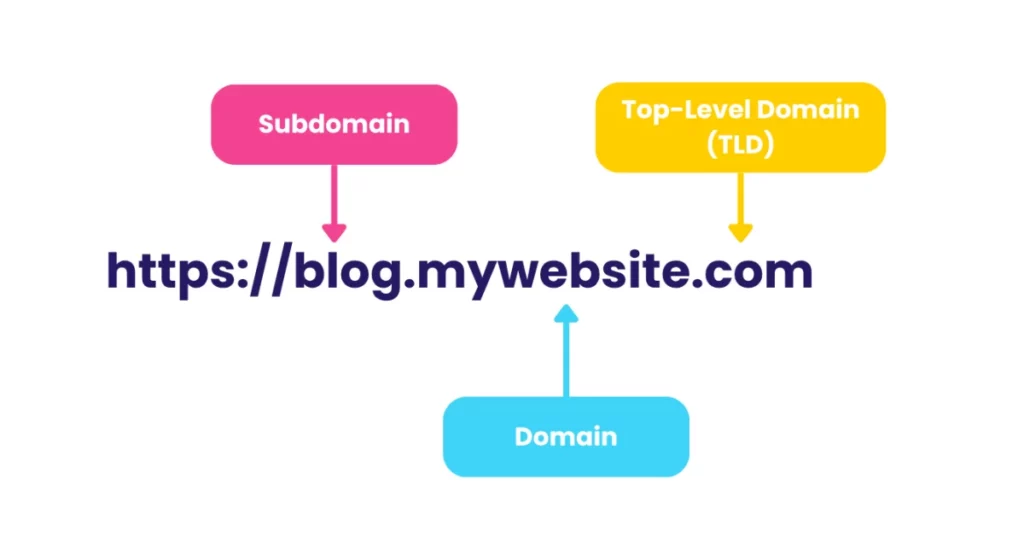
What’s the Difference Between a Subdomain and a Subdirectory?
A subdomain segments your content into a separate branch, while a subdirectory keeps everything inside the main domain’s folder structure. You might place your blog at blog.example.com if it needs its own platform or workflow, or you might place it at example.com/blog if you want it to fully share authority.
Think of your website like a house. Your root domain (example.com) is the main address. A subdomain is like building a detached guesthouse at the same property, say blog.example.com or store.example.com.
A subdirectory usually benefits from the existing reputation of the main domain, yet a subdomain can help isolate tools or content types that operate better on their own. Teams evaluating SEO subdomain options typically compare maintenance demands, content workflows, and the scope of future expansion.
A subdirectory, on the other hand, is like adding another room inside the main house. That would look like example.com/blog or example.com/store.
Both structures work well, yet one aligns better depending on how you plan to manage growth, hosting systems, and audience routes over time. To a user, both options may seem minor. But to search engines, the difference matters. Google often treats subdomains as separate websites, while subdirectories clearly live under the main site’s authority. That’s where the debate begins.
How Do Subdomains Impact SEO Performance?
If you’re wondering about subdomain SEO impact, here’s the truth: it’s complicated. Subdomains aren’t automatically good or bad. Their effect depends on how you use them, how you connect them to your main domain, and how much effort you’re willing to put into optimizing each one.
Let’s break down the biggest areas where subdomains make a difference:
Crawling & Indexing
Googlebot treats subdomains as separate properties. That means it doesn’t automatically assume your blog.example.com belongs to the same “site” as example.com. Each one has to be crawled individually. For small websites, this usually isn’t a deal-breaker.
But for large websites with thousands of pages, splitting content across subdomains can eat into your crawl budget. If Google spends too much time crawling one subdomain, it may delay updates to the other. This can impact how quickly new pages get indexed and how fast changes reflect in search results.
Authority Flow
One of the biggest debates around subdomain SEO is link authority. When another site links to your subdomain, Google may not always pass that authority back to your main domain in full.
In other words, your hard-earned backlinks could end up boosting just the subdomain instead of your root site. That can make your domain authority feel fragmented. Without strong internal linking and clear site architecture, you risk diluting your overall SEO power.
Keyword Relevance
Subdomains can also affect how Google perceives your topical authority. Since Google often treats each subdomain as its own entity, your keyword strategy may get spread too thin. Imagine you have articles about email marketing on both blog.example.com and example.com.
Instead of building concentrated relevance, you’re splitting signals between two properties. This could make it harder to dominate rankings for competitive keywords, because your authority looks divided.
User Experience
User experience is another factor that often gets overlooked. Jumping between subdomains can sometimes feel like leaving one site for another, especially if the design, navigation, or branding isn’t consistent.
Even small changes in layout or styling can create friction. That friction adds up when users are trying to shop, read, and engage with your brand in a single session. If the transition feels jarring, bounce rates may increase, and conversions may drop.
Analytics & Tracking
Finally, let’s talk about measurement. Tracking performance across subdomains isn’t as simple as checking one Google Analytics property. You often need custom setups for cross-domain tracking, and in GA4, that requires a few more steps to make sure everything flows smoothly.
Without that setup, you may miss the full customer journey, like how someone finds your blog on a subdomain, then visits your store on the main domain, and finally makes a purchase. For businesses that rely heavily on data-driven decisions, this lack of clarity can hurt.
What Are the Advantages of Using Subdomains?

Subdomains offer technical and organizational benefits when you need separation. They allow independent hosting decisions, different CMS tools, distinct development cycles, and localized content that uses separate infrastructure. If you operate multiple brands or product lines, subdomains help you compartmentalize risk and speed up deployment.
For global content strategies, subdomains can host language- or region-specific instances that operate with local servers for performance gains. They also allow experiments (because you can test templates or features without touching the main domain), and they can protect the main site from downtime tied to third-party platforms.
Why do big brands still use subdomains if they have downsides? Because in certain cases, they’re extremely useful.
- Separation of Content: If you’re running a support portal, community forum, or e-commerce shop, subdomains give you a clean way to organize.
- Geographic or Language Targeting: Multinational companies often use subdomains for country-specific sites like uk.example.com or fr.example.com.
- Different Technology Stacks: Sometimes your blog runs on WordPress, while your store is built on Shopify. Subdomains make it easier to host them separately.
- Brand Flexibility: If you want a part of your business to stand on its own (like hubspotacademy.com’s academy.hubspot.com), subdomains can do the job.
When managed well, subdomains help reduce clutter and provide freedom for specialized teams to run different parts of the site independently.
What Are the Disadvantages of Subdomains for SEO?
Subdomains for SEO increase management overhead and often require more deliberate link-building. They can dilute Subdomain ranking potential if backlinks are scattered without coordination. Small sites may struggle to earn authority separately, which reduces organic reach compared to a single consolidated domain.
You also face extra complexity with security (separate SSL certificates), canonicalization, and metric aggregation. If you lack resources to treat the subdomain as its own SEO project, search performance may suffer rather than improve.
Here’s where the warnings kick in. Using subdomains for SEO comes with risks.
- Split Authority: Your Subdomain backlinks may get divided between the subdomain and the main domain, limiting your overall growth. Some people call this “domain dilution.”
- Harder SEO Management: You’ll need to optimize each subdomain as if it’s its own website. That means unique link building, content, and technical SEO.
- User Confusion: If visitors see blog.example.com and store.example.com, they may feel like they’ve left your main site. That break in trust can affect conversions.
- Duplicate Content Risks: If your main domain and subdomain cover overlapping topics, you may end up competing against yourself in search results.
- Tracking Challenges: Analytics across subdomains isn’t seamless. You’ll need custom setups to see the whole customer journey.
In short, subdomains are more work. If you’re resource-strapped, subdirectories are usually easier to manage.
When Should You Choose Subdomains Over Subdirectories?
A subdomain makes sense when your content or platform functions like an independent property. Many teams choose this route for resource-heavy applications, member portals, community hubs, or training platforms that require different technology stacks.
If your internal teams work in silos with their own deployment cycles, a subdomain gives them freedom without interfering with your main site. This setup also works well for international sections that run with region-specific logic or compliance rules.
When you manage large-scale documentation or developer resources, a subdomain can prevent clutter in your main navigation. You create a focused environment that supports deeper structures while keeping your primary site streamlined.
The million-dollar question: which one should you pick?
Choose subdomains when:
- You’re targeting completely different regions or languages
- You need to use different hosting or CMS platforms
- You want to create distinct brand identities under the same parent company
- Your content topics are entirely unrelated (like banking vs. lifestyle)
Choose subdirectories when:
- You want to build strong topical authority under one domain
- You’re running a blog or resource hub
- You want backlinks and rankings to consolidate under your main site
- You need simpler tracking and analytics
A simple rule of thumb: if the content is core to your main site’s value, keep it in a subdirectory. If it’s truly separate, a subdomain may make sense.
How Do Subdomains Affect Rankings?

A subdomain builds its own ranking signals over time, which means visibility grows as you strengthen authority within that space. Search engines evaluate content quality, usability, freshness, and engagement patterns across the subdomain independently. If your internal links are weak or disconnected, it takes longer for search engines to associate the subdomain with your core brand themes.
Strong Subdomain ranking performance usually depends on clear topical themes, cluster-style navigation, and consistent publishing velocity. When these elements come together, a subdomain can rank strongly even in saturated categories because its structure helps clarify intent.
Here’s the part that most SEOs obsess over: subdomain ranking.
Google has said that its algorithms treat subdomains and subdirectories “similarly.” But in practice, many SEOs have seen better performance when consolidating into subdirectories.
For example, HubSpot famously moved its blog from a subdomain to a subdirectory and saw a huge traffic increase. The reason? All that blog content suddenly contributed directly to the main domain’s authority.
That doesn’t mean subdomains can’t rank. They can. But if your goal is to maximize your main domain’s visibility, subdirectories often provide a stronger foundation.
What’s the Role of Backlinks in Subdomain SEO?
Here’s where things get tricky. Subdomain backlinks don’t always transfer full authority to your root domain.
If an external site links to blog.example.com, Google may treat that link as pointing to a separate site from example.com. Unless you build strong interlinking between your subdomain and your root domain, you risk leaving authority on the table.
That’s why many SEOs recommend consolidating into subdirectories unless you have a very specific reason to keep things apart.
What Are the Best Practices for Subdomain SEO?
If you decide to go with subdomains, don’t panic. You can still make them work. Here’s how:
- Strong Internal Linking: Link generously between subdomains and the root domain so authority flows.
- Consistent Branding: Use similar design, colors, and navigation so users don’t feel lost.
- Canonical Tags: Avoid duplicate content issues by using canonicals.
- Hreflang for International Sites: Make sure each language version points correctly.
- Centralized Analytics: Set up cross-domain tracking in GA4 so you see the full journey.
- Performance Optimization: Don’t let subdomains slow down. Ensure fast hosting and clean code.
- Monitor Separately: Track rankings and performance for each subdomain individually.
Handled carefully, subdomains can deliver value without dragging your SEO down.
Should You Put Your Blog on a Subdomain?
One of the biggest battles in SEO is whether your blog belongs on a subdomain or in a subdirectory.
If your blog is central to your content marketing strategy, the safest move is to keep it under example.com/blog. This way, every article strengthens your root domain.
If your blog covers content unrelated to your main business, or you want it to operate independently, a subdomain could work. A subdomain blog works well when your blog has its own editorial identity, own workflows, or separate tools. Some teams operate extensive content engines that run more smoothly on independent CMS platforms, especially when publishing volume is high. If your blog targets audiences that differ from your main site, a subdomain provides room for tailored formats and categories.
But for most brands focused on growth, subdirectories are the smarter play. Most brands prefer blogs in subdirectories because shared authority often accelerates growth. If your content relies heavily on consistent domain signals, a subdirectory gives your articles a stronger start compared to a new SEO subdomain structure.
What Are Some Common Misconceptions About Subdomains?
Let’s clear the air.
- “Subdomains are bad for SEO.” Not true. They just require more effort.
- “Google ignores subdomains.” Wrong. Google indexes them, but as separate properties.
- “You can’t rank with subdomains.” Plenty of sites rank well with subdomains. It’s just harder to consolidate authority.
- “Migrating is always risky.” Migrations can cause short-term fluctuations, but with proper redirects and planning, they can pay off.
The key is not to fear SEO subdomain, but to understand their role.
What’s the Final Verdict on Subdomains for SEO?
Subdomains for SEO can help when your content operates like a separate product or when your platform requires tight technical independence. They support scalability and organizational flexibility, especially for teams managing large or specialized content systems. They also require more deliberate SEO planning because authority signals don’t merge naturally with your main site.
If your goal is simplicity or rapid growth for a new content initiative, subdirectories tend to bring faster returns. Still, with strong planning and consistent technical care, a subdomain can deliver reliable long-term visibility.
At the end of the day, there’s no one-size-fits-all answer. Your decision depends on your goals, resources, and content strategy.
- If you want maximum authority consolidation, easier management, and fewer technical headaches, use subdirectories.
- If you need separation for branding, technology, or markets, subdomains can work, as long as you follow best practices.
The bottom line? Subdomain SEO is about balance. Done wrong, it can dilute your rankings. Done right, it can give your brand the flexibility it needs.
Final Thoughts
SEO is full of nuances, and subdomains are one of those topics where the answer is, “it depends.” The best marketers don’t just follow trends: they test, measure, and adapt.
If you’re at a crossroads, ask yourself: “Is this content core to my brand, or is it distinct enough to stand alone?” That question alone will steer you in the right direction.
And whatever you choose, commit. Optimize aggressively, build links, and track results. Because in SEO, half measures rarely win.


FAQs for Subdomains for SEO

Subdomains can fragment authority because search engines treat them like separate websites, making it harder to consolidate link equity. This means you’ll often need to build SEO authority for the subdomain as if it were a standalone site.
Yes, SEO works on a subdomain, but it requires the same effort as optimizing a separate website. You should use a subdomain for SEO only if you have a strong strategic reason, like targeting an international market or managing a distinct content niche.
The main disadvantages are fragmented authority, compromised crawl efficiency, and complex tracking setups. Poor user experience on subdomains can also hurt performance if design or speed isn’t consistent with the main site.
Subdomains are a good idea when you need a separate brand experience, an independent platform, or a microsite that won’t affect your main site’s structure. In most other cases, a subdirectory is better for SEO because it consolidates authority and simplifies tracking.
The risks of subdomains include splitting topical relevance, requiring more SEO effort, and losing the benefit of consolidated link equity. They can also make audits and analytics more complex since each subdomain often needs its own setup.
Yes, search engines often treat subdomains for SEO as separate properties, which means they need their own structure, links, and content to build visibility successfully.
They do not inherit full authority automatically, so you must build a reputation for each subdomain through content, structure, and external links that support relevance.
A subdomain can rank quickly when it has clear topical focus, strong backlinks, and clean technical foundations, especially for specialized content areas.
Yes, they work well for international projects because teams can localize hosting, structure, and platforms to match regional needs without altering the main domain.
Tracking becomes harder without cross-domain setup, so you must configure analytics carefully to follow user behavior between your main domain and subdomain.
Small sites usually benefit more from subdirectories because they rely on consolidated authority and want to avoid spreading SEO signals across multiple sections.
Creating separate sitemaps helps search engines discover SEO subdomain pages faster, especially when they operate on different servers or platforms than your main site.
Internal linking helps guide crawlers and strengthen relevance, but external Subdomain backlinks still matter more for building true ranking potential.
Yes, they allow teams to test new platforms, tools, or structures without affecting the stability or performance of the main website during development cycles.
Growth depends on content quality, technical consistency, and link-building pace, but most subdomains develop stable visibility only after sustained optimization efforts.