Can SEO Be Automated? 5 Proven Benefits of SEO Automation


SEO often feels like a never-ending task. One moment you are adjusting the title tags, and then you have to check the technical issues, and even before that, you may have endless sheets of data to handle and gain an idea of effective keyword performance. Keep an eye on the Google updates to stay compliant and ensure you are not behind other marketers. That brings us to the big question: Is SEO automation possible?
The truth is, there is no definite yes or no to it. The growing practice of SEO automation has reshaped how businesses, agencies, and startups tackle optimisation. It doesn’t replace any creativity, but it automates the repetitive task that often takes hours to complete and feels overwhelming. This refreshed guide breaks down the updated essentials of SEO automation, its benefits, risks, tools, and the future of automation in digital marketing—now with new insights, stats, and examples.
What Is SEO Automation and Why Does It Matter
SEO automation involves the use of the latest technology to reduce the burden of repetitive tasks. Think of tracking hundreds of keywords across devices, cities, and languages—doing this manually would drain hours. Automated tools deliver the same output in less time, giving teams bandwidth to focus on deeper work.
SEO today has become a broad perspective. Technical audits, keyword data, competitor tracking, backlink analysis, and reporting demand constant attention. HubSpot reports suggest that marketers spend nearly 40% of their weekly hours on manual reporting and data cleanup. For Indian agencies or teams managing multiple clients, SEO automation can ease the difference between constant chaos and impactful changes.
Can SEO Really Be Automated?
The short answer: partially.
Think of SEO as two buckets:
1. Data-driven tasks – It speeds up automation. Rank tracking, broken link detection, page speed analysis, and site audits can run in the background with minimum human intervention.
2. Creative and strategic tasks – These still need human interference. Writing content, crafting brand stories, analyzing user intent, designing campaigns, and building relationships cannot be automated totally, as these also require human touch so that the target audience can relate effectively.
Automation also boosts efficiency, but cannot replace creativity or emotional understanding in writing a piece.
Common mistake: Businesses often think that automation can replace the need for SEO experts. It doesn’t, as it only lowers the task. So, human intervention is often required in places where you feel its need.
What SEO Tasks Can You Automate Today?
Plenty of the most time-consuming SEO tasks can already be handled by SEO automation tools.
- Keyword tracking: The tools help monitor rank and also check the effectiveness of keywords.
- Competitor analysis: Crawlers can scan competitors’ sites for backlinks, content quality, and technical updates needed.
- On-page audits: Software can detect the presence of broken links, irrelevant tags, and page speed problems.
- Link-building outreach: Follow-ups can be automated, though a personalized touch still has improved effects.
- Reporting: Automated reports can save a lot of your money and time, while still ensuring professional-level presentations.
A 2024 study states that automated audits can find issues up to 60% faster than those run manually by a team. This is enough to show how automation saves time.
Quick tip: Run audits weekly and perform, but make sure to check manually once a month, to know that automated SEO reports are correct.
SEO Tasks That Should Not Be Fully Automated
Automation has limits. Here are tasks that still need you:
In content creation, AI tools are a great assistant, but lack the cultural or emotional depth and real expertise to be used in crafting insightful content.
Similarly, for brand building, a brand earns authority only from real human interaction, and it further adds to the brand’s credibility.
User experience is also vital, and tools can take up where users drop off, but they often fail to catch the emotion or excitement.
In short, automation supports the work, but human creativity helps keep up with current SEO trends.
An instance: A brand automated all product descriptions. It resulted in increased traffic, but a low conversion rate, as users regarded the content as robotic, as the real emotions were missing. That’s where automation cannot be the sole solution to facilitate work and speed it up.
What Are the Benefits of Using SEO Automation Tools?
So, why bother with automation at all? The benefits are bigger than most marketers realise. Let’s look at them one by one:
Time Savings

SEO is packed with repetitive, time-consuming tasks. Whether it’s checking daily keyword rankings, pulling traffic reports, or running technical audits, it takes up a lot of time to complete mundane and repetitive tasks every week.
With search engine optimization automation, these processes run in the background. Instead of spending late nights exporting data and formatting Excel sheets, you get ready-made insights at your fingertips.
This extra time gives you the freedom to focus on other core activities such as building campaigns, experimenting with content ideas, or exploring new growth opportunities.
Accuracy
No matter how experienced you are, human error is inevitable. Forgetting to update a report, missing a broken link, or miscalculating traffic numbers can cost you opportunities.
Automation reduces that risk by standardizing tasks. A tool doesn’t forget, doesn’t skip steps, and doesn’t get tired after long hours. That level of accuracy ensures that your SEO data is clean, reliable, and easy to act upon. Therefore, automation can reduce the chance of errors.
Updated insight: Automated crawlers check 3x more pages per minute compared to manual audits.
Scalability
If you’re managing one website, manual SEO might still feel manageable. But what if you’re running campaigns for ten clients, or handling an e-commerce site with thousands of products?
That’s where automation truly shines. It allows you to scale without burning out. Automated crawls, reports, and updates keep everything running smoothly, so you can serve more clients or grow larger websites without sacrificing quality.
Better Decision-Making
Data in itself isn’t valuable unless it drives action. SEO automation tools consolidate information from different platforms, like Google Analytics, Search Console, and keyword trackers, into one clear dashboard.
This makes it easier to see patterns and make smarter decisions. Instead of drowning in spreadsheets, you can instantly identify what’s working, what’s failing, and where your next big opportunity lies.
In other words, search engine optimization automation isn’t just about working faster. It’s about working smarter, reducing stress, and giving yourself the breathing space to do the real marketing work, strategy, creativity, and growth.
Added insight: Most marketers can save a lot of time per week by automating the reporting effectively.
Are There Risks in Relying Too Much on SEO Automation?
Of course, automation isn’t a magic solution. The risks are real. The first danger is producing generic output.
If you rely on automation for content or outreach without personalisation, your campaigns will lack authenticity. The second risk is tool dependency. What happens if the tool you rely on suddenly changes pricing or shuts down?
Another risk is misunderstanding intent. Tools can crunch data, but they don’t always capture the “why” behind user behaviour. Over-automating makes it easy to forget that SEO is ultimately about people, not just search engines.
This is why search engine optimization automation should be seen as an assistant, not as a complete replacement.
How Do SEO Automation Tools Work?
Most SEO automation tools work on three core processes.
- Effective data collection – They begin with data collection, crawling websites to detect errors, backlinks, and keyword performance
- Data integration – integrate with platforms like Google Analytics and Search Console to unify all reporting
- AI suggestions – Finally, some advanced tools use AI to suggest content topics or highlight emerging trends
New note: Scheduling automations weekly instead of monthly gives a clear and consistent picture of how the datasets are performing.
What Are the Best SEO Automation Tools to Try?
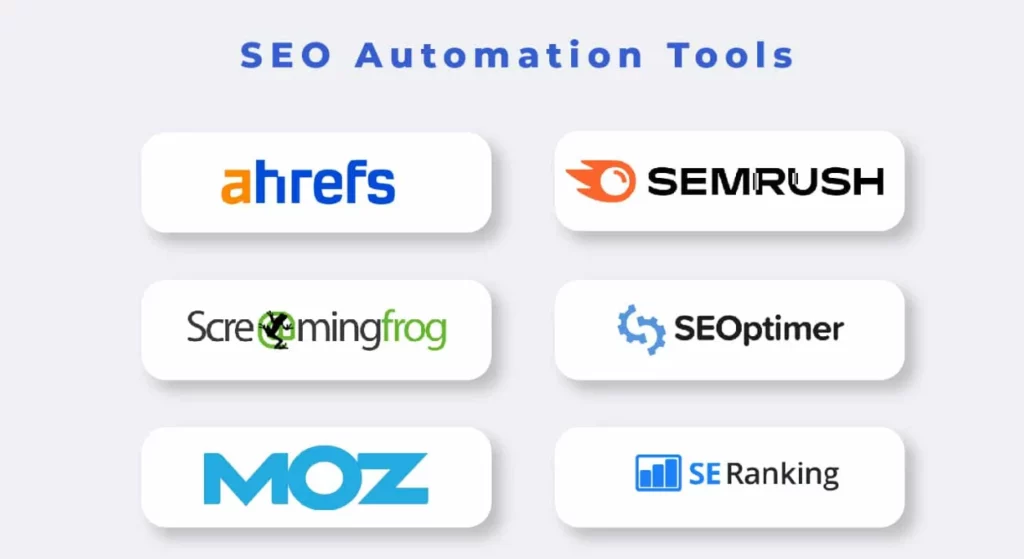
The market is crowded, but here are some categories worth exploring:
- Keyword tracking tools: SEMrush, Ahrefs, and Serpstat.
- Site audit tools: Screaming Frog, Sitebulb, and DeepCrawl.
- Outreach tools: Pitchbox and BuzzStream.
- Reporting dashboards: Google Data Studio and DashThis.
These SEO automation tools are not perfect, but when used well, they can supercharge your efficiency.
How to Decide If SEO Automation Is Right for You?
Not every business needs to dive headfirst into automation. It depends on your size, resources, and goals. If you’re a freelancer handling one or two clients, manual work may be manageable.
But if you’re an agency juggling multiple accounts or an e-commerce brand running thousands of product pages, automation is almost essential.
Think about your pain points. If reporting takes up half your week, or if you’re constantly struggling to keep up with audits, it’s time to let automation handle the heavy lifting.
Added suggestion: For smaller teams, it is better to invest in a reasonable tool to begin with.
How Do You Combine SEO Automation With Human Expertise?
The smartest approach is a hybrid one.
- Automate keyword tracking, but analyze the data yourself.
- Automate outreach follow-ups, but write the first email manually.
- Automate audits, but decide which fixes to prioritise.
Comparison Between Manual and Automated SEO
Feature | Manual SEO | SEO Automation |
| Time Invested | Need daily monitoring and reporting. | Recurring tasks can be easily scheduled for automation. |
| Accuracy | Depends on human input. Errors are common in large datasets. | Highly accurate. Tools follow set rules without skipping steps. |
| Scalability | Difficult to scale across many pages or clients. | Easy to scale for large websites or multiple accounts. |
| Cost | Lower cost, but the workload is higher. | The tools are expensive but reduce the work hours. |
| Plan Strategy and Content | Human ideas can help write creative content and plan effective strategies | Cannot include human emotional depth. |
| Best For | Freelancers, very small teams, or one-site management. | Agencies, e-commerce brands, and teams handling many pages. |
What’s the Future of SEO Automation?
The future looks promising. With AI and machine learning advancing, tools are becoming smarter and more predictive. Soon, they may be able to forecast which keywords will trend or suggest content ideas tailored for specific audiences.
For Indian businesses, the opportunities are massive. Hyper-local SEO automation could allow businesses to optimise for regional languages, dialects, and cultural nuances at scale. Adopting these technologies early will help marketers stay ahead of competitors in a fast-changing digital landscape.
Future trend: Predictive SEO will be impactful in the coming years.
Do You Know?
Many marketers, almost more than 80%, want to boost AI automation by 2025. Businesses that adopt the automation tools early can keep up with the trends and stay ahead of the competition.
Conclusion
So, can SEO be automated? The honest answer: partly.
Automation handles the heavy lifting like tracking, reporting, and auditing, but human expertise is still essential for creativity, empathy, and strategy.
If you embrace both, you’ll stop drowning in spreadsheets and start focusing on growth. The smartest SEO pros don’t choose between manual and automated—they combine both. And that’s how you win in today’s search game.


FAQs on SEO Automation

Yes, SEO can be automated, but only partially; automation is best for tasks like technical audits, keyword rank tracking, backlink analysis, and performance reporting. The creative and strategic aspects, such as planning and relationship building, still require human expertise.
Manual SEO focuses on strategic planning, content creation, and relationship building, while automated SEO handles repetitive, data-heavy tasks like audits, rank tracking, and reports. The hybrid approach combines efficiency with human creativity and adaptability.
Yes, AI can support SEO automation by offering content optimization suggestions, keyword research, and technical audits. However, strategic decisions, storytelling, and emotionally resonant content must come from human input.
The best automated SEO report tool is one that simplifies technical audits, tracks keyword rankings, and delivers detailed performance reporting. Popular choices include SEMrush, Ahrefs, and Screaming Frog, each excelling in different aspects of automation.
Automation can facilitate audit work, provide cleaner data, and offer better insights. However, rank improves only by using human-planned strategies and the use of quality content.
Small businesses can also benefit from automated SEO reports, automated keyword tracking, and audits. It saves time without the need to hire SEO specialists.
Automation can help with content ideas and layout, better keyword ideas, and optimize suggestions, but final content should be human-written for originality.
Automation can lower the manual burden, but strategy, user experience, and storytelling for a brand are better understood by a person than by machines.
You have to look for improvements in the audit report from time to time. It helps understand the errors and make the workflow smooth, leaving more time for strategic tasks. If these gaps can be filled, the automation setup can be the showstopper.