All SEO
  SEO News
  SEO Strategy
  Ask An SEO
  Enterprise SEO
  Google Algorithm Updates
  International SEO
  Link Building
  Local SEO
  Mobile SEO
  On-Page SEO
  Technical SEO
  Vertical SEO
  Wordpress for SEO
  Web Dev for SEO
  SaaS SEO
  E-commerce SEO
  AI-Driven SEO
 Meta Wins Long-Standing Antitrust Case Against the FTC

Meta has won its long-standing antitrust battle against the FTC, ending years of legal scrutiny over its business practices.
Meta has secured a significant legal victory against the Federal Trade Commission (FTC) in a landmark antitrust case that challenged its acquisitions of Instagram and WhatsApp.
A federal judge ruled that Meta did not unlawfully stifle competition by buying these popular apps, effectively ending the FTC’s effort to force their divestment after a legal battle spanning five years.
Lengthy Legal Battle on Meta’s Business Strategy
The FTC initially filed the lawsuit in 2020, alleging that Meta maintained a social networking monopoly by acquiring Instagram and WhatsApp to eliminate competition.
The agency claimed these moves reduced consumer choice and innovation, demanding a breakup of the company.
After an earlier dismissal and a refiled amended complaint, the case finally went to trial, where Meta vigorously defended its acquisitions as legitimate business strategies to acquire new technologies and compete effectively.
Judge Boasberg’s Ruling and Market Realities
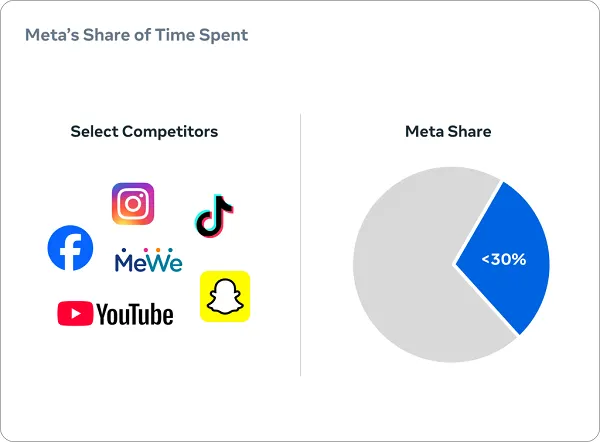
U.S. District Judge James Boasberg specifically found that the FTC had not proven Meta holds a monopoly in the relevant social networking market.
The judge highlighted the presence of fierce competition from platforms like TikTok, YouTube, and others.
He noted that Meta faces real and substantial competitive pressure which contradicts the FTC’s narrower market definition focused on Snapchat and smaller players. This wider view of competition underpinned the ruling in Meta’s favor.
Implications for Meta’s Messaging Integration Plans
While the ruling removes the immediate threat of breaking up Meta’s social media empire, questions remain about the company’s ongoing efforts to integrate messaging across its platforms Instagram, WhatsApp, Messenger, and Threads.
Some speculate that the FTC lawsuit had influenced Meta to pursue integration as a defensive strategy. However, recent moves such as adding a separate inbox for Threads suggest Meta might be deprioritizing full messaging consolidation now that the legal risk is mitigated.
Broader Impact on Regulatory Landscape
Meta’s win marks a key moment amid growing regulatory scrutiny of Big Tech. While the decision boosts Meta’s strategic freedom, it also highlights the evolving nature of social media competition with emergent players reshaping the landscape rapidly.
The FTC’s approach and definitions of market competition may evolve as digital ecosystems continue to diversify.
Summary
- Meta successfully defended against an FTC antitrust lawsuit aiming to break up its Instagram and WhatsApp acquisitions.
- The federal judge ruled the FTC failed to prove Meta holds a monopoly due to robust competition from TikTok, YouTube, and others.
- Meta argued and demonstrated that acquiring companies to incorporate new technologies is a legitimate business strategy.
- The ruling alleviates the immediate risk of divestment but leaves open questions about Meta’s messaging platform integration.
- This case highlights shifting regulatory challenges faced by Big Tech amid an increasingly competitive social media market.
Final Thought
Meta can now move forward with its business plans, but ongoing scrutiny and evolving market dynamics will continue to shape the company’s strategic decisions. Monitoring how regulatory agencies adapt to the fast-changing tech ecosystem remains crucial for industry stakeholders.