All SEO
  SEO News
  SEO Strategy
  Ask An SEO
  Enterprise SEO
  Google Algorithm Updates
  International SEO
  Link Building
  Local SEO
  Mobile SEO
  On-Page SEO
  Technical SEO
  Vertical SEO
  Wordpress for SEO
  Web Dev for SEO
  SaaS SEO
  E-commerce SEO
  AI-Driven SEO
 Google Introduces AI Content Detection Tools to Gemini


Google introduces AI content detection tools to Gemini with new features that can detect AI-generated content and increase the trust of users.
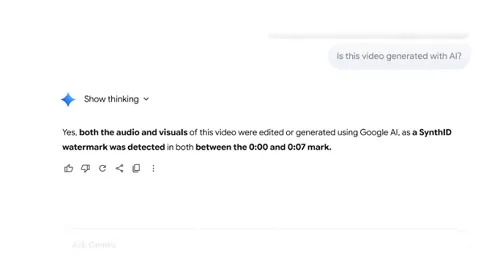
Google has integrated a new option of AI verification of content to Gemini offering users the ability to verify whether short videos were made or edited by Google’s AI tools. This is a tiny but crucial step towards more open AI transparency at a time where people are becoming more cautious of what they can see on the internet.
Why Google Is Adding AI Detection To Gemini
The new update responds to a real user behavior shift: people are less likely to share or share content as they fear it could be AI-generated and appear silly. The proliferation of super-realistic AI visuals has damaged confidence, particularly in videos that are viral and manipulative media, which could reduce the organic sharing.
Google’s solution is to let users ask Gemini directly regarding a video’s source. It’s not about snagging “all” AI content online and more about providing regular users an easy authentic, low-friction check for content that appears suspect as well as “too good to be true.”
How The New Gemini AI Detection Feature Works
Google has launched an updated feature within the Gemini application, which lets you upload a video, and then ask Gemini to verify whether the video was made with Google AI. Google explains in its announcement:
“Simply upload a video and ask something like, ‘Was this generated using Google AI?’ Gemini will scan for the imperceptible SynthID watermark across both the audio and visual tracks and use its own reasoning to return a response that gives you context and specifies which segments contain elements generated using Google AI.”
From a user-friendliness perspective from a usability perspective, it provides users with the ability to conduct a conversational test in one step instead of forcing them rely on third-party tools for forensics.
What SynthID Actually Does
SynthID is Google’s watermarking invisible system that embeds machine-readable marks into AI-generated media generated by Google’s tools. The system currently works with:
- Images
- Audio
- Text
- Video
produced by the Google’s AI stack (e.g., Gemini, Imagen and other associated products). The watermark was designed to be:
- It is invisible to us (it isn’t visible to alter any file).
- Resistant to common changes like cropping, compression, or basic edits within the limits.
Google has stated that it is working on making SynthID more widely used and has joined forces with Nvidia to integrate SynthID watermarking into other AI applications and workflows but its use is mainly restricted to Google’s ecosystem for currently.
Other large AI providers, such as Midjourney, OpenAI, and Meta are supporting alternative frameworks, such as C2PA the newest open standard for the provenance of content as well as authenticity metadata.
C2PA and SynthID are both geared towards identifying AI involvement, but they are derived from different directions in terms of technology and governance models. Google’s current rollout allows files that are up to 100 MB in size, and 90 seconds of duration inside Gemini.
Bottom Line
With AI-generated content now being a regular occurrence in feeds, users are naturally concerned about the content they are able to amplify. It’s not a perfect remedy for synthetic media or inaccurate information, but it’s a step in the right direction.