All SEO
  SEO News
  SEO Strategy
  Ask An SEO
  Enterprise SEO
  Google Algorithm Updates
  International SEO
  Link Building
  Local SEO
  Mobile SEO
  On-Page SEO
  Technical SEO
  Vertical SEO
  Wordpress for SEO
  Web Dev for SEO
  SaaS SEO
  E-commerce SEO
  AI-Driven SEO
 New Insights Emerge About Meta’s ‘Hypernova’ Smart Glasses

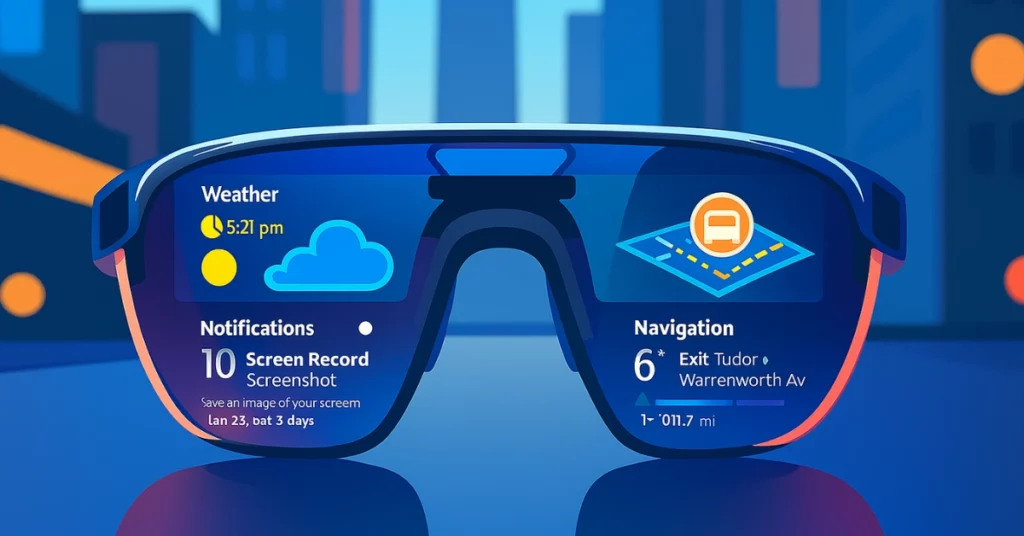
New insights reveal that Meta’s ‘Hypernova’ smart glasses feature remarkable AI and a new design that aims to surpass previous-generation devices.
As Meta approaches their 2025 Connect Conference in a matter of days, speculation mounts around the latest in the tech giant’s upcoming projects involving AI, AR glasses, VR, and the metaverse as a whole.
Meta’s Vision for AI Glasses and the Metaverse
Meta’s official Connect website highlights CEO Mark Zuckerberg’s keynote focus:
“Join Mark Zuckerberg as he shares the latest on AI glasses and lays out Meta’s vision for artificial intelligence and the metaverse.”
While still a work in progress, the metaverse virtual space reimagining interaction through VR-based avatar embodiment is a fundamental part of Meta’s strategy.
Also previewed last week, Meta teased, though did not commit to production timelines for new prototypes of VR headsets, as is its way, oddly reiterating that the immersive tech space is alive and thriving.
Take a peek into what the future of headsets might hold. pic.twitter.com/TYHg37jGUL
— Meta (@Meta) August 28, 2025
Leaked Details on the ‘Hypernova’ AI Glasses
Recently, details were reportedly leaked suggesting that Meta’s next iteration of Hypernova AI glasses is a step up from the Ray-Ban collaboration, which is set to begin production this year. The total number of units is expected to reach around 200,000 over the next two years.
While Hypernova will lead with AI functionality, Meta is planning to integrate:
- An AR display with limited but visible experiences, mounted on the right lens.
- An innovation plan on how to release early AR hardware ahead of rival companies, such as Apple, which is developing Vision Pro updates.
Pricing Strategy
With a retail Price of around $800 for Hypernova, Meta offers an affordable option compared to Apple’s Vision Pro, which costs $3,500 (even with a trade-in).
One of Meta’s primary goals is cost efficiency, aimed at facilitating mass market adoption of its wearables, as opposed to Apple’s high-end pricing strategy.
Timeline and Competitive Landscape
More ambitious, fully immersive AR glasses are not going to be ready for consumers until 2027 at the earliest, according to Meta. However, its existing Aria AR model is scheduled for a release to developers sometime this year.
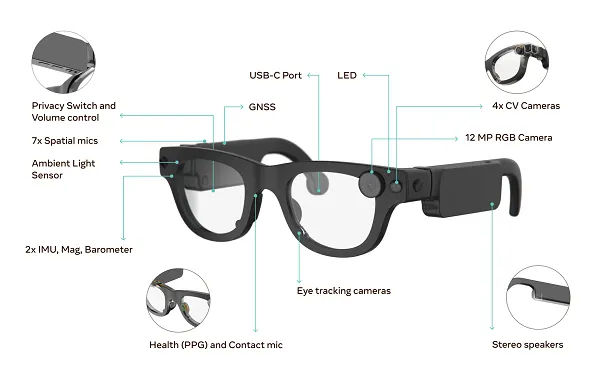
This timeline places Meta in a competitive race with:
- Apple’s ongoing Vision Pro development
- Snap’s “three to five years” launch for its AR glasses has been pushed to 2026
Meta is aware that it needs to accelerate its efforts and stake a claim in this territory, given the early stage of development and the upcoming launches by competitors.
Although Meta has been developing AI systems for years, the widespread adoption of ChatGPT and the emergence of OpenAI prompted the company to accelerate its development.
For Meta, the risk of losing out becomes even stronger when considering OpenAI’s first-mover advantage as AR wearables approach the mainstream.
Looking Ahead
Meta itself has yet to reveal more about these, as everyone is waiting in particular for the Hypernova glasses to see whether they’ll be further detailed and what new advances in AI and metaverse technology will be revealed.
Bottom Line
Zuckerberg views this strategy as a means to balance performance, cost, and market aperture, thereby creating a favourable opportunity to compete with both Apple and Snap.