How to Create an SEO Strategy: Expert Tips, Complete Guide

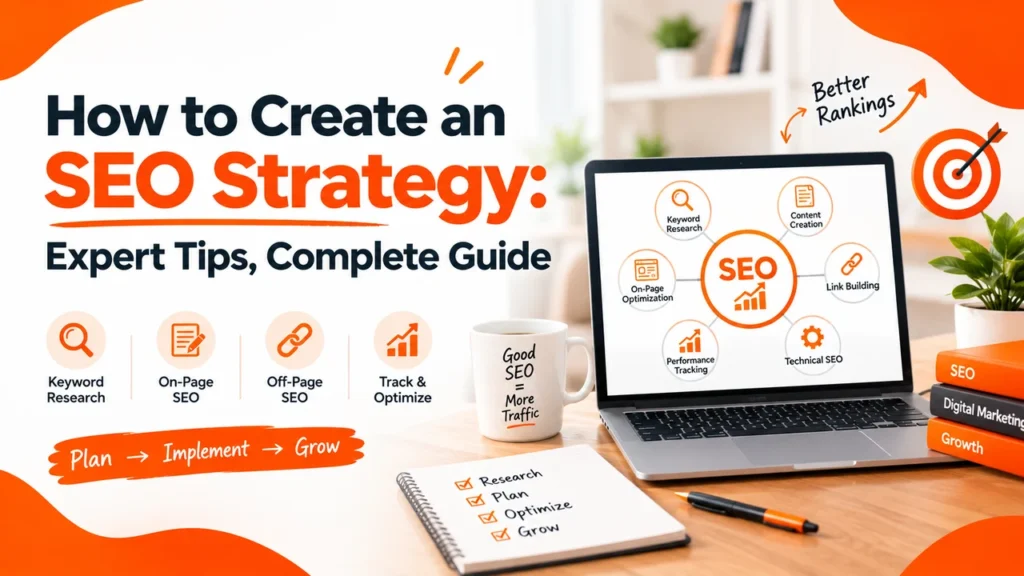
An SEO Strategy is a plan that links all the SEO activities with your overall business plans. But in 2027, it is no longer about chasing only the ranks. It is about building a system that connects search visibility, user intent, brand trust, and measurable business growth.
Understand your audience, as it helps produce quality content, and setup a site that Google trusts. A lot depends on the technical foundation of a website, help decide and converts fast.
With a good SEO Strategy, you do not have to guess anymore. Search engines have matured. Algorithms now focus on relevant content, real expertise, enhanced user experiences, and brand authority over any shortcut. That’s what you need to establish an optimised website that is credible and easy to reach.
By 2027, search interactions will be AI‑influenced by 55 %, rather than relying on traditional methods. It highlights the need for SEO strategies that optimize for AI visibility alongside traditional ranking signals.
A strong strategy will coordinate your keywords, content, technical solutions, and link-building activities in a single integrated system that will attract traffic and income. Without a strategy, even strong content or marketing campaigns struggle to perform consistently.
When a B2B company shifts from posting weekly to publishing one piece of authority and quality content, organic leads are sure to rise. It’s the intent, the consistency and the depth of one’s posted content, when you don’t have to post multiple in a week.
Key Highlights of SEO-Strategy in 2027
- Build an SEO strategy as it focuses on the metrics that rewards in effective business growth
- Set SMART SEO goals as it generates revenue, quality leads, and offer values customers
- Learn how to research relevant keywords by understanding the intent. It becomes easy with AI-assisted tools for effective SERP analysis and understand what your target audience looks for
- Check SEO website for faulty UX and performance issues. It often results in irrelevant content
- Make sure every content should be as per the E-E-A-T guidelines
- Understand link-building, digital PR, and brand strategies
- Improve technical SEO by focusing on mobile-first indexing and an accessible website
- Align SEO and marketing across the possible sources, such as content, social, PR, and paid media
- Track the vital metrics using a real-time method and useful insights
So, focus on strategies that are perfect for businesses, and marketers. It should reward a business with sustainable growth, and helps achieve new levels to be consistent and prominent in the competitive market.
Did You Know?
More than 68% of online experiences change due to search engine. That’s how the SEO is considered as the high ROI source. Websites that meet the updated SEO standards have lower bounce rates.
Content which adheres to updated SEO guidelines, better than the swiped out or untouched pages.
So, brands should adhere by E-E-A-T guidelines, to remain consistent and go by the algorithm updates.
How Do I Align SEO With Business Goals?
The biggest mistake most brands make? Doing SEO in isolation. You can’t optimize your website just for rankings; you have to tie it to business results.
Start by asking:
- What do I actually want to achieve: leads, revenue, or awareness?
- Which services or products should rank first?
- What’s the ROI I expect from organic traffic?
Once you define that, your SEO roadmap gets clear and focused. The SEO Strategy now aligns with your marketing goals rather than focusing solely on attention.
Also, set KPIs, organic traffic growth, conversions, and ranking improvements, and track them monthly. That’s how you know what’s working and what’s not.
Track the site’s progress on time and don’t let your emotions influence your judgment to better assess progress and know what needs fixing.
How To Research Keywords And Searcher Intent Properly
Keyword research is the foundation of SEO. But great research goes beyond finding popular words. It’s about understanding what your audience is thinking when they search.
Begin by identifying what problems your ideal customer wants to solve. Use keyword tools and search suggestions to uncover phrases people are typing in. Group them by intent:
- Informational: Questions and how-tos.
- Commercial: Research or comparison-based searches.
- Transactional: Purchase-ready terms.
Look at the current top-ranking pages for your chosen keywords. What do they offer? What format performs best: guides, videos, or landing pages? That’s how you understand search intent.
A well-planned keyword map ensures every piece of content targets a real need, not just a random phrase.
Which Site Structure And User Experience Help SEO The Most

Your site’s architecture decides how search engines crawl, and users explore your content. A poor structure can bury great pages deep inside, where neither users nor Google can find them.
Keep your structure flat and logical. Important pages should be reachable within three clicks from your homepage. Group related topics together and interlink them. This makes your website easier to navigate and strengthens its topical relevance. So, it can be expected that UX will become the ultimate SEO in 2027. use it effectively, without having to loss on potential audience and rankings.
Use clear, descriptive URLs and avoid unnecessary parameters. Optimize your menus and breadcrumbs so users always know where they are.
A fast-loading, mobile-friendly website is non-negotiable. Check your Core Web Vitals and make improvements to speed and responsiveness.
A strong structure gives your SEO Strategy the technical stability it needs to grow efficiently.
Reports indicate how the majority of online searches will be voice‑dominated by the coming year. In addition to this, visual search will be continuing to rise, optimizing it for conversational queries. There is also use of search by image or video.
What Content Should I Create, And How Do I Optimise It For Both Users And Search
Content is where your SEO vision becomes visible. It’s what your audience reads, shares, and remembers.
Start by creating content that solves real problems. Every blog post, guide, or landing page should provide clear value. Use the pillar-and-cluster model: one main pillar article supported by multiple in-depth cluster posts. This helps you build authority on a topic.
Focus on Experience, Expertise, Authoritativeness, and Trustworthiness (E-E-A-T). Include data, examples, and real insights. Add author bios and updated stats to make your content credible.
Optimize naturally, include your keyword in the title, first paragraph, subheadings, and a few body sentences. Use semantic keywords and make your writing flow naturally.
Regularly refresh your old content with updated information. This signals Google that your content remains relevant and useful. Content decay can have real impacts, so updating it can be the fastest way to achieve a strong position amidst this digital competition.
When you write for humans first and optimize smartly, your SEO Strategy compounds result over time.
SEO helps businesses boost their credibility. Genuine, relevant content helps users and the brand rank better in search results than before.
A senior strategist says that search engines are aware of what brands demand. SEO success now depends on how consistently a business demonstrates expertise across content, UX, and external signals.
How To Build Authority Through Backlinks And Off-Page SEO
Backlinks are votes of confidence from other websites. They tell Google that your content is trustworthy and valuable.
But not all links are equal. Focus on quality over quantity. A single link from a reputable site in your industry is worth more than ten from irrelevant blogs.
Create assets that deserve links: research reports, original studies, infographics, or powerful case studies. Share these through outreach and collaborations.
Guest posting on authority websites, contributing insights, and forming partnerships are great ways to earn links ethically.
Regularly check your backlink profile. Remove spammy or low-quality links and maintain a healthy ratio of dofollow and nofollow backlinks.
When executed right, off-page efforts strengthen your brand visibility and reinforce every other element of your SEO Strategy.
When Should I Fix Technical SEO Issues
Technical SEO is often ignored until something breaks, but it forms the backbone of your website’s visibility.
Start with a site audit to find crawl errors, duplicate content, slow page speed and mobile issues. Fixing these issues makes your site cleaner and easier for Google to index.
Ensure your XML sitemap and robots.txt are configured correctly. Use canonical tags to avoid duplicate content problems.
Improve your site’s loading time by compressing images, using browser caching, and removing unnecessary scripts.
Also, make sure your website uses HTTPS and is mobile responsive.
Even the best content can’t perform well without strong technical SEO. When your foundation is strong, your SEO Strategy performs at its full potential.
How To Integrate SEO With Other Marketing Channels?
SEO works best when it’s not a standalone effort. It should blend with your other marketing activities.
Use keyword insights to shape your content marketing plan. Align blog topics with customer questions and trending search themes. This creates content that both ranks and converts.
Collaborate with your social media and PR teams. Each mention, share, and press feature amplifies your reach and brings new backlinks.
Paid ads can also inform SEO. The keywords that convert well in ads are usually worth targeting organically for long-term growth.
Integrating SEO with your broader marketing ensures a consistent brand message across all channels. That’s the essence of a holistic search engine optimization strategy.
When SEO and marketing collaborate, it ensures consistent messaging with proper visibility across channels.
SEO Mistakes to Avoid in 2027
• Chase keywords without an intent
• Publish content only focusing on AI
• Ignore user experience and page speed
• Skipp content updates
• Treat SEO as a one-time job
What Tools And Dashboards Should I Use For Better SEO Decisions?
The right tools transform data into strategy. Without measurement, you’re just guessing. Knowledge of SEO comes from practice.
Use analytics platforms like Google Analytics and Search Console to track your organic traffic, impressions, and click-through rates. These reveal what’s working and what’s not.
Keyword tools help identify opportunities and monitor ranking changes. Site crawlers detect technical issues, and backlink tools show how your authority is growing.
Set up a dashboard that displays your KPIs: traffic, conversions, rankings, and site health, all in one place. Review it regularly and adjust your SEO Strategy based on real numbers, not assumptions.
When you understand your data deeply, you can make smarter, faster decisions.
So, in 2027, SEO tools are increasingly AI-assisted. Platforms now help with intent clustering, content decay detection, predictive keyword trends, and SERP volatility tracking. Used well, these tools support better decisions but should never replace human judgment.
When And How Should You Adapt Your SEO Strategy?
SEO is a long-term game, but it’s never static. Google updates, competitor tactics, and consumer behavior all change over time.
Review your analytics quarterly. If certain pages bring high traffic but low conversions, improve their CTAs or structure. If rankings drop, revisit your content and add new insights.
Keep testing new formats such as videos, visuals, and interactive content. Experimentation keeps your site fresh and engaging.
Stay informed about algorithm updates and industry trends. Agility is key; the faster you adapt, the stronger your rankings remain.
Your SEO Strategy should be a living document, constantly evolving as the digital world changes.
Comparison Table on Old and New SEO
| SEO Old | SEO New |
| Focus is on Keyword density | Focus shifts to search intent and context |
| Use of volume-driven keywords | Problem-driven topics |
| Link quantity | Authority and relevance |
| Static content | Use of updated content |
| Rankings as success | Revenue and engagement metrics |
How Can You Become An SEO Expert Yourself?
To truly master SEO, you must go beyond theory. Practice, test, and learn continuously.
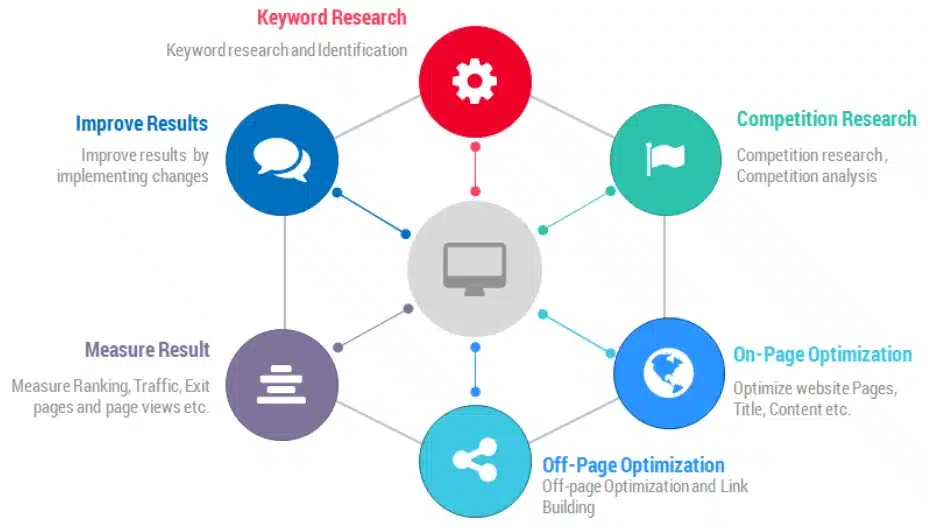
Start by understanding the core areas like keyword research, technical SEO, on-page optimisation, content creation, and link building. Then go deeper into analytics and conversion optimisation.
Create your own projects. Build a blog or a niche website. Apply what you learn, track results, and refine your approach. Nothing teaches you faster than hands-on experience.
Engage with SEO communities, read case studies, and learn from successful marketers. Over time, your instincts sharpen, and your decision-making improves. The best SEOs will think like an audience, not an algorithm.
Eventually, you’ll know not just how to do SEO, but how to build an entire search engine optimisation program that drives measurable business results.
Why SEO Is Still Important?
Studies show that high‑quality SEO campaigns in 2027 can deliver an average ROI of 748 %. Small businesses can often achieve significant returns, making search optimization a cost‑effective long‑term strategy.
Conclusion: SEO Plan for 2027
SEO is a long-term investment. Done right, it compounds; every blog post, link, and technical fix builds momentum.
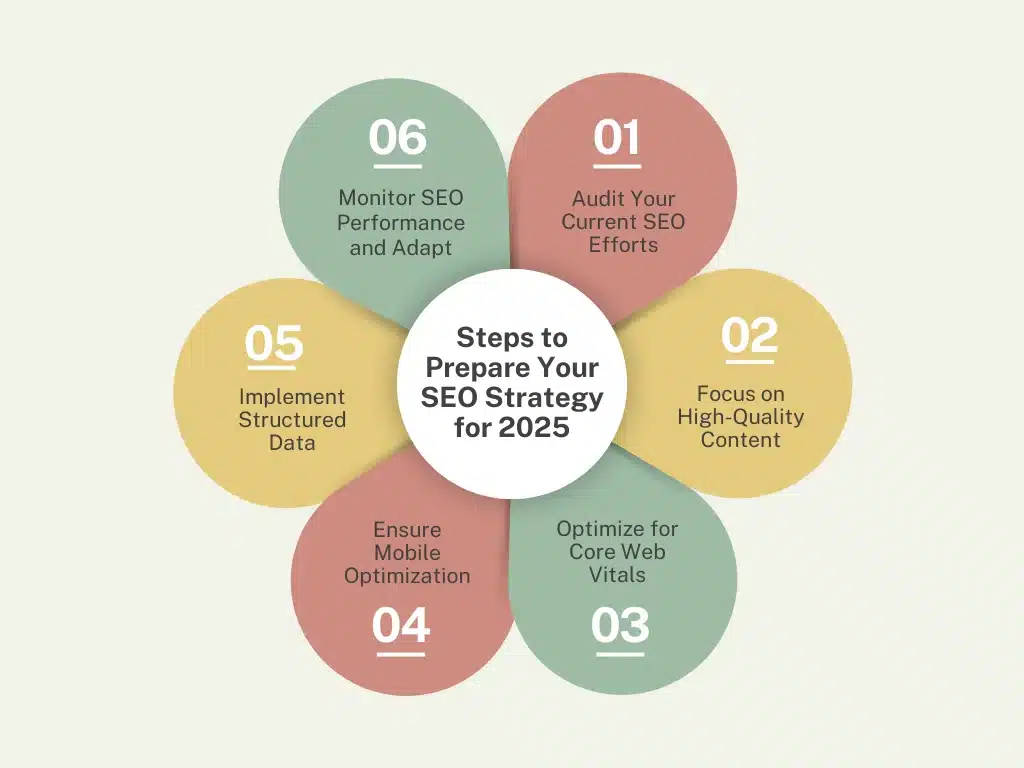
Let’s wrap this up with a quick action plan to keep your strategy focused and effective.
Step-by-step summary:
- Start by aligning business goals and KPIs
- Do deep keyword and intent research
- Plan a clean, logical site structure
- Create and optimize valuable content
- Build quality backlinks and authority
- Fix technical SEO issues early
- Align SEO with all marketing channels
- Use tools and dashboards for insights
- Adapt your strategy continuously
- Keep learning and practicing SEO skills
Checklist before launch:
- Goals and metrics defined
- Keyword clusters mapped
- Site structure finalized
- Content calendar built
- Backlink plans ready
- Technical audit done
- Reporting dashboard lives
- Continuous updates scheduled
SEO rewards consistency. Build trust, create value, and focus on your users, and Google will follow.
And remember, great SEO isn’t about chasing algorithms; it’s about mastering human intent. That’s what makes your brand stand out in the ever-evolving world of digital marketing.


FAQs About SEO Strategy

AI has changed how search engines consider content, the search intent, and content quality. An actionable strategy now focuses less on keywords and more on their context and usefulness. AI-led search rewards help craft quality content that relates to real instances, gives a clear structure, helping in generic optimization.
It needs a focused search engine optimization plan. Small brands can win by targeting long keywords, niche topics, and local search intent. A SEO website with experience-driven content can outperform others.
Review and update once or twice in a month. Check the blog posts, the key points, and internal links. It helps ensure that the content is updated as per recent needs. It helps maintain ranks, improve user engagement, and signal ongoing relevance to search engines.
SEO and marketing work better together, but SEO remains a cost-effective way to deliver benefits for the brand. While paid ads stop when budgets pause, a strong search engine optimization program continues to deliver traffic, leads, and brand visibility over time.
Don’t rely only on automation or AI content. Human review is crucial as it elevates the content quality. It is also because search engines look for focused and original content that users find easy to relate to, which adds to the brand’s credibility. SEO works best when technology supports strategy, not when it replaces critical thinking.