What are Rich Snippets and How They Improve Your Search Results


‘What are rich snippets’ is a fundamental question that many wonder, especially those who want to improve the visibility of their website on the search results page.
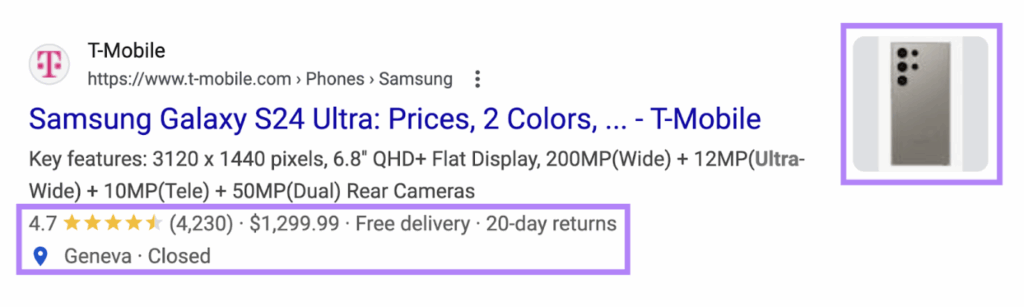
You may have searched on Google and came across results with recipe details, star ratings or product prices. It is likely that they are displayed under the page link directly. This means you have already encountered what are rich snippets in action. Rich snippets show enhanced search results that provide extra information to users before clicking on it. The snippets display a display structured detail instead of a plain blue link and short description. It helps users to decide faster.
Research shows that about 36.6% of all searches display at least one rich result with structured data pulled into a rich snippet. That means more than a third of searches now include these eye-catching results, showing how important they’ve become for both visibility and clicks.
In this guide, we’ll explore rich snippets SEO, explain the difference between rich results and other SERP features, go through the types of rich snippets, and share how you can make your own content appear this way.
What Are Rich Snippets?
So, what are rich snippets? Rich snippets, at their core, refer to the standard Google search listings. It includes additional details derived from structured data. These organized data tags represent special markup embedded in a webpage that helps search engines. It helps to understand the content more effectively.
It does not show the page title and description. Instead, Google can display star ratings for reviews, price ranges for products or cooking times for recipes. That is why when people ask what is rich snippets, the answer is simple. They are the enhanced versions of search listings. Such results stand out to attract more attention and traffic. For instance- a movie page may display the release dates or cast. Similarly, a product page may show its details or cost.
Think of it this way: a basic listing provides just the essentials, while an enhanced snippet adds valuable context. This makes the rich result more appealing and credible, which is why marketers prioritize structured markup so heavily.
The Role of Search Intent in Triggering Rich Snippets
The majority of people just consider structured data to be the only relevancy to their search query and thus ignore one important factor: the search intent. Not even the most perfect schema markup would allow the rich snippets to appear if the content does not fit what the users are actually searching for.
Google will only promote the results when the content clearly, structurally, and trustworthily answers a query. For instance, if a user searches for a recipe, Google gives preference to the recipes that are explained in a very clear manner with the ingredients and time needed.
If your web page is satisfying the “format expectation” of a search query, your chances of getting rich snippets become significantly higher. To sum up, the technical markup is what helps Google understand your page, but the intent part is what convinces Google that your page deserves enhancement.
E-A-T and Content Quality: The Factors Behind Rich Snippets
Structured data is the visible part of the puzzle, yet E-A-T – an acronym for Expertise, Authoritativeness, and Trustworthiness, is the major factor influencing Google’s decision against the rich snippet.
Google prefers to display content from reliable sources, especially for discussion topics such as finance, health, law, or product reviews. If your site has poor content, the authorship is not clearly stated, or there are no references, then Google may decide not to show your rich snippets.
Building up your brand’s reputation, creating author bios, quoting reputable sources, and updating your content regularly will all help you to become more eligible. In a nutshell, Google is keen to promote websites that it can rely on, and one way to do that is by granting them rich snippets.
What is the Difference Between Rich Results vs Rich Snippets vs SERP Features?
When it comes to rich results, rich snippets or SERP features, it often creates confusion. Some even use these terms interchangeably. But they are not identical. There is a significant difference between rich results vs rich snippets vs SERP features. Let us break it down below-
Rich Snippets
They are enriched organic listings created using structured data. Example- a recipe with cooking time and calorie info.
Rich Results
A broader category that includes-
- Rich snippets
- Carousels
- Images
- Interactive results
SERP Features
They are distinct elements present on Google search engine result page, like-
- Featured snippets
- People Also Ask
- Knowledge panels
- Video packs
Here’s a quick table to clarify the differences:
| Term | Description | Example |
| Rich Snippets | Organic rich result enhanced with structured data | Product listing with star ratings and price |
| Rich Results | Enriched results beyond basic links (includes snippets, images, carousels) | Recipe carousel with multiple entries |
| SERP Features | Any special rich result in the search engine results page | Featured snippet box at the top, Knowledge Panel, PAA section |
This distinction matters because while all rich snippets are rich results, not all rich results are rich snippets.
How Rich Snippets Help with SEO
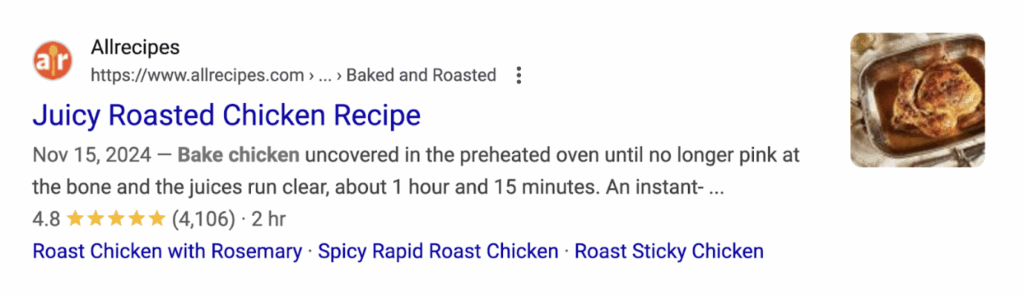
Rich snippets SEO does not directly change search rankings. It is because their value lies in attracting more clicks and improving user interaction metrics. Enhanced results offer users additional context to make listings stand out among competitors. Rich snippets examples include a product listing with star reviews and prices is easier to trust and more tempting to click.
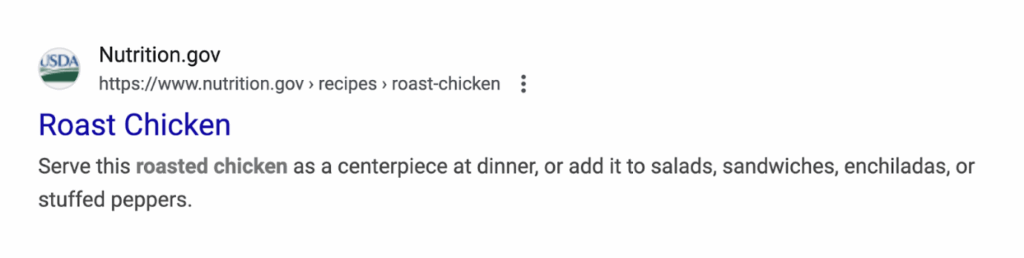
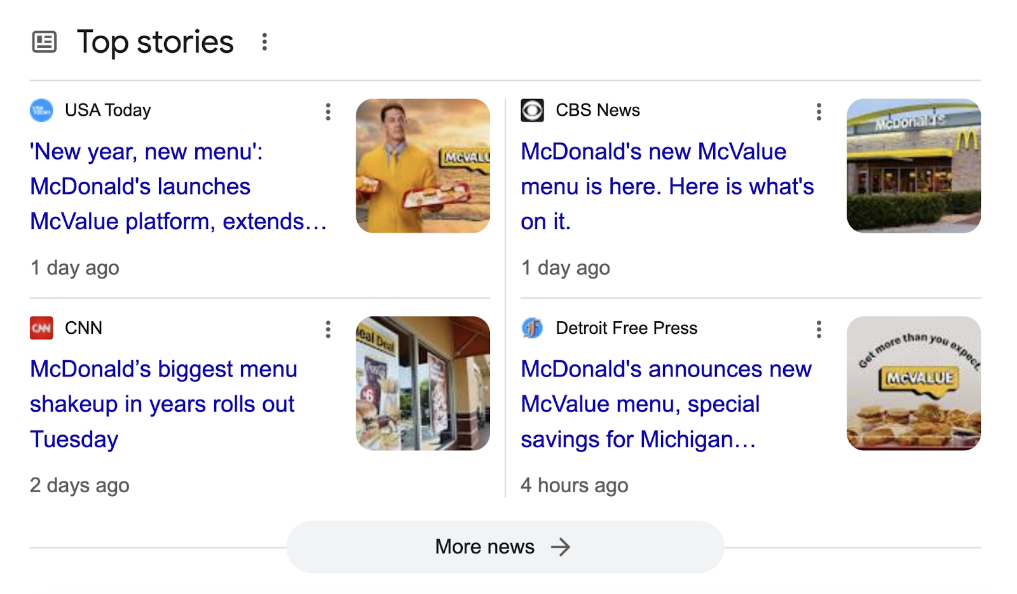
This is what a typical search listing looks like-
A rich snippets examples would look like this-
Here are some clear SEO advantages of rich snippets-
- Higher Click-Through Rates: Rich snippets grab attention with visuals or added information. It leads to more clicks compared to plain results.
- Lower Bounce Rates: Users arriving through rich snippets tend to find relevant content quickly and reduces bounce rates.
- Improved User Experience: It increases overall satisfaction by displaying clear and useful information that matches user search intent.
- More Qualified Traffic: Rich snippets can attract users who intend to convert because they see the important details at a glance.
Did you know that branded queries that trigger video rich snippets get more clicks than general queries? This confirms that rich snippets cater to users looking for trusted or specific content types, further demonstrating their SEO utility.
How to Get Rich Snippets
Achieving rich snippets SEO requires carefully planning structured data and optimization. The procedure involves selecting the right snippet types. You must also add a structured markup while validating the changes. Rich snippets are actually quite powerful as it helps to improve the appeal of your search listing. But you can only achieve it if you markup your website with structured data that aligns with the guidelines of Google.
Ensure the implementation is precise enough to help search engines recognize and display enhanced information. Let us explore the vital stages below-
1. Choose the Right Rich Snippet Type for Your Content
It is important to identify which types of rich snippets aligns with the content before you add any code. Different snippet types exist for different information categories. Selecting the right type ensures your site matches searcher intent and complies with the markup standards of Google.
This step sets the foundation for success. For example- product pages benefit most from product markup snippets. But blogs might leverage articles or review snippets. The snippet type determines the fields and data you need to provide in the structured markup.
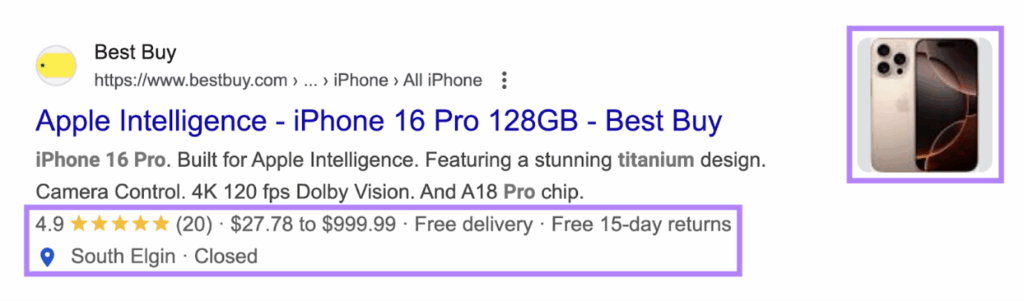
Product Markup Snippet
This snippet highlights product details such as-
- Price
- Availability
- User ratings
It is essential for e-commerce sites wanting to showcase key information clearly in search results. It helps potential buyers by making product offerings more transparent.
Review Snippet
Reviews display star ratings and sometimes reviewer names or counts. It’s widely used for products, services, and recipes. Review snippets boost user trust by showing aggregated or individual opinions directly in the search listing.
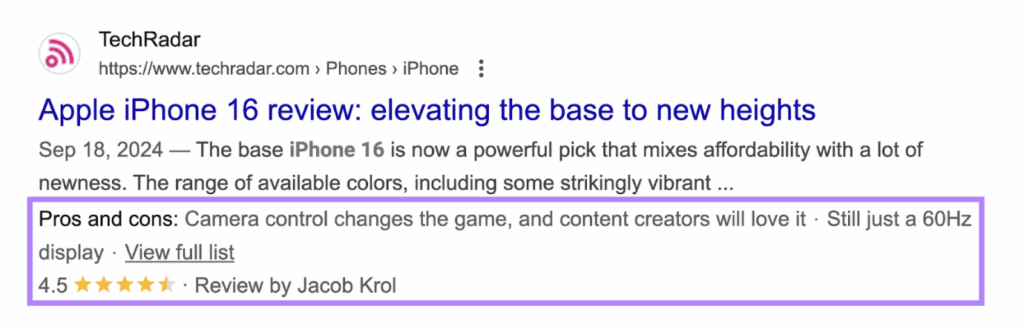
Recipe Snippet
Recipe snippets reveal cooking time, ingredients, user ratings, and food images. Cooking blogs and websites rely on this to attract food enthusiasts by displaying summarized, actionable recipe info directly in results.
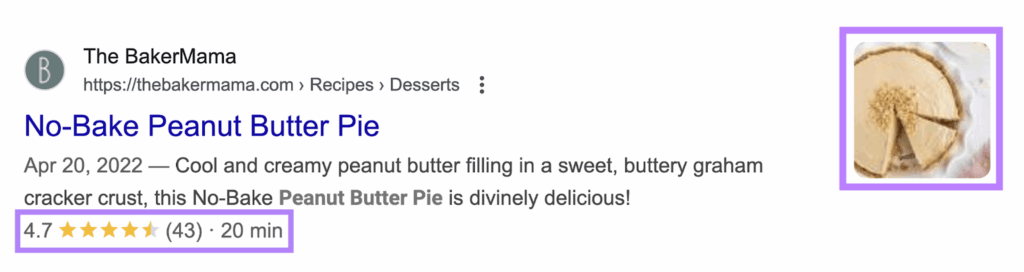
Organization Snippet
This snippet presents organizational details like logo, contact info, and social profiles. It’s widely used by businesses who want to impress users with branded search listings that provide quick, relevant info.
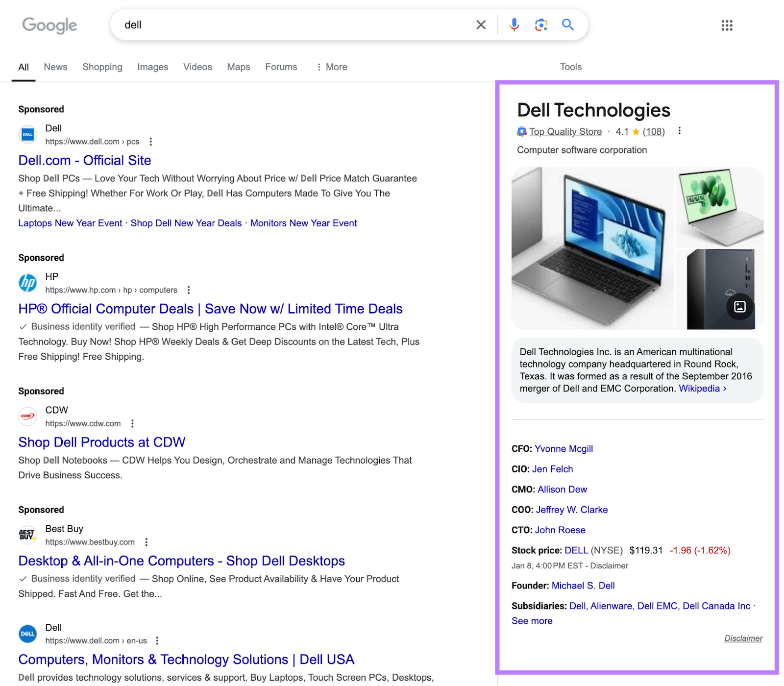
Video Snippet
Video snippets show a thumbnail, video length, and timestamp information. This helps users evaluate video relevance visually before clicking, improving traffic to video content pages.
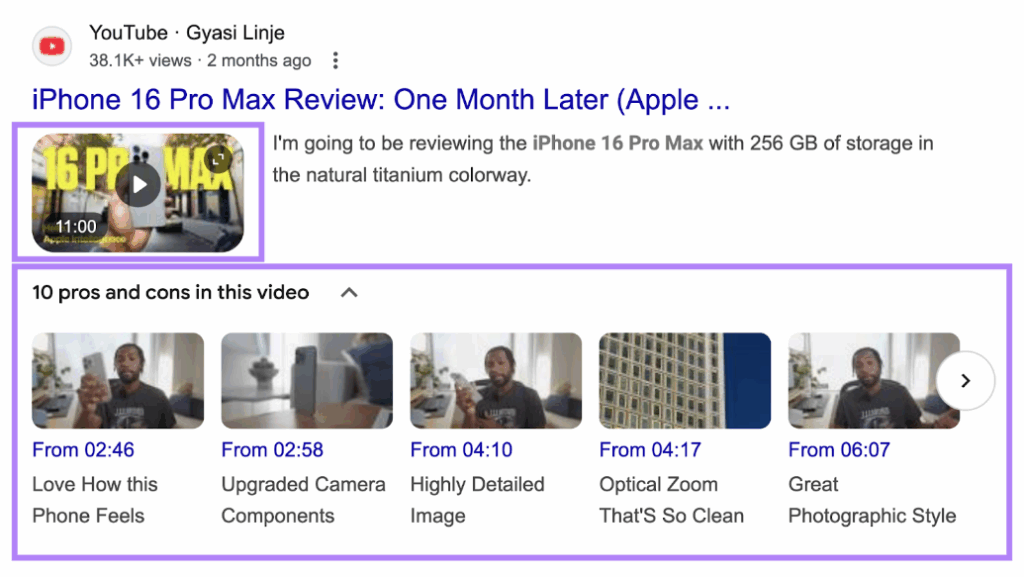
Article Snippet
This snippet is used for news articles and blog posts, showing the title, publisher, and sometimes a thumbnail. It helps those producing regularly updated content attract more readers through visually appealing search listings.
2. Create and Add Structured Data Markup to Your Pages
Once you know your snippet type, the next step is adding structured data markup to your webpage’s HTML. Schema.org vocabulary is the industry standard guiding this process. It lets you tag your content to explicitly tell search engines what each part means. Rich snippets examples include marking a price or a rating or an event date.
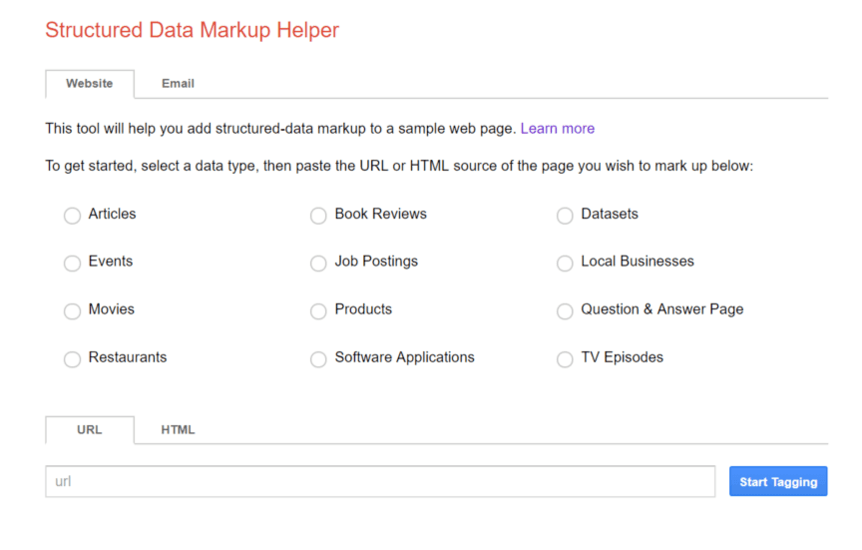
You can implement this markup using the Structured Data Markup Helper by Google. It is best known for its simplicity as well as versatility. Correct implementation is important to ensure rich snippets show up properly.
3. Validate Your Structured Data
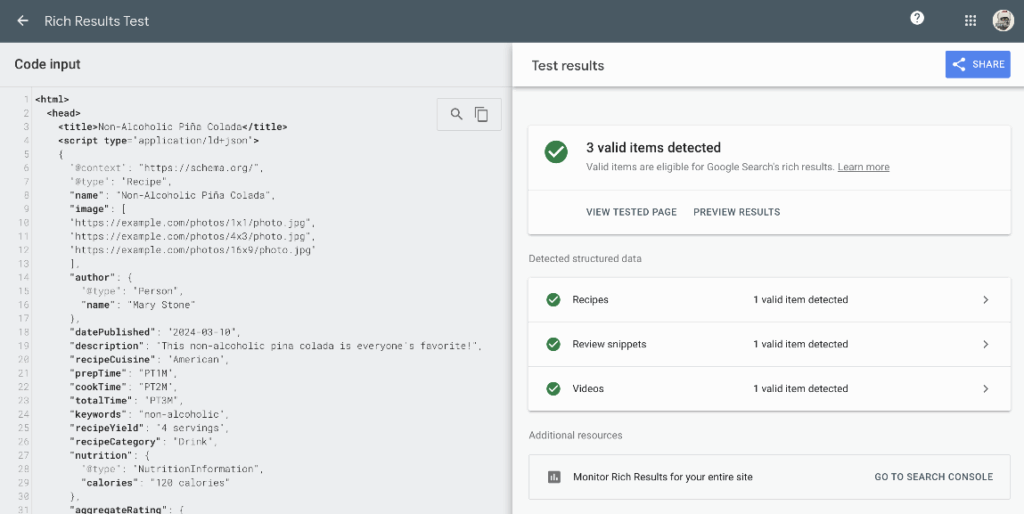
After adding structured data, check that it follows guidelines and is error-free. Google’s rich results testing tools help by simulating how your page will appear in search results with enhanced snippets. Fixing issues early improves your chances of earning rich snippets.
Why Are Rich Snippets Important?
Rich snippets are essential because they improve search result listings with more useful, eye-catching content. This additional context shortens the decision-making process by showing users key details right on the results page. When users can assess content quality, relevance, and freshness quickly, they are more likely to click.
Increased CTR from rich snippets can indirectly improve your site’s rankings over time through enhanced engagement signals. Plus, they help differentiate your brand from competitors in crowded search result pages by making your listing stand out.
Rich Snippets Supporting Voice Search Queries
Smart assistants and smart speakers are responsible for а gradual but steady increase in voice search, and rich snippets have surprisingly and yet significantly helped in overcoming that.
Google usually takes structured data for answering spoken queries in a more accurate manner. If your site is giving clear, structured, and short information it is going to be easier for voice assistants to extract answers.
Thus, rich snippets have now become an integral part of the modern search behavior along with a visual upgrade. Making voice search optimization comes hand in hand with strong structured data practices.
Common Myths about Rich Snippets
The majority of those who own a website believe that rich snippets are the ones that lead to ranking improvements, which is indeed a great misunderstanding. Directly or indirectly, rich snippets do not increase the rankings, they merely and beautifully display your listing.
Another misconception is that a belief exists that all the structured data types will be visible. Google just authorised certain groups and might overlook the data that doesn’t meet the standard.
Some people also think that putting keywords in the schema is aiding the SEO, but actually, keywords do not affect the performance of the structured data. Getting rid of these myths sets one up with the right expectations.
Why Aren’t Your Rich Snippets Showing Up?
Adding structured data to your website is not always straightforward. Sometimes, small mistakes or unexpected issues can prevent your rich snippets from appearing, despite all your effort. Here are some of the most common reasons this might happen:
Google doesn’t always show your snippets
Google’s algorithms are quite selective. Even if your structured data is set up perfectly, Google might still choose not to display rich snippets for your page. It’s important to remember that nothing is guaranteed.
2. Mixing markup languages causes problems
You can add structured data but mixing these formats on the same page often leads to errors. Sticking to just one markup language helps avoid confusion for search engines.
3. Your page might be in a testing period
Sometimes Google shows or hides rich snippets for a new or recently updated page as part of an initial testing phase. This phase can last a few weeks to a couple of months before results stabilize.
4. Coding mistakes affect snippet display
If your markup contains errors, like missing tags or syntax problems, your rich snippets will likely not show. Double-check your code carefully to make sure everything is correctly written and closed.
5. The data isn’t relevant or clear
The information in your snippet needs to truly represent your page content and be useful. Misleading or irrelevant details will prevent Google from displaying your rich snippet.
6. Reliability and site quality matter
Sites that are flagged as unreliable by Google, or that contain inappropriate language, usually won’t get rich snippets. Keeping your website trustworthy and professional is essential.
By paying attention to these factors, you can improve the chances your rich snippets will appear and help your site stand out in search results.
How to Implement Rich Snippets
Effective implementation involves these practical steps:
- Conduct a content audit to identify snippet-appropriate pages.
- Pick relevant types of rich snippets for your content.
- Use Schema.org vocabularies to generate structured data.
- Embed structured data using JSON-LD in your page HTML.
- Test the markup with Google’s Rich Results Test tool.
- Monitor Search Console for errors or performance insights.
Following these steps consistently helps maximize your chance of rich snippet inclusion.
How to Test Rich Snippets
Testing is a vital part of rich snippet strategy. Google provides tools such as the Rich Results Test and the Schema Markup Validator. These allow you to:
- Confirm structured data is correctly implemented.
- Preview how snippets might appear in search results.
- Identify errors or warnings to be fixed.
- Ensure your pages meet Google’s display requirements.
Regular testing ensures that your rich snippets maintain visibility and accuracy as search engines update their criteria.
How to Maintain Rich Snippets Over Time
Rich snippets coming your way once cannot be regarded as the case of “forever”. Google constantly reassesses pages according to their freshness, precision, and the quality of the markup.
Each time you modify your content, introduce new products, change prices, or update reviews, your structured data needs to be in sync with those changes instantly. Ignoring this often results in losing snippets.
Constant checking in Google Search Console allows you to spot warnings early and then you can solve the problems without losing your visibility. Always consider rich snippets as an asset that requires constant maintenance rather than a one-time success.
Examples of Brands Successfully Using Rich Snippets
There are some brands that keep on using rich snippets because their content, structure, and user intent are perfectly aligned. The recipe sites such as Allrecipes and BBC Good Food are the ones that mainly rely on the structured data which is detailed, well-maintained to dominate the search visibility.
Middlemen like Amazon are using product markup to show the ratings, prices, and availability thus increasing the users’ confidence ahead of their click.
Even small businesses that apply structured data correctly regularly notice a significant rise in their organic CTR. These cases prove that rich snippets are not just for big companies; any site that has accuracy, clarity, and frequent updates can win.
Conclusion
Understanding what is rich snippets and harnessing their potential can enhance your search presence along with user engagement. Rich snippets provide more informative and visually engaging search results. It helps to attract users to click and explore your content. But they do not boost rankings directly. Their indirect influence via improved CTR and better user experience plays a major role in digital marketing today.
Optimizing for rich snippets means choosing the right snippet types while embedding structured data accurately and continuously validating your markup for errors. Rich snippets help your website stand out in competitive search results when you do it correctly. It drives more qualified traffic and supports overall SEO efforts.


FAQs on Rich Snippets

The rich snippets in the search result page highlight the enhanced search results. It shows the extra details like ratings or images sourced from structured data on a webpage.
The primary benefit of rich snippets involves improving the click-through rates by providing more visually appealing and informative search results.
You can optimize for rich snippets by adding the appropriate structured data markup to your pages and validates it using Google tools.
The primary benefit of rich snippets involves improving the click-through rates by providing more visually appealing and informative search results.
Rich results include any enhanced search listing with visuals. Featured snippets specifically appear at the top as highlighted answers.
A page qualifies for rich snippets by implementing structured data correctly. It should also match Google’s requirements for specific snippet types.
Not at all; rich snippets are only applicable to content categories allowed by Google, like products, recipes, articles, reviews, videos, and events. Even when adding structured data, pages that do not fit these formats will not show rich snippets. So it is always advisable to match your content with eligible snippet types as this increases your chances.
The time frame can vary from a few days to several weeks. Google requires time to crawl your sites, assess your structured data, and make a decision based on whether or not the quality and relevance meet its standards. Regularly monitoring Google Search Console allows you to catch and resolve any issues that may arise during this waiting period.
Yes, but in an indirect way. Rich snippets provide the users with detailed information even before they click on the link, so people coming to your website are already more interested and assured. This results in higher traffic of better quality and generally more conversions for product pages, service listings, and reviews.
Not necessarily. A lot of CMSs (including WordPress) provide plugins that will automatically create structured data for you. However, it sometimes helps to have a developer for e-commerce sites or large content platforms in order to ensure the structure is accurate and scalable. Those who are comfortable with coding can also go for the option of manual implementation.
Absolutely. Google might classify wrong or misleading structured data as a reason to impose penalties or take manual action. Google is very particular about ensuring that structured data represents on-page content accurately. That is why it is always a good practice to validate markup through Google’s testing tools before publishing.