All SEO
  SEO News
  SEO Strategy
  Ask An SEO
  Enterprise SEO
  Google Algorithm Updates
  International SEO
  Link Building
  Local SEO
  Mobile SEO
  On-Page SEO
  Technical SEO
  Vertical SEO
  Wordpress for SEO
  Web Dev for SEO
  SaaS SEO
  E-commerce SEO
  AI-Driven SEO
Understanding SERPs: What Search Engine Results Pages Really Mean in 2026

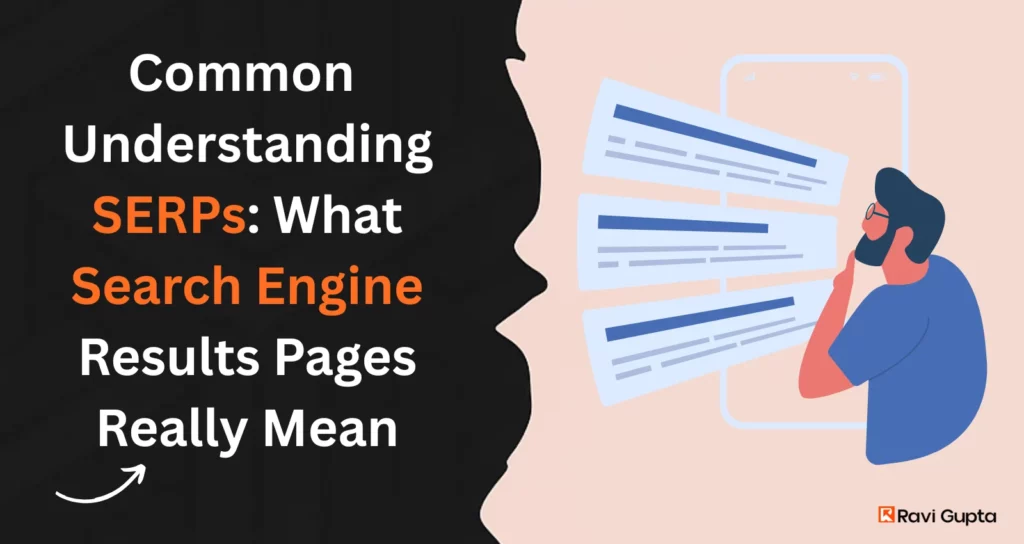
Go to Google, enter some words or a phrase, and what does it show you? A properly arranged list of blue links, advertisements, pictures, videos, local business listings, and even direct answers. These findings also entail AI-generated summaries and interactive platforms that can be operated by the Search Generative Experience (SGE) of Google in 2026. That entire screen is called a Search Engine Results Page (SERP).
Now, here’s the thing: most people stop at what they see on top. But if you’re running a business, doing digital marketing, or simply trying to grow your online presence, you need to understand not just what shows up, but why it shows up.
This blog will provide you with the knowledge of what SERP is, how it functions, its characteristics, and how, as an SEO marketer, you can become competitive in the Google search engine of 2026 to generate visibility, traffic, and consequently, conversion.
What is a SERP, Really?
When someone asks you what is SERP SEO, they are essentially trying to understand the relationship between search engine results and optimization. A SERP is the page that displays after you search for something on a search engine like Google or Bing. This will also contain AI-made summaries, interactive and customized ranking signals in 2026 that present the results in a new format to the individual user.
But a SERP is more than just blue links. Depending on your query, the SERP may show:
- Paid advertisements at the very top.
- Organic results ranked by relevance and authority.
- Rich snippets, FAQs, or even maps and videos.
- Knowledge panels that give instant answers
That is where SERP SEO is applicable. To gain a mixed visibility within this particular saturation, you must not only optimise towards the standard rankings but towards the special SERP functionality which search engines prioritise and the recent AI-generated SERP functionality which will now gain precedence in a typical search engine by 2026.
What Does “SERP” Stand For?
SERP is an Abbreviation that means Search Engine Results Page. Simple. However, it is deeper than that. In 2026, the meaning will be how the search engines decode the user intent with advanced AI models and provide the most useful and personalised collection of results they can provide.
What Kinds of Content Can Appear in a SERP?
A SERP can feature text links, images, carousels, local business results, and increasingly, AI-powered answer cards that Google’s 2026 algorithms generate in real time. Think of it as a digital high street where multiple “shops” compete for attention, but only a few get the prime window display.
How Do SERPS Differ Across Search Engines?
Google still prevails over the market, yet Bing, DuckDuckGo and Yahoo already provide more sophisticated SERP in 2026 with changing designs, AI-driven responses and new ranking systems, although the purpose is the same to provide the most suitable answer to the query.
How Do Search Engines Generate SERPs?
Search engines are not magical; they operate like complex machines powered by algorithms and massive datasets. Every time a user types in a query, the search engine crawls its vast index of webpages, evaluates them against hundreds of signals, and then delivers results it believes best match the user’s intent.
By 2026, it is also expected that the ranking system of Google will be based on real-time AI behaviour analysis and continuous quality evaluation heavily, so your SERP SEO activities should go along with these aspects to be represented in strong SERP positions.
Key Ranking Factors That Shape SERPs
Google alone considers hundreds of factors: relevance of content, backlinks, page speed, mobile friendliness, and user experience. Combined, these factors decide whether your site makes it to page one or a digital graveyard of oblivion — a reality that modern AI-driven ranking systems now calculate more dynamically, especially when determining what is SERP SEO relevance for Google.
The Power of Relevance, Authority, and User Context
- Relevance: Does your page answer the query?
- Authority: Do others trust your site enough to link back?
- User context: Where is the searcher located? What device are they using?
Particularly as the Google 2026 refinements of search results go real-time, and change the SERP designs more often than they previously did.
Algorithms and Updates That Change the Game
Remember Google’s Panda, Penguin, and BERT updates? Each one reshaped the way SERPs look. That’s why SEO SERP tracking is crucial: Particularly as the Google 2026 refinements of search results go real-time, and change the SERP designs more often than they previously did.
What Are the Different Features of a SERP?
SERPs aren’t static anymore. They’re dynamic, interactive, and packed with features.
The Ongoing Value of Traditional Organic Results
These are the “classic” listings that appear based on relevance and authority. Still valuable, but now they compete with far more dynamic SERP elements that often capture user attention first.
SERP Features That Boost or Steal Clicks
Think about SERP features in SEO like a buffet. You’ve got:
- Featured snippets (direct answers at the top)
- “People Also Ask” boxes
- Image and video carousels
- Knowledge panels
- Local packs (maps and nearby businesses)
Each of these pulls clicks away from traditional listings. However, with the right strategy, they are the keys to developing new paths in ranking and allowing your content to go above your rivals who use common blue links.
The Role of Paid Ads in the SERP Mix
They are labelled, and lots of people are used to clicking them oblivious of the distinction, and this translates to a massive share of attention taken by such placements. For businesses, this means organic SERP SEO and paid campaigns must operate together strategically, ensuring visibility whether users trust ads or rely on organic listings.
How Do SERP Features Affect Visibility and Clicks?
Visibility on the SERP is not just about ranking anymore; it’s about placement, design, and intent.
Which Features Tend to Get More Attention / Clicks?
Featured snippets and People Also Ask boxes often drive disproportionate attention. Local packs are game-changers for small businesses.
How Do Features Change User Behaviour?
For example:
- A search for the best pizza near me can never lead to a click, as the local pack immediately displays maps, reviews, and tap-to-call features, providing the user with all this without having to open a site.
- A how-to query can be directly answered within a snippet, and this is likely to be done on Google, which has enlarged its AI-driven snippets such that even fewer traditional clicks are made.
This plays a challenge as well as an opportunity on the side of the SERP SEO strategists, as they now have to optimise not only towards rankings, but also visibility within these zero-click results.
Pros and Cons of Appearing in Different Features
- Pros: More visibility, brand authority, traffic spikes.
- Cons: Reduced CTR if users get their answer right on the SERP.
How Can You Appear (Or Rank) in Different SERP Sections?
Here’s where strategy meets execution.
The Three Pillars of SEO
Search engine optimisation is about three pillars:
- On-page SEO: Optimising your content and structure.
- Off-page SEO: Building backlinks and authority.
- Technical SEO: Ensuring crawlability, speed, and mobile readiness.
Optimising for Specific SERP Features
For a featured snippet, you need concise, structured answers. For image packs, optimised alt text and file names. For local packs, strong Google Business Profiles. That’s where SEO keyword SERP research comes in, knowing what queries trigger what features.
Paid Search and Ads in the SERP Strategy
Paid ads guarantee presence but not necessarily ROI. The smart play? Combine paid ads with SERP SEO for a balanced strategy.
What challenges or nuances should you be aware of?
- The SERP landscape is in a state of constant flux, with changes being made at a faster rate than marketers can respond, and as such, their adaptation is a factor that needs to be made constantly.
- Influence of customised results history, location, and type of device now influence SERPs even more, and so serps seo ranking now becomes hard to measure reliably.
- Rise of voice search and AI ecosystems assistants and AI summaries often provide an answer immediately, and do not even display a web page.
- Measuring performance difficulties – In the case of simple keyword positioning, tracking is no longer enough; impressions, clicks, and the visibility of SERP elements must be monitored through SEO SERP tracking, especially as serp features SEO becomes more important.
What Tools and Methods Exist to Analyse SERPS?
You can’t improve what you don’t measure.
Which tools are commonly used?
- SEMrush
- Ahrefs
- Moz
- Google Search Console
All of these give you insights into SERP SEO performance.
How do you conduct a SERP audit?
- Step one: pick your target keywords
- Step two: check which features show up for those keywords
- Step three: compare your competitors’ placements
What metrics should you track?
- Keyword rankings
- CTR by position
- Visibility in SERP features
- Traffic changes over time
These give you a complete view of your SERP SEO efforts.
What Does the Future of SERPs Look Like?
Change in SEO is something that is constant, and there is no better place to recognize it than in the future of SERPs, where Google AI Overviews are already changing the way results are displayed and how they interact.
They do not just display a list of links, but give summaries on a results page, which could decrease the number of clicks, but heavily favours official websites that can offer reliable information consistently.
Searching by voice and by sight is bound to prevail, too, since younger search engine users are more likely to find it easier to talk to their phones or take pictures as opposed to typing in search terms.
This creates the need to change your SERP SEO to align with multimedia, which will need to optimise your content as per voice intent searches and image searches.
The behaviour of the users will keep changing, and shorter attention span, heightened expectations, and demand for instant answers will follow, unless you change your strategies, competitors will do the same, and that will grab your clicks, your traffic, and your visibility as well.
Wrapping Up
The digital era is the arena of SERP. Ranking will no longer suffice, and you need to be familiar with the features, maximise intent and continuously monitor changes that occur.
Key takeaways:
- SERP is fast-changing and has revolving opportunities.
- SERP SEO is not just a question of ranking, but it is more a question of gaining visibility, clicks, and valuable conversions.
- Apply the correct tools, measure the right measures, and conduct an experiment of what works.
Don’t solely check SERPs; learn to master them, in case you are serious about growing. Check your present visibility, make a list of the features that you think are the most important to your audience and begin to optimize your strategy now.


FAQs on SERPs (Search Engine Result Pages)

A SERP, or Search Engine Results Page, is the webpage displayed by a search engine like Google or Bing after a user types in a query. It displays a combination of natural results (on the ranking of algorithms) and sponsored advertisements, as well as innovations of a new SERP, including featured snippets, AI-generated answers, knowledge packs, images, videos, and local business packages.
The goal of a SERP is to provide the most relevant answers to the user’s intent in a structured format. The behaviour of many users has, since 2026, been even more selective by clicks; the first page is literally priceless as almost all attention and interaction are absorbed.
A Search Engine Results Page is the output generated by a search engine after it crawls and indexes the web. Here’s a simplified breakdown of how SERPs Work:
- Query Input: A user types a keyword or question into the search engine.
- Search Engine Crawl & Index: The engine scans its massive index of web pages to find relevant matches.
- Algorithm Ranking: Complex algorithms evaluate these pages using hundreds of criteria like relevance, authority, and usability.
Generation of SERP: This move also incorporates AI-assisted summaries, visual results, and snippets, which are shown on the SERP, and they frequently contain advertisements or maps.
We consider the interactive page in which all these results are displayed, growing more and more controlled by the active AI interpretation, as the Search Engine Results Page.
On platforms like Coursera and elsewhere, a web page’s placement on a SERP is generally referred to as its ranking position or simply its SERP position.
The algorithm’s ranking process determines this position. This will encompass AI-aided quality checks and on-the-fly relevance scoring in the year 2026.
For example, the page at the very top of the organic listings is said to be in position 1, which is often the most clicked and sought-after spot.
Much attention is paid to the optimization of SERP positions by the business, as high positions in a search result lead to an increase in visibility and significant organic traffic in the modern AI-based search environment.
Modern SERPs provide much more than a list of website links. They are served in 2026 as interactive response centres that use AI. Here are the components of a SERP you’ll typically encounter:
- Organic Results: Algorithm-ranked web pages relevant to the query.
- Paid Ads: Sponsored placements purchased by businesses for visibility.
- Featured Snippets: Answer boxes with concise solutions to queries.
- Knowledge Panels: Fact-rich boxes with information about entities (like people, places, or brands).
- Image/Video Packs: Visual results relevant to the query.
- Local Pack/Maps: Local businesses and maps tied to the searcher’s location.
- People Also Ask (PAA): Related questions that expand for more answers.
- Rich Snippets: Enhanced results with star ratings, reviews, or prices.
Simply put, SERPs provide information, context, and convenience, and in many cases immediately fulfil the intent of the user, serving up a summary of the contents AI-created without leaving the search page.
SERPs in 2026 are far more competitive because AI-generated answers, featured snippets, local packs, video blocks, and rich media now take up most of the visible screen. This reduces traditional organic link visibility and pushes businesses to optimise for multiple SERP features—not just rankings. As a result, winning a spot on page one requires stronger relevance, higher authority, and improved technical SEO.
AI-generated responses reshape SERPs by summarising information directly on the results page. This means fewer clicks to websites unless your page is authoritative enough to be included in those summaries. To stay competitive, websites must publish trustworthy, well-structured content enriched with schema markup, clear headings, and strong topical depth so AI systems can interpret and use it.
Yes, businesses can still rank without paid ads, but the approach is different in 2026. You need to target SERP features like snippets, People Also Ask boxes, images, and local listings. Improving content quality, adding structured data, building backlinks, and strengthening E-E-A-T (Experience, Expertise, Authoritativeness, Trustworthiness) are essential. These elements help you secure visibility even when ads dominate the top positions.