All SEO
  SEO News
  SEO Strategy
  Ask An SEO
  Enterprise SEO
  Google Algorithm Updates
  International SEO
  Link Building
  Local SEO
  Mobile SEO
  On-Page SEO
  Technical SEO
  Vertical SEO
  Wordpress for SEO
  Web Dev for SEO
  SaaS SEO
  E-commerce SEO
  AI-Driven SEO
What Is Keyword Cannibalization? Causes, Examples & Fixes in 2026

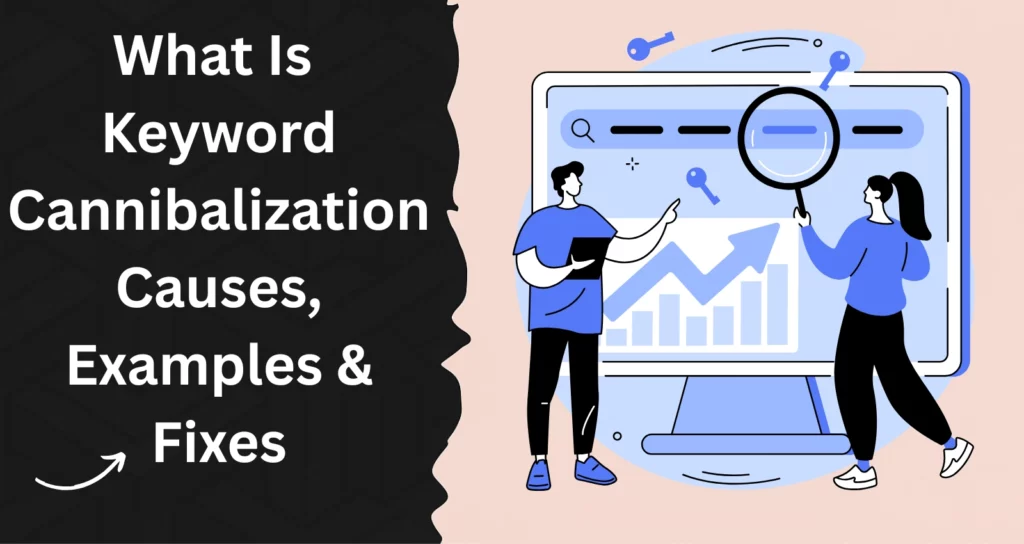
Keyword cannibalization is among those SEO problems that quietly grows as websites publish more pages year after year. It is likely to show up even faster in 2026 because content velocity is higher and AI tools make publishing easy for everyone. You may think more content means more visibility, yet rankings still fluctuate without warning.
That confusion often points back to competing URLs targeting overlapping intent. Recent industry audits suggest nearly 37% of websites show some form of internal keyword overlap that weakens organic performance.
In 2026, search engines read meaning, intent, and context more deeply than keywords alone, which changes how cannibalization works. Pages no longer compete only by exact terms but by perceived usefulness.
When this issue goes unchecked, traffic spreads thin across multiple URLs, authority weakens, and conversions fall. This guide explains how Keyword cannibalization looks in 2026, why it happens, and how you can resolve it with practical clarity.
How Search Behavior Has Evolved by 2026
Search behavior in 2026 reflects trust in machines to interpret intent correctly. Users type fewer words and expect complete answers. Search engines now predict what users want to achieve rather than matching phrases. This behavior reduces tolerance for overlapping content.
AI summaries pull insights from pages with a clear purpose. If your site presents multiple pages with similar intent, none stands out as the best source. This shift explains why SEO keyword cannibalization appears more frequently, even when keyword tracking tools show variation. Search systems reward clarity over quantity.
What is keyword cannibalization?
At its roots, Keyword cannibalization occurs when two or more pages on the same site target the same search term. Instead of rating one powerful page highly, the search engine distributes signals over multiple pages.
This weakens authority, confuses crawlers, and frequently lowers the visibility of all competing pages.
Many individuals look for “What is keyword cannibalization?” to figure out why rankings change even when a site presents quality content. In most situations, the issue is not the quality of the content, but the distribution of similar phrases across several URLs.
Search engines then struggle to determine which pages should be ranked, resulting in performance volatility.
So, what’s different in 2026?
In 2026, Keyword cannibalization means intent collision rather than keyword overlap. Pages compete when they answer the same user need in similar depth and tone. Even different wording can trigger conflict. AI-based ranking models group content by meaning, not phrasing. That explains why older audits miss modern cannibalization patterns. The new definition focuses on intent uniqueness and topical ownership within a site.
Why Keyword Intent Matters More Than Exact Keyword Matching in 2026
Exact keyword matching lost influence as engines began measuring satisfaction signals and task completion. In Cannibalization in SEO, intent alignment now decides performance. Pages succeed when they solve one specific problem completely.
Two pages optimized for different phrases can still compete if intent overlaps. This explains why some pages never stabilize. Clear intent separation creates predictable rankings and supports long-term growth.
Why Keyword cannibalization Matters in SEO
When a website has overlapping information, it hurts both ranking signals and user experience. Internal links, backlinks, and the rate of click-through are thinly distributed among rival pages.
This prevents any single page from gaining sufficient traction to regularly rank. The idea of Cannibalization in SEO demonstrates why a systematic strategy is critical.
Compared to having multiple pages compete for the same audience, combining efforts into a single authoritative page increases clarity and organic reach. Search engines favor precision, and clean signals improve page performance.
Types of Keyword cannibalization in 2026 SEO
Intent-Level Cannibalization
This occurs when pages target the same decision stage. Two guides or two sales pages often overlap here. Search engines see redundancy. Rankings rotate without stability.
Semantic Cannibalization
Semantic overlap happens when pages use different words but share meaning. AI detects similarity fast. This form of Cannibalization SEO often surprises site owners.
URL Cannibalization
URL-level conflict appears when multiple URLs target one core topic. Pagination, filters, and parameters amplify the issue. Authority splits across versions.
AI-Generated Content Cannibalization
AI tools produce similar structures and phrasing. Without strong briefs, pages mirror each other. This accelerates Keyword cannibalization across blogs and resources.
How Keyword cannibalization Affects Your Site Architecture
When Cannibalization in SEO occurs, it doesn’t just impact rankings, it disrupts your site’s overall architecture. Google relies on internal linking structures and hierarchy to understand which pages are most valuable. When multiple URLs target the same topic, it breaks this structure, leading to weak internal authority.
For instance, if you run a digital marketing website and multiple pages internally link using the same anchor text, say “SEO services”, Google may struggle to identify which page should be the main landing page. The result is diluted link equity and misdirected crawl efficiency.
Proper site architecture ensures every keyword has a dedicated home. Mapping primary and secondary keywords in a content plan helps avoid duplication. Internal linking should always reinforce this hierarchy, guiding both users and search engines to the right destination.
When your architecture is clean and intentional, each page gets the attention it deserves, improving visibility and boosting overall crawl performance across the site.
How Search Intent Influences Keyword cannibalization
One of the most overlooked causes of SEO keyword cannibalization is misunderstanding search intent. Two pages can have similar keywords but completely different purposes. For example, a blog about “How to Improve SEO Rankings” (informational) and a service page “SEO Services for Businesses” (transactional) might both target “SEO,” but they satisfy very different user needs.
When intent overlaps aren’t addressed, Google sees them as competing content. This confusion can lower rankings for both pages. The solution lies in defining content by intent, creating one page to inform, one to convert, and another to guide action.
Before publishing, ask: “What is the purpose of this page?” If it’s meant to educate, focus on value and insights. If it’s meant to sell, prioritize trust signals and conversion elements.
By aligning each keyword to a distinct intent, you build a well-balanced SEO strategy where all pages support one another, rather than competing for the same user query.
Common Causes of Keyword cannibalization in 2026
Several causes can cause keyword clashes without the site owners’ knowledge. The majority of situations result from content growth without a clear content map. As new articles or landing pages are added, they may overlap with existing material.
Common Causes of Keyword cannibalization in 2026-
Publishing content without keyword intent mapping
Skipping intent planning leads to overlap. Teams focus on volume instead of purpose. That mistake compounds over time.
Over-optimization using outdated SEO playbooks
Old tactics emphasize keyword repetition. In 2026, this creates confusion rather than clarity. Search engines penalize redundancy quietly.
Lack of content governance in large websites
Large sites grow fast. Without governance, similar pages appear across sections. This fuels SEO keyword cannibalization.
Multiple authors or AI tools creating similar pages
Different contributors often cover the same topic differently. Without alignment, intent clashes emerge.
Poor internal linking and anchor text repetition
Repeating anchors across pages spreads signals thin. Internal links must reinforce one primary URL.
Examples of Keyword cannibalization
Consider an online shoe store to observe how Keyword cannibalization occurs.
Search engines have to choose one of two product pages that target “running shoes for men” and have comparable descriptions. Irregular traffic results from Page A ranking sometimes and Page B ranking other times.
Blogs are another example. Consider two articles: one on “speeding up your laptop” and another about “fixing slow laptops.”
They both cover almost the same ground. Even though the writer may have considered them to be separate pages, search engines can treat them as rival pages.
This demonstrates how difficult it is to avoid SEO keyword cannibalization when subjects overlap without careful preparation.
The Impact of Keyword cannibalization on Backlinks and CTR
Backlinks are a core SEO ranking factor, but Keyword cannibalization can severely weaken their impact. When multiple pages target the same keyword, backlinks get split across them, reducing the authority of each individual page.
For example, if three blogs target “email marketing tools,” and all receive separate backlinks, none of them gains enough link equity to dominate search results. Instead, Google sees them as equally weak contenders.
This dilution also affects your click-through rate (CTR). When multiple similar pages appear in search results, they compete against each other, splitting clicks and confusing users.
To fix this, focus on consolidating link authority. Merge pages that target the same keyword into one comprehensive guide and redirect the weaker URLs. Use this master page as your link destination in future outreach campaigns. Over time, backlinks concentrate on one authoritative page, improving CTR, rankings, and long-term visibility.
Is Cannibalization of Keywords Harmful?
While Keyword cannibalization isn’t always harmful, it frequently causes more issues than it fixes. Search engines may become perplexed as to which page on a website should be displayed when several pages compete for the same query.
Due to this confusion, authority is divided, link equity is dispersed, and overall rankings may be lowered. You wind up with multiple underperforming pages rather than one powerful one that gains traction.
This problem in SEO can affect long-term growth, conversions, and organic visitors. In general, a well-targeted page outperforms multiple diluted ones.
Therefore, cannibalization usually weakens placement where you want strength, but it may occasionally assist in grabbing a little more prominence for broad inquiries. Therefore, it only makes sense to deal with Keyword cannibalization as soon as possible for long-lasting ranking gains.
How to Find Keyword cannibalization Issues
It takes a combination of trustworthy technologies and manual checks to detect Keyword cannibalization. Finding overlapping pages and keywords before they degrade performance is the aim.
Try these tricks to find the issue:
1. Make use of Google Search Console
One of the easiest ways to find overlaps is with Google Search Console. Examine queries under the “Performance” tab to determine whether the same search phrases are returning more than one URL. It is frequently a warning sign when two or more URLs vie for the same requests.
2. Use SEO Tools to Verify Rankings
Tracking the distribution of keywords across URLs is made simpler by tools like as Ahrefs, Semrush, or Moz. Run a keyword report, mark the places where many pages rank, and filter by desired terms. This aids in the large-scale visualization of Cannibalization SEO patterns.
3. Run a Site Search on Google
Typing site:yourdomain.com “keyword” into Google surfaces all pages optimized for the same phrase. This fast check assists in identifying potential inadvertent content overlaps. It’s particularly helpful for identifying older blogs or legacy pages.
4. Examine Internal Linking Frameworks
Keyword cannibalization can occasionally occur from the linking between pages rather than just the content. Examine how anchor text is used in all internal links. You might be providing search engines conflicting priorities if several URLs are extensively connected with the same anchors.
5. Conduct a Side-by-Side Comparison of Content
In the end, one of the best methods is still a manual review. Put pages that are in competition with one another and compare the subjects, headings, and keyword targeting. Search engines may perceive two materials as interchangeable if they feel that way.
Prioritizing Pages When Fixing Keyword cannibalization
When working to Fix keyword cannibalization, not every page should be deleted or merged. The key is prioritization, deciding which content deserves to stay. Begin by analyzing page metrics such as organic traffic, backlinks, and conversions.
Pages that already attract strong engagement should be kept as primary assets. Weaker, low-performing pages can be merged or redirected into these stronger ones. You can also re-optimize the content to target a related but less competitive keyword.
If you have multiple pages about “social media marketing tips,” find which one performs best, then consolidate similar content into that version. Always use 301 redirects to transfer link equity properly.
This approach ensures that your strongest pages become even more authoritative while weaker ones serve a supporting role. By aligning your efforts around high-performing content, you create a focused SEO ecosystem that delivers consistent visibility and ranking stability.
The Role of Content Clusters in Preventing Keyword cannibalization
To prevent Cannibalization in SEO, a structured content clustering strategy works wonders. A content cluster consists of a main “pillar page” covering a broad topic and several supporting pages focusing on subtopics. This structure helps Google understand the relationship between different pieces of content and how they fit into a larger theme.
For instance, a pillar page could target “Digital Marketing,” while supporting pages explore “SEO,” “Email Marketing,” and “Content Strategy.” Each subpage links back to the main pillar, reinforcing hierarchy and clarity.
This approach ensures that your pages don’t compete, they complement each other. Each keyword serves a unique purpose, helping Google distribute authority efficiently.
A strong internal linking strategy within these clusters keeps users engaged longer and signals expertise to search engines. As a result, you not only prevent Keyword cannibalization but also strengthen your topical authority and improve long-term rankings.
How AI and Google’s Algorithms Detect Keyword Overlaps
With AI-driven systems like RankBrain, BERT, and MUM, Google now understands context and intent better than ever before. These algorithms analyze how closely related two pages are, not just by keywords but by meaning and search intent.
If your pages deliver similar information under different URLs, Google might consolidate them internally or choose one to display more prominently. This is why creating unique, intent-specific content is crucial.
AI also evaluates user signals, like dwell time, CTR, and pogo-sticking, to decide which page best meets the query’s intent. If users bounce between two of your own pages, Google perceives it as confusion, often lowering both rankings.To adapt, focus on semantic SEO. Use natural language and structured data, and ensure your pages target distinct intents. In the age of AI, avoiding SEO keyword cannibalization isn’t just technical, it’s strategic content differentiation.
Fixing Keyword cannibalization
Aligning signals and content is necessary to solve the problem. Making sure that one page effectively conveys the target keyword while supporting it with related pages is the aim.
Here are a few efficient ways to Fix keyword cannibalization:
- Content consolidation: Consolidate content by combining related topics into a single, complete page.
- Canonical tags: Use canonical tags to let search engines know which version of a page is the main one you want indexed.
- 301 redirects: Direct less important or redundant pages to the more powerful one.
- Re-optimization: Modify keywords to give each page a clear focus.
- Internal linking: Connect similar pages to your main page to help users and search engines alike.
These fixes make it clear which page should rank and avoid dilution. Results become more stable and visible over time because of the combined signals.
Common Mistakes People Make When Fixing Cannibalization
Many marketers are aware that it’s an issue, but they frequently make mistakes while attempting to address it. Let’s dissect the most significant errors frequently observed.
1. Deleting Pages Too Quickly
Deleting a page without properly reviewing the facts is among the worst things you can do. Numbers don’t lie, even though it may seem archaic.
Before you hit delete, check your rankings, backlinks, and traffic. You thought that previous blog entry was pointless? It may still have strong links or attract a lot of traffic.
Your rankings could drop overnight if you just blow it.
2. Considering Canonical Tags to Be a Magic Solution
Although canonical tags are fantastic, they are not a fix.
It is preferable to merge or set up a redirect if two pages are nearly identical. Canonicals are only effective when there is minimal overlap and each page clearly has a distinct function.
Otherwise, you’re merely applying a “fake fix” to a more serious issue.
3. Merging Pages Without Considering Search Intent
This one is enormous. Two articles are not necessarily the same just because they discuss the same subject.
Confusion for both audiences and search engines may result from merging two pieces that are geared toward novices and experts, respectively.
“Does this page serve a different intent?” should be your constant question. Keep them apart if so.
4. Overlooking Internal Linking
Internal links are quite valuable for SEO. They direct users across your website and let Google know which pages are most important.
The mistake? Individuals neglect to connect relevant content. Without this, visitors lose out on a more seamless experience, and your best sites fail to transfer authority to those who need it.
Cannibalization challenges can be resolved more quickly than you might imagine with a few clever internal links.
Solutions for Keyword cannibalization That We Hardly (or Never) Suggest
Not every solution produces long-lasting results. In the short term, some strategies could sound enticing, but they may cause more problems later. The following are some tactics that are best avoided:
- Keyword Stuffing to Differentiate – The problem is rarely resolved by changing a few words in the content while maintaining the same search intent; in fact, it may make the text harder to understand.
- Over-Reliance on Noindex Tags – Duplicate pages can be concealed by noindexing; however, this doesn’t solve the structural issue at its core.
Although these shortcuts might seem effective, they generally don’t increase authority. Results are more dependable when a methodical strategy is used, combining consolidation, re-optimization, and cautious redirects.
Preventing Cannibalization of Future Keywords
After resolving current issues, prevention becomes paramount. Every new page should have a distinct focus and avoid overlap, thanks to a keyword map.
Assigning a single principal term to every URL and keeping track of content coverage are part of this process.
Additionally, teams should routinely examine internal linking structures. Relevance is reinforced when links to the appropriate page are made using similar anchor text.
Using these techniques will reduce the likelihood of Keyword cannibalization and maintain a focused, well-structured, and growth-oriented content strategy.
Keyword cannibalization and SEO Strategy
An effective SEO strategy incorporates site structure and keyword analysis. Monitoring performance data makes sure that expansion doesn’t lead to problems.
In order to identify trends and modify the strategy, content audits are crucial. The more general idea of Cannibalization SEO demonstrates the close relationship between strategy and execution.
Avoiding overlaps improves ranks, gives consumers more targeted responses, and increases topical authority. Long-term losses in organic visibility can be avoided by addressing problems early.
The Future of Keyword cannibalization and SEO Strategy
As Google’s search systems evolve, Keyword cannibalization will shift from being purely keyword-based to intent-driven. Future SEO success will rely on topic ownership, brand authority, and entity-based search.
This means businesses should focus on maintaining topic depth rather than keyword count. Conduct quarterly content audits to detect overlapping pages early. Use tools like Ahrefs or Semrush to monitor keyword distribution, and ensure each page aligns with a unique search goal.
In the coming years, search engines will reward websites that provide clarity, context, and user trust. A site that manages its keyword structure well will not only avoid cannibalization but also establish dominance in its niche.
By treating Cannibalization SEO as a long-term strategy, brands can future-proof their visibility and build a content ecosystem where every page supports growth rather than competition.
Final Thoughts
Even well-designed websites may be subtly limited in their success by Keyword cannibalization. It happens when the same phrase appears on several pages, dividing authority and decreasing visibility.
Constant audits, methodical keyword mapping, and careful content preparation are necessary for locating, resolving, and avoiding issues.
Avoiding Keyword cannibalization helps a website create stronger signals, maintain steady ranks, and make sure every page has a distinct function.
When SEO activities are properly organized, they complement one another rather than hinder it.


FAQs on Keyword Cannibalization

Keyword cannibalization refers to a situation where multiple pages on the same website target the same or very similar search intent. Search engines then struggle to decide which page should rank. In 2026, this problem appears even without exact keyword overlap. Intent similarity causes rankings to shift, authority to split, and visibility to weaken over time.
Let’s say you have two blog entries: “Top SEO Tools to Use in 2026” and “Best SEO Tools for Beginners.” They both aim for “SEO tools,” and they begin to vie for the same search term.
Google distributes authority between the two pages rather than having a single high page ranking. The outcome? Neither is ranking as high as they could be.
Planning before publishing is crucial. To ensure that every page has a distinct target, map keywords to content topics. Make use of long-tail variations, group pillar pages into clusters, and connect them internally.
Consolidate authority rather than compete with yourself by merging or rerouting lesser pages into stronger ones if you already have overlap.
It generally happens when several articles discuss the same subject without a distinct keyword strategy. Overlap occurs, for instance, when a series of related blog entries regarding “email marketing tips” is published over time.
You run the risk of making duplicate pages that compete with one another in search results if you don’t examine your current pages.
Instead of using them for duplication, use them to add depth. Assume that “Email Marketing Guide” is your pillar page. Long-tail searches such as “best email subject lines for sales” or “email marketing tips for small businesses” might be targeted by supporting posts.
After discussing a distinct viewpoint, each one connects back to the primary guide. This allows you to reach a wider audience without overlapping.
When several pages on your website are fighting for the same search query, this is known as Keyword cannibalization.
On the other hand, keyword stuffing occurs when you use the same keyword excessively within a single page. Site-level competition is the subject of one, whereas improper on-page SEO is the subject of the other.
Use distinctive adjectives to set product pages apart. Rather than focusing on “running shoes,” each page might concentrate on “lightweight running shoes,” “trail running shoes,” and “waterproof running shoes.”
This lowers the possibility of overlap by making each product stand out with its unique keyword and purpose.
Keyword overlap does not always result in ranking loss. Issues arise when pages satisfy the same intent at the same depth. Pages with clearly different purposes can coexist without conflict. Cannibalization SEO becomes a concern when relevance signals overlap too closely. Stable rankings depend on intent separation and consistent internal prioritization across the site.
AI search engines evaluate meaning, structure, topical depth, and user satisfaction patterns. When multiple pages offer similar answers, engines see them as redundant. They rotate rankings or suppress visibility altogether. This behavior increases the impact of SEO keyword cannibalization in 2026, especially for sites with repetitive content patterns or weak differentiation.
Internal linking plays a strong role in guiding search engines toward priority pages. Links with intent-based anchor text help clarify which URL should rank. Strategic linking consolidates authority signals and reduces confusion. When paired with content alignment, internal links support long-term resolution efforts when you Fix keyword cannibalization across related pages.
Blogs face higher risk because they publish frequently and revisit similar topics over time. Without intent planning, posts begin to overlap naturally. Older articles compete with newer ones silently. This pattern makes Cannibalization in SEO common on blogs that focus on volume rather than intent clarity and structured topic ownership.
Deleting pages works only when those pages offer no unique value, traffic, or backlinks. In most cases, merging content produces better results. Consolidation strengthens authority and improves relevance signals. Redirects preserve link equity and user paths. Removal should always follow performance analysis rather than assumptions or content fatigue.
Audit frequency depends on publishing pace. Active websites benefit from quarterly reviews to catch overlap early. High-output sites using AI tools may require monthly checks. Regular audits help identify ranking instability before traffic drops. Early correction prevents long-term authority dilution and reduces recovery time after visibility loss.
Long-form pages help when they replace several thin pages targeting the same intent. They centralize authority and reduce overlap. Focus still matters. Pages that try to cover too many intents can trigger new conflicts. Length works best when paired with clear purpose, strong structure, and defined topical boundaries.
Complete avoidance is difficult for ecommerce sites due to filters, variations, and overlapping categories. Clear taxonomy reduces risk. Canonical tags help manage duplication. Intent separation between category, subcategory, and product pages improves clarity. Regular monitoring keeps Keyword cannibalization from spreading as inventory and content scale.
The first step is intent mapping. Identify which page should own each intent and decision stage. That clarity guides content updates, internal links, and consolidation choices. Without this step, fixes remain inconsistent. Every effective Fix keyword cannibalization process begins by assigning clear purpose to every important URL.