All SEO
  SEO News
  SEO Strategy
  Ask An SEO
  Enterprise SEO
  Google Algorithm Updates
  International SEO
  Link Building
  Local SEO
  Mobile SEO
  On-Page SEO
  Technical SEO
  Vertical SEO
  Wordpress for SEO
  Web Dev for SEO
  SaaS SEO
  E-commerce SEO
  AI-Driven SEO
 YouTube Reveals Data on Its Educational Benefits for Teens


New data from YouTube reveals its positive educational benefits and its role in fostering learning, creativity, and knowledge building among teenagers.
If there are any doubts about how kids really use YouTube, the platform has published a new study that not only shows how kids use its platform but also how they attend school and learn. Essentially, this effort looks designed to help bolster YouTube in response to potential new age-based access laws.
Study Overview and Key Findings
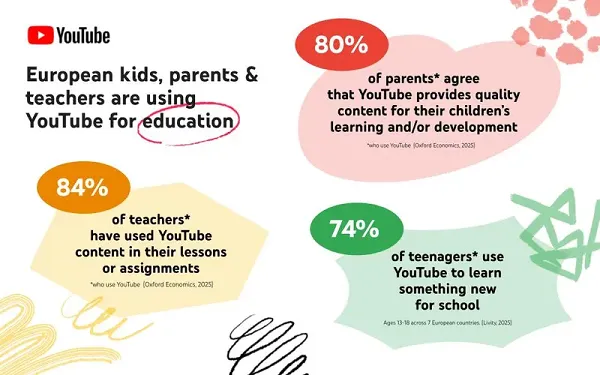
Commissioned by the youth consultancy Livity, the report surveyed over 7,000 young people aged 13 to 18 in seven European countries.
According to YouTube:
“Of those surveyed, 74% said that they watched videos on YouTube to learn something new for school, while 71% said they watched videos on YouTube to learn something new for fun outside of school.”
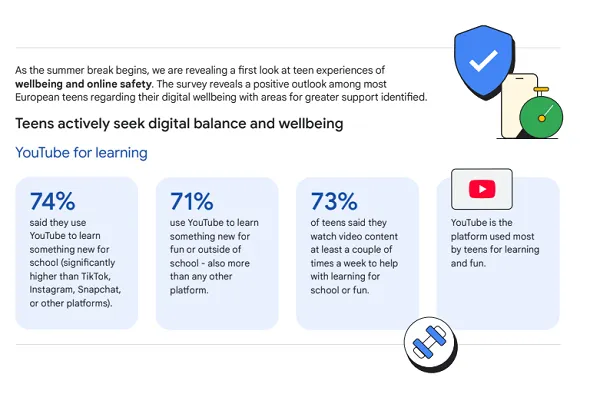
This cements YouTube’s place not only as a platform for entertainers to shine, but also as a trusted educational center for kids, parents, and teachers.
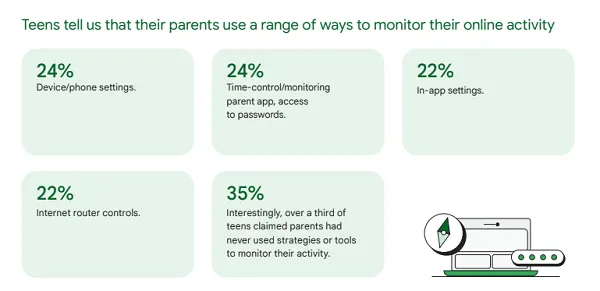
Additionally, learn about how parents limit their kids’ digital usage to prevent excessive time spent in the digital world.
According to a new study from Oxford Economics, YouTube states:
“84% of teachers surveyed used YouTube content in their lessons or assignments, while 80% of parents who use YouTube believe the platform offers quality content for learning and entertainment.”
This highlights its increasing importance as an educational tool.
Navigating Regulatory Challenges Around Teen Access
Laws limiting social media access to those over 15 or 16 years of age are currently under deliberation or have recently been passed in several countries, including:
In Australia, YouTube was temporarily excluded from upcoming restrictions on teen access. At the same time, ministers considered its educational role, only to be reinstated to the list as the government changed its mind. Now, the network is preparing to limit access for those under 16.
YouTube, meanwhile, continues to make its case for exemption, citing numerous instances of educational benefit. Still, the platform continues to come under scrutiny as similar regulatory efforts gain momentum worldwide.
The challenge for YouTube is likely to persist as it attempts to demonstrate how education-related features help mitigate fears of making children vulnerable to inappropriate content.
Final Thought
While a full exemption seems unlikely, emphasizing the platform’s positive contributions may help reduce the severity and impact of potential restrictions.
Check out highlights from YouTube’s “Future Report” here.