All SEO
  SEO News
  SEO Strategy
  Ask An SEO
  Enterprise SEO
  Google Algorithm Updates
  International SEO
  Link Building
  Local SEO
  Mobile SEO
  On-Page SEO
  Technical SEO
  Vertical SEO
  Wordpress for SEO
  Web Dev for SEO
  SaaS SEO
  E-commerce SEO
  AI-Driven SEO
 Report Highlights Evolving Social Media and Online Shopping Trends


A new report highlights evolving social media use and online shopping trends, revealing how consumer behavior is changing and what brands do to stay ahead.
If you are looking forward to planning your 2026 digital marketing roadmap, DoubleVerify’s latest Global Insights series is well worth a look. The digital analytics company surveyed more than 22,000 consumers and nearly 2,000 marketers to understand how people are using social media, AI, and online shopping tools insights.
Most-Used Social Platforms Still Skew to the “Big Three”
The report first breaks down which social platforms the respondents use most often.
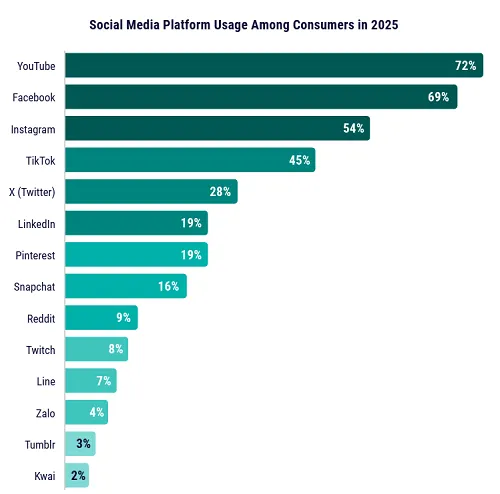
YouTube, Facebook and Instagram sit at the top, with TikTok, X, LinkedIn and Pinterest appearing further down the list, a pattern that closely mirrors recent social usage data from Pew Research in the US.
One important nuance, though: simple usage questions don’t capture time spent, and many users may still open Facebook frequently while actually devoting more engagement time to other apps like TikTok or Instagram.
It is also worth noting that newer text-based platforms such as Threads and Bluesky were not included in DoubleVerify’s social platform options, so their emerging role is not reflected here.
For marketers, this reinforces a familiar takeaway the large, established platforms still offer the broadest reach, but attention is fragmenting as users split their time across multiple apps.
How People Get Their News on Social
DoubleVerify also explores how consumers rely on social platforms for news, which has clear implications for information flow and even electoral behavior.
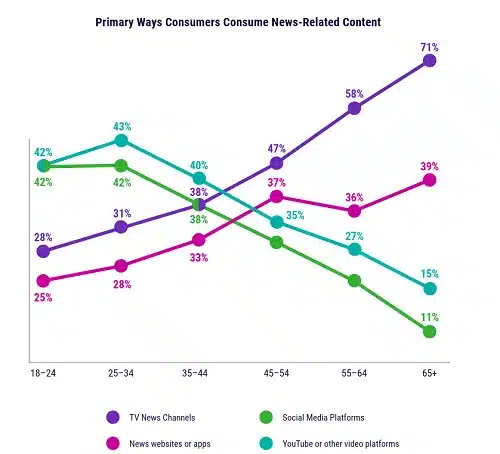
Younger audiences are more likely to treat social media as a primary news source, whereas older consumers still prioritize TV news and dedicated news websites.
That generational split helps explain why traditional broadcast properties still lean on familiar, long-running personalities because the core TV audience itself is older.
Social Media’s Role in Product Research
Another section looks at how people use social media when they research products, focusing specifically on pre-purchase behavior rather than initial discovery.
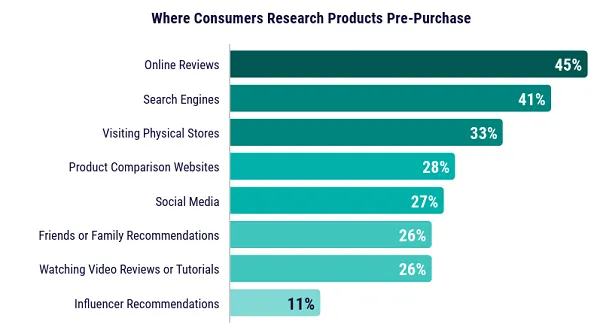
In that context, social platforms rank below search engines, retailer sites and brand websites as research tools, which makes sense given how many shoppers turn to search and marketplace reviews when they are close to buying.
However, if the question were about where consumers first discover new products, social media would almost certainly rank higher, especially for visually-led categories like fashion, beauty and lifestyle.
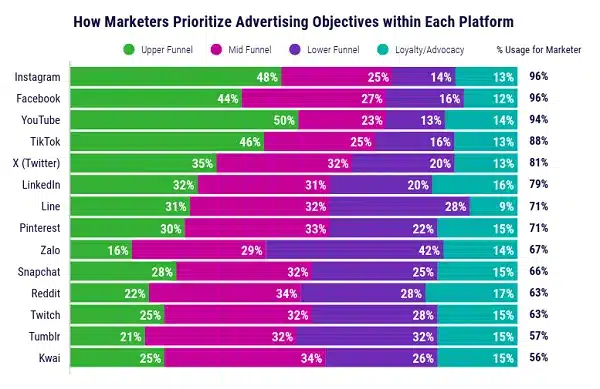
From a marketing standpoint, social should be viewed as a powerful top- and mid-funnel channel that feeds into more traditional research destinations such as Google, Amazon, and brand sites.
Influencers Growing in Power and Purchase Impact
The report dedicates a section to the growing influence of creators and social media influencers on purchase decisions.
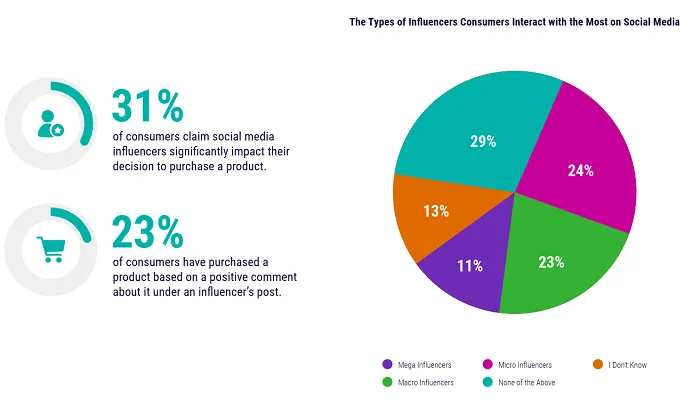
According to the report:
“Over 58% of surveyed consumers stated that they interact (follow, like, share, comment) with influencers, especially micro influencers (24%). The lower-funnel strength of these interactions is also high – 54% of consumers reported that social media influencers impact their purchase decisions.”
This aligns with other research showing that audiences often see influencers as more relatable and authentic than brands, particularly when it comes to product recommendations.
For marketers, that means influencer collaborations especially with niche micro-influencers are no longer just an awareness play; they increasingly act as tangible performance drivers in the lower funnel.
Social Commerce Adoption: Faster in Asia Than the West
DoubleVerify also tracks the rise of social commerce, where people discover and complete purchases directly inside social apps.
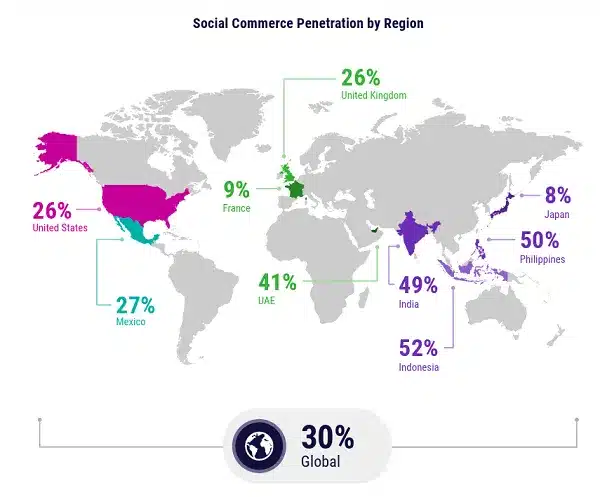
Adoption is notably higher in Asian markets, where integrated in-app shopping has been normalized for years, while Western consumers continue to favor separate apps and platforms for browsing, socializing and purchasing.
Why that gap persists is still an open question, though cultural preferences, platform design and regulatory frameworks around payments and consumer protection all likely play a role.
From a practical perspective, brands operating in Asia may want to prioritize end-to-end in-app shopping flows, while those in Western markets might lean more on social for discovery and traffic, then convert via dedicated e-commerce sites and marketplaces.
How Marketers and Consumers Are Using AI
Beyond social usage and shopping, the Global Insights reports also explore how both consumers and marketers are encountering AI-generated content.
DoubleVerify highlights that a majority of consumers now report seeing AI content on social media, a share that is more than double those who say they encounter AI content via search.
That surge in AI-driven posts and ads is blurring the line between human-created and synthetic media, raising new questions about authenticity, transparency and brand safety.
Bottom Line
Overall, DoubleVerify’s findings paint a familiar but evolving picture. The report may not go as deep into each trend as some specialists would like, but it offers a useful high-level map of where consumer behavior and marketer strategies are heading as you plan for 2026.
You can access the full Global Insights reports on DoubleVerify’s here (with email sign-up)