All SEO
  SEO News
  SEO Strategy
  Ask An SEO
  Enterprise SEO
  Google Algorithm Updates
  International SEO
  Link Building
  Local SEO
  Mobile SEO
  On-Page SEO
  Technical SEO
  Vertical SEO
  Wordpress for SEO
  Web Dev for SEO
  SaaS SEO
  E-commerce SEO
  AI-Driven SEO
 Meta Releases Latest Data on Policy Enforcements and Content Trends

Meta has released its latest transparency report, detailing enforcement actions against policy violations and emerging content trends across its platforms.
Meta has just published an analysis of its latest Community Standards Enforcement Report, which provides fresh insights into all content actions taken in Q2 and includes the Widely Viewed Content update, highlighting what was most popular with Facebook users during that period.
In the introduction of its most recent Community Standards Update, Meta points out:
“In January, we announced a series of steps to allow for more speech while working to make fewer mistakes, and our last quarterly report highlighted how we cut mistakes in half. The latest report continues to reflect this progress. Since we began our efforts to reduce over-enforcement, we’ve cut enforcement mistakes in the U.S. by more than 75% on a weekly basis.”
While fewer enforcement errors are positive, meaning fewer users are wrongly penalized, a reduction in enforcement can also allow more harmful content to slip through, as lower thresholds lead to less content moderation overall.
Declining Enforcement of Harmful Content
Meta’s data shows a dramatic decrease in interventions against bullying or harassment, with users mainly posting reports after being detected. This pattern implies less proactive moderation, with more harmful interactions likely to endure.
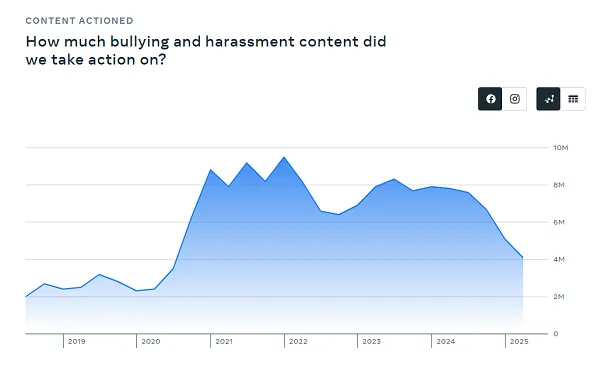
That is a precipitous drop in reports, while the expanded data here also shows that Meta’s not detecting as much before users report it.
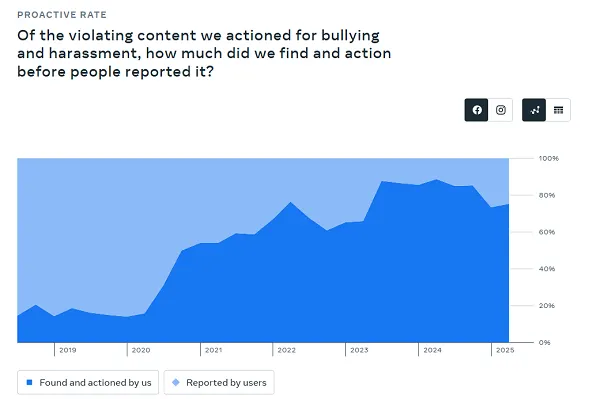
This misleadingly portrays improved performance while increasing platform risk. While a lower enforcement rate might suggest fewer false positives, it actually indicates a more harmful outcome.
This decline, particularly in action against “Dangerous Organizations” and hate content, reveals that reduced proactive detection allows more harmful material to remain based on user reports.
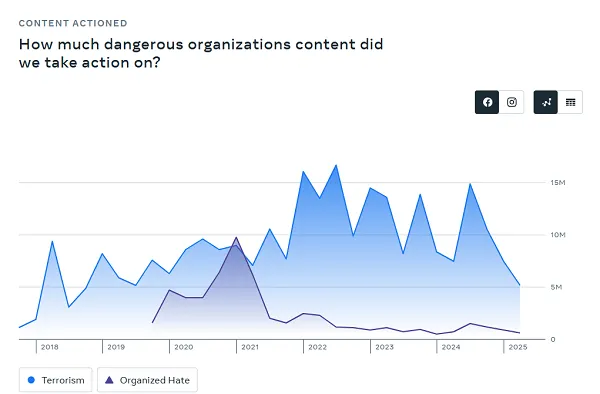
As well as “Hateful Content” specifically:
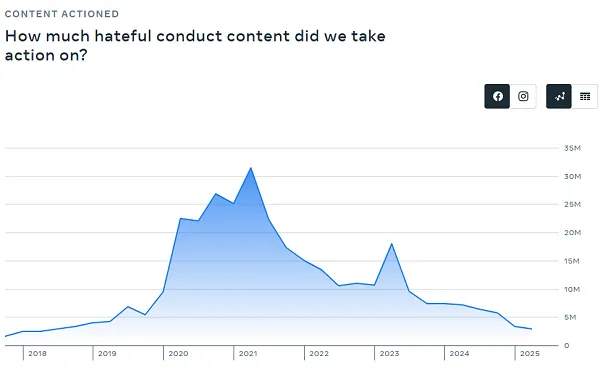
Data shows that Meta is enforcing policies less in key areas, resulting in a reduction in incorrect reports. However, this also means less action against critical issues, such as fake accounts, which the company estimates still make up 4% of its total audience.
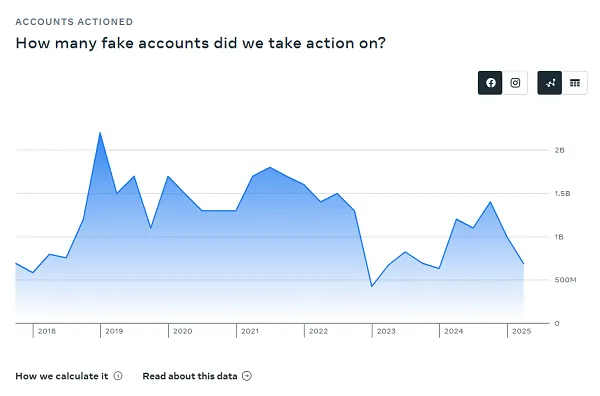
Although there was a drop in the removal of fake accounts, Meta stated that fake accounts still comprise about 4% of its user base, down from earlier estimates of 5%. The Q1 2025 report gave worldwide Facebook numbers as 3%, suggesting variation in detection efficacy.
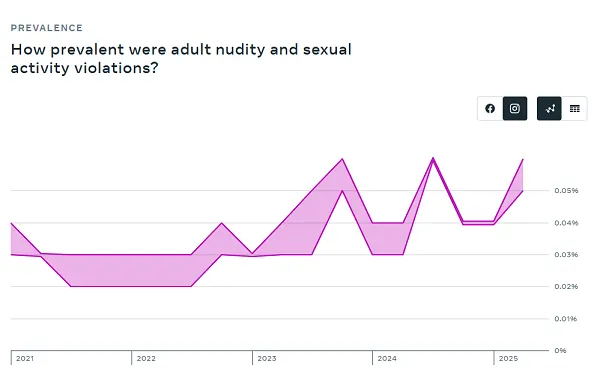
Meta emphasized that there was a higher rate of views claiming nudity or sexual activity breaches. However, these turned out to be errors rather than genuine breaches; they emerged only because our systems were better at identifying text in pictures. Nonetheless, these figures are a cause for concern.
With Facebook referrals to off-site destinations, nevertheless, more bad news for those looking to drive referral links from Facebook:
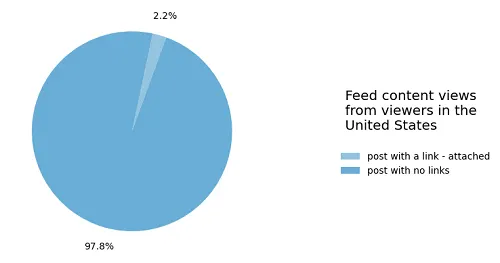
“97.8% of the views in the US during Q2 2025 did not include a link to a source outside of Facebook. For the 2.2% of views in posts that did include a link, they typically came from a Page the person followed (this includes posts which may also have had photos and videos, in addition to links).”
Role of Oversight Board Report in Meta
Despite Meta’s shift to allow more political discourse, the visibility of link posts is declining, making up just 2.7% of total views in Q1. This suggests that shared articles have relatively low reach compared to other types of content.
Facebook’s most-viewed posts in Q2 included a mix of breaking news and viral oddities from the death of Pope Francis and a Chuck E. Cheese brawl to local fundraising pledges and rare medical cases. The platform remains a blend of news and tabloid-style content, although notably absent this quarter were AI-generated oddities (two top posts were unavailable at review).
Additionally, Meta released its Oversight Board’s 2024 annual report, highlighting how the independent body influenced and refined company policy over the year.
According to the report:
“Since January 2021, we have made more than 300 recommendations to Meta. Implementation or progress on 74% of these has resulted in greater transparency, clear and accessible rules, improved fairness for users and greater consideration of Meta’s human rights responsibilities, including respect for freedom of expression.”
This reflects Meta’s ongoing efforts to refine its policies in alignment with human rights and transparency.
Bottom Line
Despite controversies, Meta signals continued focus on expanding freedom of expression, especially in response to U.S. government expectations. This approach aims to strike a balance between open discourse and managing harmful content, thereby shaping Meta’s community standards for the next several years.