Google Discover Update: Early Data Shows Fewer Domains In US

First Look at February Rollout
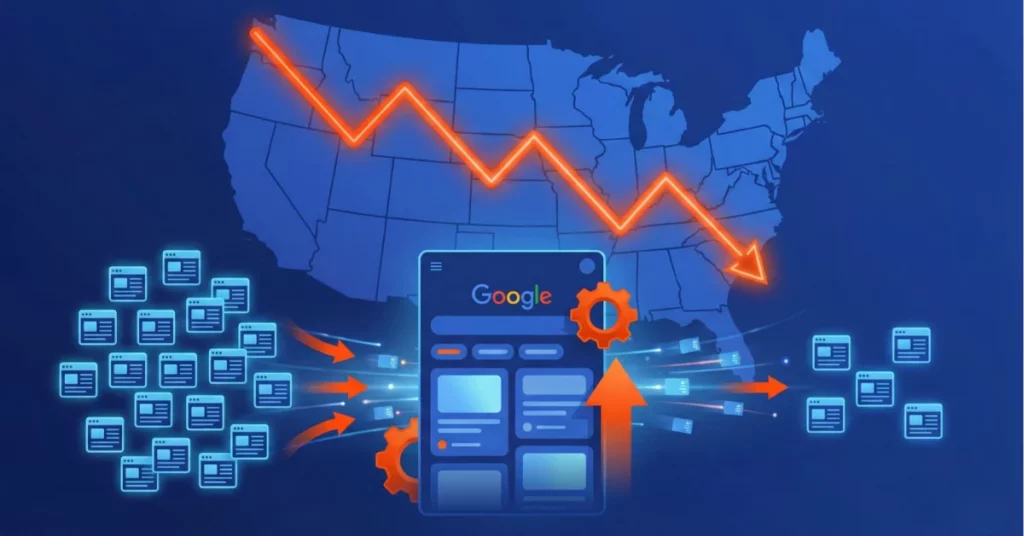
Google’s February 2026 Discover core update is beginning to show its impact. Early data suggests that fewer publishers are appearing in its Discover feeds across the United States, while the range of topics grows.
The findings come from NewzDash, a news SEO tracking company that monitors Discover visibility through its DiscoverPulse tool.
The firm compared activity before the update, from January 25 to 31, with activity after the update, from February 8 to 14. It reviewed the top 1,000 domains and top 1,000 articles across California, and New York.
The rollout is still underway. But the early numbers point to significant changes.
More Local Stories in State Feeds
Google said the update would highlight more locally relevant and timely reporting. The NewzDash analysis supports that claim.
Feeds in California and New York largely matched the national feed. Still, each state showed a stronger local layer.
New York-based publishers appeared about five times more often in New York’s Discover feed than in California’s. California publishers saw a similar boost in their home state.
In California, local stories in the top 100 got up from 10 before the update to 16 later on. Some state-focused publishers obtained spots locally without appearing in the national top 100 in the same period.
This suggests Discover is paying closer attention to geography when ranking stories.
Clickbait Drop Is Difficult to Measure
Google also said it wanted to reduce sensational or click-driven headlines. That shift is harder to confirm with early data.
NewzDash noted that headline words alone cannot prove whether clickbait has fallen. However, it did observe a drop in what it described as templated “curiosity gap” headlines.
One example stands out. Yahoo’s presence in the U.S. top 1,000 articles declined from 11 pieces before the update to six afterward. It had no placements in the top 100 during the post-update window.
While this does not prove cause and effect, it signals a change in distribution patterns.
With Fewer Publishers there is Wider Topic Range
One of the clearest changes were in the number of publishers who gained any visibility.
In America, some of the most unique domains in the top 1,000 fell from 172- just before the update to 158 once after it. California saw a fall from 187 to 177 domains only.
At the same time, Discover showed a broader mix of content categories across all three geographic views studied.
In simple terms, more subjects are being covered, but fewer publishers are sharing the exposure. That pattern may favor outlets with clear expertise in specific topics.
X Posts Climb in Discover
Posts from X.com also gained ground.
In the U.S. top 100 placements, X items increased from three to 13. In New York, they rose from two to 14. Most of these posts came from established media brands with institutional accounts.
NewzDash said it cannot determine whether Discover traffic routed through X reduces visits to publishers’ own websites. That remains an open question.
Early Stage, More Changes Ahead
This review covers a short period while the update is still rolling out. Major events during the window, including high-profile sports tournaments, may have influenced visibility in some categories.
Google has said the Discover core update will expand beyond English-language U.S. users in the months ahead. For publishers, the early message is clear- local relevance and topical focus appear to matter more than ever.