What Is Off-Page SEO? Meaning, How To Do It & Strategies That Work


What is Off Page SEO?
The off page seo meaning, it is all about the process we do outside of our website to make it popular, i.e. when your website is live, everyone sees it. In Off Page SEO, it includes actions like link building, quality content, etc., to improve the website’s ranking. People do on-page SEO with content and keywords, but off-page optimisation is all about building up the reputation of your site in the online world.
Online reputation is about a great number of people, talking positively about your business/work on an online plateform, makes it look trustworthy in the eyes of Google. By doing seo off page activities, you tell the search engines that your content is worth looking at.
Off-Page SEO Matters:
Google uses more than 200+ ranking links. A good number of those links are off page links, which means we make backlinks on that, which will surely affect your website ranking. According to SEMrush, backlinks matter the most for Google’s ranking algorithm. How these off page SEO backlinks work is explained below:
- Creates Trust: If an authoritative site links to you, it means that the search engines believe the most in your content.
- Rank Higher: Great off-page SEO practices/activities will surely influence your ranking position.
So, page SEO consists of one of the biggest off page seo factors in organic traffic and brand awareness.
Best SEO Off Page Activities/ Techniques:
All off page seo services work around things like content and meta tags; off-page measures work at building trust and authority for your website.
Off page seo services include a list of tools by which you can track the results, including how many link building, social media marketing, and brand mentions are working successfully for you.
SEO Off Page Activities are some off page actions, which should be done outside of your website, to impact your search engine rankings.
The following are the off-page SEO techniques:
- Link Building: This off-page SEO technique involves making high-authority backlinks from related blogs, news sites, or directories.
- Guest Posting: As a guest, you post your work/niche-related content to some other high authority website and get a link pointing back to you by doing a hyperlink or mentioning your website name/ work to some other high authority website(related to your niche).
- Commenting: Leave your web link with useful comments on other blogs(related to your niche), no spamming.
- Social Sharing: Share your business/work (niche) on social media platforms, i.e. Facebook, Twitter, and LinkedIn.
- Local Listings: List your business to Google My Business and local directories. People normally go through these local listing platforms when they need a particular service, so if they need a service related to your niche, they will find you and contact you easily.
- Influencer Outreach: Influencers are mostly popular, so try to find such influencers and ask them to mention your business/ or do advertisements for you in their social media accounts.
Reason: Why Off-Page SEO is Important?
The reason behind the importance of off page optimization is that it creates a reputation for your website on search engines.
- Get a good ranking on the first page of Google.
- Builds trust and authority for your target browser.
- Reach leads and all around more people.
- This enhances brand building on Google.
How do off page seo factors affect Search Engine Rankings?
With the help of the off page seo factors , all Search engines provide the best possible trustworthy results. These off page seo factors look beyond content on your site to build trust.
Here are the top off page SEO factors affecting rankings:
Backlink: Backlinks with quality and relevance remain the foremost off-page SEO criterion.
Brand Mentions: If you do Brand mentions and link to some brand in your social media platforms, that matters.
Social Signals: It means that Search engines like Google, Yahoo, etc, feel that shares, likes, and engagement denote popularity.
NAP Consistency (Name, Address, Phone): To add information about your business, make you reachable for your clients, so NAP Consistency is important for local SEO.
Guest Blogging: Guest posts on sites with high authority get you traffic and backlinks.
Content Syndication
It means to write fresh content again and again, which is time-consuming. So just republish the same previous content on these reputable websites(Medium, LinkedIn, Quu, Taboola, Outbrain, etc.); each website gives you a fresh, new audience, and it makes you a popular and trustworthy site.
How Google’s AI Overview Impacts Off-Page SEO (New for 2026)
Google’s AI Overviews have greatly changed the way off-page SEO will influence the ranking of websites in search. The previous situation of ranking a site based on links and authority only is gone. Google is now using the AI systems to summarize directly the information in the search results.
This, however, implies that your site will have to show very strong signals of credibility before the AI model will take your content as being worth quoting. Off-page SEO is a big factor here as one of the sources of the presentations for the AI Overviews are the trustable sources, consistent brand mentions, and authoritative citations across the web.
If there are good comments about your brand on reputable sites, social media, podcasts, and industry portals, Google’s AI will consider those signals as evidence of the brand’s reliability. In 2026, Google also increased its “Web Integrity Signals”, which very simply measure how much a brand is talked about in verifiable conversations, allowing digital PR and high-quality mentions to be more valued than ever.
The other significant change is the original expertise which AI Overviews recognize. If your content is backed up by interviews, data, case studies, or expert insights that are shared on external platforms, Google will consider your site as a primary source and not a secondary one.
Off-page SEO today is not only about links, it is about demonstrating your real-world importance across the internet. The stronger your off-page presence, the more confidently Google will accept your content as part of the AI-generated responses.
Your Domain and Page Authority(Off-Page SEO Influences )
off page optimization is mainly aimed at boosting your domain authority (DA) as well as page authority (PA) metrics, and the ranking position of a site.
Ways in which off page optimization works to build that authority:
- Natural Backlinks: Other sites link to your content without your asking.
- Editorial Links: By creating great, useful, or original content.
- Content Promotion: Promotion of your content through social platforms gives it visibility to your website link.
- Mentions and Citations: Google will score mentions of the brand, even if they are not linked, in favour of credibility.
- High DA and PA levels: It will not just put you into better ranks; those will make it far easier for you to rank for keywords and outrank competitors.
Off-Page SEO Versus Other Types of SEO
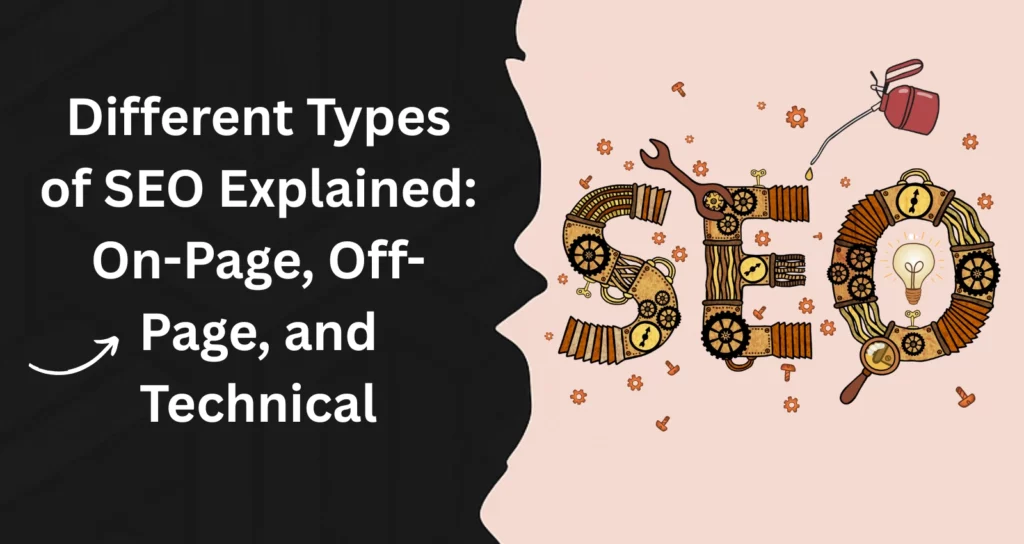
The off-page SEO you perform on your site to get the best results, so it is better if you do it with excellence. Here, excellence means you must have a balanced approach which achieves more than just off-page SEO. To get some idea of where off-page optimization fits, it is helpful to compare it with the other main approaches of SEO, i.e. let’s compare it with On-Page SEO and Technical SEO, so you will get a clear idea about it.
On-Page SEO vs. off page optimization
The principal difference between on-page and off-page SEO is the place where the optimisation starts working.
On Page SEO:
Within Website Activities: On-page SEO is all about search engine optimisation work that takes place inside the website.
- That includes keyword-rich quality content, keyword-based meta title, meta descriptions, (H1, H2, H3 include keywords), internal links, external links, and image optimization using alt text. You can make the changes whenever you want.
- Basically, relevancy and quality of the content are the main aspects of on-page SEO that enable the search engines to understand what the pages are meant for.
Some of the Important Elements of On-Page SEO:
- Keyword optimisation: Do the natural insertion of the primary and secondary keywords in the content, metadata, and titles.
- Title Tags & Headings: Clear and relevant titles (H1) for web pages along with subheadings (H2-H6) that assist both users and crawlers.
- Meta Descriptions: They are the short description of your page in the search results and are used to increase the page’s click-through rate.
- Internal Linking: To connect relevant content from your site for good navigation for a user or for sharing link authority.
- Image Optimisation: Use alt tags, compress file sizes, and give suitable file names.
- Content Quality: Useful original and well-structured content that serves the purpose of user intent.
- Target: The reason behind everything should be making your content easy to find, understand, and engage.
Off-Page SEO:
Outside Website Activities: Off-Page SEO has to do with things that occur outside your website, but these external tasks will affect your SEO ranking. Things like backlinks, brand mentions, social sharing, influencer endorsements, etc.
- These things are done by someone else or third-party platforms, like they link your blog and share your article on Twitter. You can push the off-page SEO a little bit by doing outreach and guest posting; however, its efficiency is something that you cannot really control.
- Off-page techniques give a site its authority and confidence, and it is these authorities that Google uses to value content and compare it against a competitor’s.
Summary: In short, both types of SEO are important: on-site SEO makes your content worthwhile to be viewed, and off-site SEO pushes visibility and confidence to your content.
Off-Page SEO vs Technical SEO Optimisation:
Off Page SEO:
There are different important descriptions for these two different optimisations. Outside Activities: Off-page SEO refers to the linking, to the influencer marketing, and to brand mentions; ie, what is being said about your website.
- In off-page SEO, you must write guest posts, get backlinks from other sites, and even engage with your audience on social media.
Technical SEO:
The Performance and Crawlability of Your Website:
In technical off page optimization , the backend coding part is the main factor. Your technical SEO must be good/strong. If you want, your website must be indexed easily and quickly, load easily and be accessible by any search engine. In this SEO, content, interlinks, and external tags do not matter, but yes, how the search engine views or experiences the site matters only. In technical SEO, we only care about website speed, mobile usability, and anything that crawlers consider.
- Aspects of technical SEO include optimising Core Web Vitals, reducing server response times, cleaning up your site’s coding, and ensuring that it looks great on mobile phones.
- Tools for technical SEO tasks include checking page speed, HTTPS encryption, setting up redirects, XML sitemap submission, and mobile responsive design of good examples of technical SEO.
So then, Technical SEO is inward-looking technical work done inside your website, whereas Off-page SEO is promotion done from outside on other websites. Together, both are needed to rank your off-page builds authority, and your technique keeps the site running.
Some of the Important Elements of Technical off page optimization:
- Fast Speed Loading Website: Faster loading websites give the best user experience.
- Mobile-friendliness: Everyone opens the website on mobile first, so websites should be mobile-friendly
- Secure connection (HTTPS): It gives security to your website. Security is the first preference for Google.
- Sitemap and Robots.txt: This helps the search engines know which pages will be crawled, which will not.
- Structured Data (Schema Markup): This is semantically giving clues to search engines about what the real content of the site is (e.g., star ratings, FAQs).
- Canonical Tags: To avoid duplicate content, sometimes two pages have the same content.
How They Work Together(On-Page SEO, Off-Page SEO, Technical SEO)
The three forms of SEO(on-page, Technical, and off-page) work best when they are all implemented simultaneously under an SEO strategy.
Consider the following example:
One has a long article on one’s website with information on “Eco-friendly Building Materials.”
- On-Page SEO will take care of the keywords, the content formatting, and the internal linking.
- Technical SEO makes it load very fast, is mobile-friendly, and is structured well.
- Off-page SEO will work to help you get backlinks from sustainability blogs, influencer shares, and placement in the green architecture directory.
Together, these will generate some rankings and good organic traffic for that page.
List of Tools Used
- On-Page SEO Tools: Writers use tools such as keyword finder, keyword planner(Adwords), Yoast SEO and SEO All In One, to make content SEO friendly and optimize (adding Meta Title, Meta Description, Meta Keywords)their pages.
- Technical SEO Tools: Perform an analysis for errors and performance using Google Search Console and PageSpeed Insights.
- Off-Page SEO Tools: These tools provide backlink analysis, mentions tracking, and influencer discovery: Ahrefs, Moz Link Explorer, SEMrush, and BuzzSumo. In general, you will try to combine working on one or more of these tools as the complete strategy.
Why All Three Are Important
SEO cannot really work well if you pick any of these and use them singly. They all must work in :
- On-Page SEO will get the attention of your content.
- Technical SEO will make sure your site is accessible and is indexed easily.
- Off-Page SEO will tell the wider web to trust your site.
How Off-Page SEO Works?
The On-Page SEO focuses on what shows on your website. Off-page SEO techniques deal with how people interact with and refer to your website.
How Off-Page SEO Works Behind the Scenes
Whenever someone links to your site, shares your blog on social media, or writes a nice online review of your company, these are signals to the search engine (Google, Yahoo) that “This website is valuable.”
- Backlinks are the best way to gauge any website’s credibility and trustworthiness. Google ranks it. Backlinks can be considered votes of confidence. Each genuine link is a statement that your content is useful and reliable.
- Each and every link has its weight. However, not every backlink carries the same importance, i.e. some are famous and also mentioned by great brands and influencers. Having backlinks from those will also be great for you, as it will also improve your DA(domain authority). If a site is useless, nobody sees that if you make a backlink on that website, it will be countless for you.
Some of the activities are done by the search engine while checking your off-page off page optimization activities are as follows:
- Google crawls the entire web and discovers your website’s external and internal backlinks pointing to your website.
- After the search engine analyses those backlinks websites for their quality, relevance, and authority.
- And those signals are then used to update your site’s domain authority (DA) and page authority (PA).
- Sites with high DA that have strong off-page SEO generally rank higher for the competitive keywords.
Other off page SEO factors are social signals, Google Business reviews, citations, and brand mentions. If you have multiple trustworthy sources, you must do SEO on them.
Do-Follow vs No-Follow Links in SEO
In the world of off-page SEO techniques, not all backlinks are equal. Some pass authority, and others do not. This area of Off-Page SEO covers do-follow and no-follow links.
Do-Follow Links:
They are the most powerful kind of backlinks. So, if a site links to you with a do-follow link, it signals to search engines, “We trust this site.” This link passes what is known as a “trust signal link”, a trust signal that helps with raising SEO rankings.
For instance, if a renowned blog in your industry allows you to guest post and includes a do-follow link to your website, this can raise your domain authority tremendously and also improve your rankings.
No-Follow Links:
If you add “No-follow links”, it instructs search engines not to pass links to the target site. However, the links lead much traffic and visibility to the brand and have less influence on ranking. Such links include:
- Comments on blogs
- Forum posts
- Some social media links
- Sponsored or paid links (usually to be no-follow links)
Although no-follow links do not pass authority, they can still be valuable. They are considered good if they are part of creating backlinks, which increases the natural look and balance of your off-page SEO.
Balanced Link Profile:
You must create balanced backlinks, because Google wants to see a natural off-page SEO. It must be a mixture of do-follow and no-follow links. If your website receives all the backlinks from some low-quality quality blogs, it will directly affect your ranking. So do slow work, but do quality work.
So, Just Stay away from untrustworthy directories when investing in off-page SEO services. Instead, do work on only white-hat link building that will secure do-follow links from credible sources.
White Hat vs Black Hat Off-Page SEO
For long-term success, it is very important that you understand the basic difference between white and black hat techniques and also avoid penalties.
White Hat Off-Page SEO
By white hat, we mean techniques that are ethical and approved by Google for improving your rankings. They are sustainable and safe because, although they may take longer to show, their results remain for a long time.
Some white hat off-page SEO techniques include:
- Backlinking through high-quality, reliable content that deserves to be shared
- Guest posting on high-authority websites
- Link Building relationships with influencers and bloggers
- Getting positive reviews on Google, Yelp, and industry directories
- Getting cited on reputable business listing(Justdial, Indiamart, etc) platforms
White hat off-page SEO strategies concentrate on real authority with a reputation which users and search engines alike value.
Black Hat Off-Page SEO:
Black hat methods are totally opposite to white hat SEO. Black Hat SEO perfers, ranking the website by doing SEO in unethical ways. This SEO provides a momentary glory, which lasts only for a short time. It has the danger of Google penalties, the de-ranking, or even de-indexing from search engines.
Some instances of black hat off-page SEO are:
- Buying backlinks in bulk from low-quality domain authority sites
- Going along with link schemes, buying them online
- Spammy blog comments, posting, and forum links
- Anchor text keyword stuffing
- Fake reviews and testimonials
Black hat techniques will slowly destroy the process of your online reputation. Google’s algorithms, including Penguin and SpamBrain, are meant to discover such manipulation, and restoration from a penalty is almost an impossible task for the penalised.
Grey Hat SEO:
It’s a mixture of some white and black hat techniques- maybe using guest posting just for link building or link exchanges, which are rather extreme. It’s a risky mix because what is safe today might go under the black hat definition tomorrow.
For long-lasting success, always follow white hat off-page SEO. While creating Backlinks, you must concentrate on quality rather than quantity. Trust builds slowly if you do good work; tricks should not be there, otherwise, it will destroy your efforts.
Pros and Cons of Off-Page SEO
off page optimization is an essential part of both SMO(digital marketing) and search engine optimisation. It happens outside your own website. Off Page SEO helps search engines and users perceive your brand as trustworthy, credible, authoritative, and relevant in the particular niche.
- Everything occurring outside your website that helps your website in the rankings on search engines like Google, from backlinks, brand mentions, social signals, and even guest blogging, is included in the process of off-page SEO.
- However, all of these have their own good and bad effects. Knowing both will help you give a proper idea about how to approach SEO in a good way, to get a positive result in search engines.
Let us move on to the massive advantage, which accounts for this pros and cons list for Off-Page SEO.
Pros of Off-Page SEO
Properly done Off-page SEO will set up the website with great visibility, high domain authority, and credibility. A White hat SEO will give hype to your brand in the search engine.
1. Better ranking in Search Engines:
White hat Off Page Seo backlinking results in better ranking in search engine result pages(SERP). It will take time, but the result will surely be on the way. The first advantage is the boost given to achieving higher rankings on the Search Engine Result Pages (SERP).
- Search engines take backlinks as their main ranking criteria. Achieving quality backlinks from recognised websites increases your chances of landing on the first page or at the first position.
- Ranking on the first page/first position is directly linked with off-page SEO techniques, which include guest posting, influencer outreach, and digital PR that earn high authority links that speak directly to Google, which means building trust.
2. Increases Trust and Authority of the Website:
While doing off-page SEO as a reputation manager in the eyes of search engines. If the backlinks are from top-ranking, authoritative websites, they are all links to the website. This process tells the search engines that the particular website’s content is useful and trustworthy.
- White Hat Off-Page SEO builds Domain Authority (DA) and Page Authority (PA), which are two key off page SEO factors. That results in search visibility in search engines.
- Off-page SEO gives you trust and also positions you as a competitor for others(in that particular niche).
3. Increased Organic Traffic:
The greater your positioning for relevant keywords through proper citation of off-page SEO efforts, the more traffic your site will receive organically.
- Also, there will be an incremental referral traffic coming from those websites linking to yours-they visit those sites, click your links, and get landed on your page.
- A steady series of off-page activities will draw visitors, grow engagement and therefore conversions.
4. Increased Brand Visibility and Awareness:
Off-page SEO services include all the strategies, such as social media marketing, influencer marketing, content syndication, and online referencing, all of which create better brand visibility in search engines.
- People begin noticing your business in various online platforms- Blogs, YouTube channels, industry sites, and social media.
5. Building relationships and building industry connections:
Good off-page SEO would consist of establishing relationships with bloggers, influencers, journalists, and other webmasters. Such relationships help you:
- Get backlinks
- Create content together
- Make use of an already existing audience
So, in short, these relationship-building efforts both help your off-page optimisation and open a new window for alliances and content exposure opportunities.
6. Complements On-Page and Technical SEO
No SEO can stand alone. If there is a strong on-page and technical SEO, off-page SEO becomes an external support for the content and structure you build within the website.
- Together, the three form an extremely capable SEO base that guarantees growth with rankings in the long run.
7. Works for Local SEO and Google Business Profile
For local clients, Off-page SEO is the most important thing; your business should register in local listing directories. Positive Reviews on local listings directories such as Google Business Profile (GBP) platforms give you more local visibility.
Cons of Off-Page SEO:
As we saw above off page optimization, there are numerous benefits of off-site SEO, but there are disadvantages too. Disadvantages come in the field when anything does not go as expected. If you don’t follow positive methods, it will be considered a risk for your business website. Let’s see the disadvantages given below:
1. Lack of Control:
The biggest issue of off-page SEO, wherein things happen beyond our control, if any third person shares content, or comments and creates backlinks on your behalf, there are many things listed below that we cannot control:
- Whether somebody goes ahead and publishes your guest post
- Whether the links on your site remain live
- What anchor text do others use
- Whether or not a reviewer gives a bad rating
So this lack of control makes off-page SEO a little more difficult to manage compared with on-site alternatives.
2. Consumes Time and Resources
Techniques that require an effective off-page SEO process include guest blogging, digital PR, and influencer outreach, all of which take time. They could be:
- Researching target sites
- Pitching content ideas
- Creating valuable content
- Following up with editors
If you do not have an in-house SEO team, you will most probably look into off-page SEO services and will end up buying them after spending money.
3. Risk of Low Quality Backlinks
Being a trustworthy link takes so much time and effort. Some backlinks may not be that advantageous. Those links come from spammy or irrelevant websites. Such backlinks will be destructive to your SEO rank. If your backlink profile appears artificial or manipulative, Google may decide to:
- Ignore these links
- Put a penalty on your site in rankings
- Throw your site under manual review
- Make sure to keep an eye on your backlinks to disavow or remove those that can hurt yours.
4. Susceptible to Algorithm Updates:
Google keeps updating its algorithm to fight against black hat SEO methods. Updates like Penguin and Spambrain are meant to specifically target black hat SEO activities, which include three:
- Buying backlinks
- Keyword-stuffed anchor texts
- Private Blog Networks (PBNs)
- A site relying heavily on spammy off-page SEO tactics risks dropping down in rankings once such an update rolls through.
5. There Are No Fast Results
Off-page SEO needs long-term efforts; it cannot be done in a few days like we do on-page seo activities. Sometimes, Off-page work takes months to pay off in terms of real results.
- Building backlinks, trust, and domain authority has its own patience game, and if you are looking for quick wins, then off-page SEO will seem slow.
6. Difficult to Define/Quantify Direct ROI:
One of the major problems of off-page SEO services is in defining or quantifying actual ROI. Numbers such as the number of backlinks, domain authority, or amount of referral traffic help with showing evidence of work done, but sometimes we are not able to track them.
- This makes it all the more vital to view Google Analytics, Semrush, or Ahrefs periodically, and thereafter keep an eye on the metrics tracked to determine whether your efforts are worthwhile or not.
7. Susceptible to Negative SEO
Another danger it carries is that of Black Hat off-page SEO, whereby your competitors create spammy backlinks to your site, discouraging your rankings. Being a rather rare practice in most industries, one can nevertheless encounter it in strongly competitive ones.
- Perform regular monitoring of your backlink profiles in Google Analytics and the Webmaster tool, so that you notice any unpleasant surprises very early. Google will kindly allow you to disavow any link you deny having created or approved.
Best Practices and Common Mistakes
When done correctly, off-page SEO ranks high, brings traffic to your site, and also adds domain authority to it. There may be many mistakes in off-page SEO that can ruin your site’s reputation and ranking with search engines. Knowing what to avoid is just as important as knowing what to follow.
Common Off-Page SEO Mistakes to Avoid
1. Relying on Low-Quality Backlinks
Some websites have copied content; they don’t have that domain authority. If, in case, you have created backlinks from such websites, it will affect your ranking.
Backlinks are a top-ranked off-page SEO factor; however, not every link carries an equal amount of weight, as it depends on the quality of content that the website contains.
- One of the most common errors in off-page optimisation is the creation of low-quality or spammy backlinks from irrelevant or undesirable websites.
- Doing Black Hat SEO by buying links, link-generator software, or exchanging links with unrelated websites. These are black-hat SEO techniques forbidden by Google and can result in penalties or lower rankings.
What to do instead:
Try to create backlinks from authoritative sites relevant to your niche. On its part, then, Moz backs guest posting, digital PR, and producing content worthy of being linked as valid off-site SEO tactics.
2. Not Optimising the Anchor Text
Anchor text is the clickable word that shows up in a hyperlink. It gives search engines a clue regarding the content of the page that is being linked to.
- A usual error in off-page SEO services is over-optimisation of anchor text; stuffing it with the exact-match keywords, or simply falling for bland anchors like “click here” on every occasion.
What to do instead:
Use all sorts of anchor texts- branded, generic, partial-match, and exact-match. It talks about page optimisation and complements the natural form of your backlink profile.
3. Forgetting About No-Follow and Do-Follow Links
Many newbie website owners misunderstand the value of no-follow links. Only do-follow backlinks indeed pass direct SEO value.
- However, no-follow type links from websites considered authoritative (say news websites, social media or Wikipedia) bring in traffic and visibility for a brand.
What to do instead:
Never dismiss no-follow links at all. A natural backlink profile should have both. Backlinko and Yoast say that it is vital to have healthy amounts of both types of links for any off-page SEO strategy.
4. Building Links Too Fast
Google observes the rate at which you are creating backlinks. Your website will be suspicious in the eyes of search engines if you create hundreds of backlinks overnight.
- If you buy some links from some software, an unnatural rate of link building will put you in danger. Google will review or filter being triggered.
What to do instead:
Organic/ quality link-building work matters. Take time and do quality work only. This is one of the main pillars of white-hat off-page SEO techniques.
5. Unique Content Marketing:
Content is the king of the SEO process. Some site owners rely too much on backlinks and, hence, forget about quality content marketing, which is a very strong off-page SEO factor.
- When you make valuable content (like infographics, how-to guides, or research papers), natural backlinks will count as a white hat Off page SEO strategy.
What to do instead:
Have link-building strategies centred on content. SEMrush advised that content remains king, even in off-page SEO services. So, create content that others want to reference.
6. Link Quantity Over Quality
One of the most outdated off-page SEO techniques remains obsessing over the quantity of backlinks.
- A few high-authority links from relevant domains are worth far more than hundreds of low-quality ones.
What to do instead:
Use a link rating tool such as Moz’s Domain Authority or SEMrush’s Authority Score. Go after backlinks that come from an authoritative site that is trustworthy and topically relevant to your own.
7. Brand Mentions:
Building external SEO is also not just about links.
- Even unlinked brand mentions-where someone sells or talks about your brand without providing a link to your website-can be considered a trust-building signal for Google.
What to do instead:
Set alerts for your brand name using Google Alerts or SEMrush. Contact those sites that mentioned you but did not link to your website, and politely request them to link to you.
8. Ignoring Local SEO as Part of Off-Page Optimisation
Most businesses, especially local ones, tend to forget off-page SEO.
- It includes local citations, business directory listings, and GMB optimisation.
What to do instead:
Get your business listed in reputable local directories with a consistent name, address, and phone number (NAP) across platforms. These seo off page activities are hugely important for local rankings.
9. Getting Involved in Link Schemes
Link schemes include everything from exchanging links (“I’ll link to you if you’ll link to me”) to running private blog networks or buying from softwares or websites.
- These off-page SEO techniques are risky and are strongly forbidden by Google.
What to do instead:
Avoid manipulative behaviour, focus on honing relationships and acquiring links organically through value. This sits perfectly well within Google’s E-E-A-T (Experience, Expertise, Authoritativeness, Trustworthiness) guidelines.
10. Off-Page SEO Efforts
Without keeping track of your backlink profile.
- you could potentially fall prey to negative SEO or spammy links, harming your reputation.
What to do instead:
Regularly audit your backlinks using tools such as Google Search Console, Ahrefs, or Moz Link Explorer. Consider no-follow links that might be harmful and make necessary adjustments to your off-page optimisation strategy.
Future of Off-Page SEO
It has kept the websites in the rankings. Traditionally, off-page SEO includes link-building techniques that include creating huge backlinks and solutions for traffic exchange.
- However, with new algorithm updates and more focus on user intent and authority, off-page SEO has become more high-level and strategic. The time of spammy backlinks and quick fixes is gone-the time has come for ethical, value-driven, and brand-centric strategies.
- To gain an understanding of the future direction of off-page SEO, we need to review the fundamentals of off-page SEO and observe how emerging trends and algorithmic changes are already shaping the future of Search Engine Optimisation.
Future of Off-Page SEO in a Changing Google Algorithm
Search engines nowadays are not just considering how many backlinks you have for your website. Instead, they analyse factors like quality, context, source, and even engagement. As Google’s algorithms become more intelligent, so do the signals used by off-page activities for higher ranking positions.
Let’s discuss some of the key off page SEO factors that are starting to change and are expected to shape the SEO future of this discipline:
1. Authority Over Quantity
Previously, a huge number of backlinks could have improved a certain page’s rankings. But today everything has changed. Google’s algorithm is far more sophisticated.
- According to Moz and Backlinko, link authority is now considered to be one of the most important off page SEO factors.
- That means links from trusted domains and quality content are weighed far more than numerous low-authority backlinks.
Future Insight:
With off-page SEO, nowadays, favour earned authoritative backlinks rather than manipulated links. If you are promoted by some publications, on government or university websites, and relevant industry blogs/articles, it will be counted as a huge success.
2. E-A-T with a Deeper Account of Experience
As Google quality guidelines evolve, E-E-A-T has emerged to have a stronger impact on how off-page SEO signals are assessed.
- When trusted sites mention or link to your content, your trustworthiness in the eyes of Google increases.
Future Insight:
The future of off-page SEO factors largely depends on brand mentions, author citations, and third-party positive reviews, even if they do not contain links. These unlinked mentions may build relevance and trustworthiness(that your service mentioned on your site is the best).
3. Brand Mentions and Digital PR
Perhaps one of the very subtle yet upcoming trends is the unlinked brand mentions.
- As Google learns to better understand the context and recognise entities, it can associate your brand with particular topics and industries-even if there’s no direct link.
Future Insight:
Effective off-page SEO techniques will place digital PR at the core. Being cited in interviews, podcasts, news features, and thought leadership pieces will become as important as backlinks.
4. Contextual Relevance and Semantic Signals
Google has begun using NLP in the advancement of content relevance and semantic factors.
- Now it can also understand how a backlink is related to the topic of your content. Thus, contextual relevance is likely to be a big ranking factor of the future.
Future Insight:
Backlinks must not only come from reputable sources; they must also be related to your niche. For example, on Fitness websites, you cannot create a backlink from any Tech Website. They should be related to each other.
5. Social Signals and Brand Awareness:
While social signal metrics like shares and likes have no direct ranking factors, they impact off-page SEO in some way by way of visibility, traffic, and perhaps backlink potential.
- Most importantly, social media can generate brand awareness, which Google sees as a relevance and authority signal.
Future Insight:
Social media engagement and branded search volume will then become more and more mixed up within the off page optimization activities. It seems like Google has begun paying closer attention to users’ brand interactions on/off their platforms.
6. The Way to a Holistic Approach to Reputation Management
Previously, off-page SEO was just about links. Now it encompasses online reviews, customer feedback, influencer marketing, and content syndication.
- Google collects data across the web to assess the reputation of your site.
Future Insight:
Creatively working off-page SEO activities will be about proactive reputation management: tracking reviews, responding to users, and asking happy customers to leave positive feedback on Google, Yelp, Trustpilot, and so on.
7. AI with Off-Page SEO Monitoring
Google uses machine learning to understand content and context better, meaning AI is also getting into off-page strategies.
- Tools like SEMrush, Moz, and Ahrefs offer predictive analytics for backlinks, domain authority, and spam scores.
Future Insight:
Off-page SEO services, link-profile audits, identification of toxic links, and selection of the best outreach opportunities will increasingly become guided by AI-driven insights.
8. Video and Multimedia Mentions
In recent years, as platforms like YouTube and Instagram have become more search-oriented, multimedia mentions have contributed to your off-page presence.
- Technically, Google can now index video content, and brand mentions in videos are growing in influence.
Future Insight:
Hence, in the future, off-page SEO techniques would likely involve video PR, influencer collaborations, and syndication of multimedia content as part of the full-fledged strategy.
9. User-Generated Content (UGC) and Community Signals
Forums, Q&A sites like Quora and Reddit, blog comments, and any other user-generated content are increasingly being analysed by Google as signals of authority and relevance.
- Though they sometimes do not give backlinks, they contribute to the off-page SEO definition in terms of engagement and brand visibility.
Future Insight:
Promoting genuine discussions about your brand in trusted communities will also become one of the best practices of off-page SEO.
The Role of Digital PR in Modern Off-Page SEO
Digital PR has evolved from being merely an auxiliary strategy to becoming the core of the off-page SEO plan. For the year 2026 and onwards, getting exposure on high-trust media, industry papers, and reputable blogs has more potency than having a number of conventional backlinks together.
Google’s revised quality assessment of links now puts context, credibility, and editorial control in focus next to high-authority placements thus rendering them more influential than ever before.
When your brand gets referred nonchalantly in expert round-ups, research papers, event coverage, or reputable newspapers, those signals reinforce your whole SEO infrastructure.
Besides that, Digital PR also contributes to Google’s EEAT framework by demonstrating that real professionals trust, cite, or recognize your work. Such third-party endorsements cannot be simulated, and their impact extends to influencing how algorithms assess your site’s authority.
Digital PR has another advantage in the form of entity recognition enhancement. With Google gradually shifting its focus to entities, frequent citations of your brand in trustworthy sources aid search engines in figuring out who you are, what you do, and why you are important.
This understanding increases the likelihood of your brand being listed in AI Overviews, Knowledge Panels, People-Also-Ask sections, and other premium SERP placements.
Digital PR of today has nothing to do with press releases, it’s all about nurturing connections, imparting genuine knowledge, and gaining visibility purely because you possess something worthwhile to say.
When Should You Consider Hiring Off-Page SEO Services?
Off-page SEO can sometimes eat up hours, months or years of a single person’s schedule. That is where hiring professional off-page SEO services would come to the rescue.
What to Expect from Genuine Off-Page SEO Services:
Creation of high-quality backlinks
- Outreach to influencers or bloggers
- Placement of guest posts
- Analysis of competitors
- Reputation monitoring
Only choose white-hat agencies that abide by the Google guidelines. Give Red flags to those companies’ services that promise you “1,000 backlinks in 1 night!”
Common Off-Page SEO Mistakes to Avoid in 2026
Most websites fail at off-page SEO not because they lack effort, but because they follow outdated or risky practices. In 2026, Google’s link evaluation systems and AI-driven quality checks are far more advanced, which means old shortcuts no longer work, and can even harm your site.
One of the biggest mistakes is chasing links purely for volume. Low-quality directories, mass guest posts, and irrelevant backlinks may temporarily boost metrics but provide no long-term search value. Google’s link spam updates now ignore or devalue such links instantly, and repeated patterns can damage your site’s trust profile.
Another common error is relying too heavily on AI-generated outreach or link-building content. Google can recognise repetitive AI-style text, and publishers are becoming stricter about accepting AI-written guest posts without genuine perspective. Off-page SEO still requires human input, originality, and context.
Ignoring unlinked brand mentions is also a missed opportunity. Today, Google uses brand sentiment and entity connections as trust signals. If your brand is mentioned negatively or associated with low-authority spaces, it affects overall perception, even without a backlink.
Businesses also often forget consistency. Publishing a few guest posts, earning one PR mention, or doing sporadic social promotion won’t influence rankings. Off-page SEO works when signals build over time, across multiple channels, with relevance and authenticity.
Lastly, many brands overlook relationship-building. SEO in 2026 isn’t just algorithm work, it’s people work. Genuine connections with publishers, creators, experts, and communities lead to the kind of mentions and links that algorithms trust most.
Measuring Success of Off-Page SEO in 2026
The monitoring of off-page SEO mostly depended on metrics like the quantity of backlinks, domain authority scores, and referral traffic. Although these indicators are still important, the primary indicators of success in 2026 indicate a deeper level of trust and engagement.
The search engines want to know whether your brand is becoming a recognized and reliable presence all the way through the web, not just accumulating links.
Brand authority can now be gauged through tools that analyze the volume of unlinked mentions, the type of sentiment and the quality of citation placements.
With these analytics, it is clear whether the public is talking about your brand and if the talk is favorable, unfavorable or neutral. Google’s algorithms are especially attentive to this sentiment data when assessing the credibility.
Another major change is the emergence of “contextual link value” as an important factor influencing ranking. A single link from a highly-relevant source with strong editorial control can surpass for example dozen or more backlinks from general sources.
So instead of quantity, turn your attention to quality through building and maintaining good relationships with publishers, partners, and the industry community.
Moreover, engagement metrics will also bear the brunt of off-page success. When the social content that you publish is shared in a non-commercial way or when your podcast gets mentioned by other creators or your research gets referred to as authoritative these are indications of the expanding influence that you are enjoying.
The modern off-page SEO is a direct representation of your brand’s reputation, acknowledgment, and outreach and on the metrics you will see if you are getting your money’s worth in terms of efforts and investment.
FAQ’S:
- What are the key off page SEO factors?
We have so many factors, such as backlinks, brand mentions, domain authority, reputation online via reviews, and engagement through social media. It’s always quality backlinks from trustworthy, relevant websites that will act as the strongest signals, declaring a site as trusted and credible.
- Anchor texts of backlinks, quality domain authority, and trusted brand mentions in forums, blogs, or news sites further influence the thing.
- All those factors go towards enhancing your site’s authority, visibility, and ranking. So these factors affect your search engine ranking.
- How to get backlinks?
A backlink is meant to be a URL, in which a website links out to a specific webpage(related to your niche). Off-page SEO is getting links from other sites to your content.
- One of the finest methods is to create quality content and get it in many people’s hands; guest blogging on respected websites and influencer outreach within the industry; submission to relevant directories; digital PR; and participation in forums and Q&A sites for links.
- Never do anything via black-hat off-page seo, such as link buying, as it could get you serious penalties.
- What is the anchor text in SEO?
An anchor text is partly or fully clickable text in an HTML hyperlink. It reveals the topic of the linked page and is one form of SEO.
- On-page SEO is connected with the title and headings of the page. While the off-page anchors come from external sites and help engines recognise the topic of the linked page, potentially influencing the ranking of that page for some keywords.
- How many backlinks in a day?
Backlinks are not limited by the number one must get each day. Instead, what search engines want to see is a natural trend of link building. Too many backlinks within a short period will cause all sorts of spam alerts and affect your rankings. Off-page SEO is all about quality.
- One backlink from a truly high-authority relevant site composes more value than hundreds from low-authority sites. Backlinks are gained in a slow, natural way. Especially when they come from reputable sources, they are considered indicators of good, healthy growth.
- How do I check backlinks?
A backlink checker is an ally in examining backlinks; SEMrush, Moz Link Explorer, Ahrefs, and Google Search Console will all do that. These tools look at who’s linking to your site, the value of such links, the anchor text used, and whether it’s a do-follow link or not.
- Checking for backlinks is a very crucial point of off-page SEO, where it is conducted to look for any bad ones in the mix, to check on SEO progress, or to plan any next outreach.
- By constantly doing an audit on your backlink profile, you will be able to check such links that would otherwise be harmful to your off-page SEO reputation, thus keeping a clean and highly authoritative online reputation.
- How to create a backlink?
The very core of backlinks is high-quality content that others will naturally want to create.