All SEO
  SEO News
  SEO Strategy
  Ask An SEO
  Enterprise SEO
  Google Algorithm Updates
  International SEO
  Link Building
  Local SEO
  Mobile SEO
  On-Page SEO
  Technical SEO
  Vertical SEO
  Wordpress for SEO
  Web Dev for SEO
  SaaS SEO
  E-commerce SEO
  AI-Driven SEO
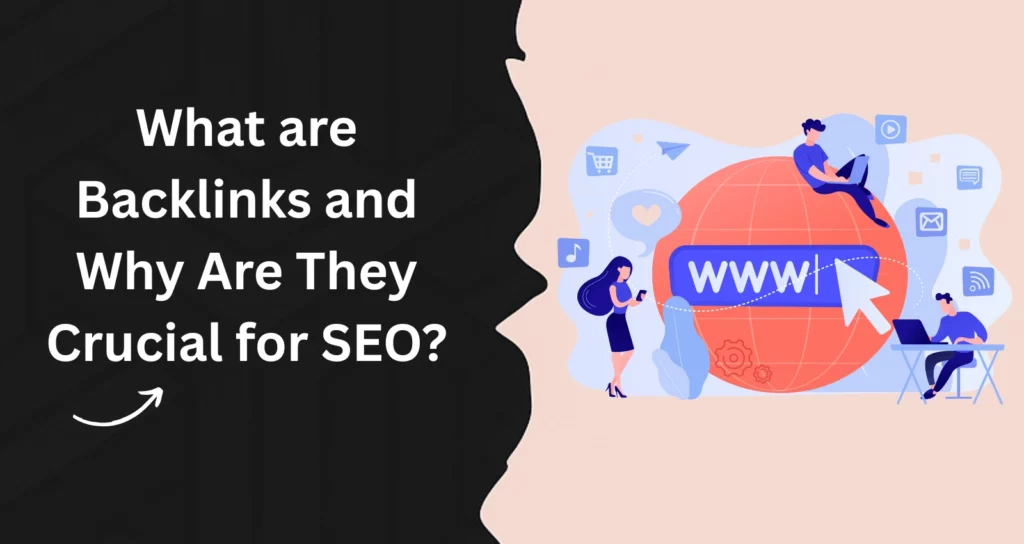
 What are Backlinks and Why Are They Crucial for SEO?

If you’ve ever wondered why some websites always show up at the top of Google, you’re not alone.
The secret isn’t just in keywords, site design, or content; it’s in something called backlinks. In fact, when you ask yourself what are backlinks?, you’re touching on one of the most powerful levers in SEO.
They help in determining how trustworthy and relevant your site appears within its niche, a concept that continues to evolve under Google’s E-E-A-T (Experience, Expertise, Authoritativeness, Trustworthiness) framework in 2026.
Here are the insights you need to understand backlinks, why they matter, and how to build them strategically.
What Are Backlinks?
A backlink is a hyperlink from one website to another, often referred to as an inbound or incoming link. When an external site links to your webpage, it signals to search engines that your content holds value and credibility.
To visualise this, imagine you run a local bakery and a popular food blogger links to your website in a review. That single backlink acts as a vote of confidence, signalling both to Google and readers that your bakery offers trustworthy products or information.
Marketers sometimes call them inbound links, incoming links, or one-way links. They’re like digital votes of confidence that tell search engines, “This content is worth checking out.”
To break it down even further: what is back link in everyday language? Imagine you own a local bakery, and a popular food blogger writes a review and links to your website.
That link tells both readers and Google that your bakery matters. This is the foundation of SEO backlinks: they build trust, authority, and visibility.
In the SEO ecosystem, backlinks form the backbone of authority building. They help determine how trustworthy and relevant your site appears within its niche, a concept that continues to evolve under Google’s E-E-A-T (Experience, Expertise, Authoritativeness, Trustworthiness) framework in 2026.
How Do Backlinks Work?
Backlinks work by passing authority from one site to another. SEO professionals often call this “link juice.” When a respected site links to you, some of its credibility flows your way.
Here’s what a backlink does in simple terms: when a site you admire links to you, it’s like they are vouching for you in front of Google and your audience both. That endorsement helps your page climb the visibility ladder. According to recent data: pages ranked #1 have on average 3.8 × more backlinks than those in positions 2-10.
What is backlink in SEO terms? It’s a ranking signal. Google uses backlinks to evaluate whether your page deserves to be on page one or buried under competitors.
The logic is simple: if others are talking about your site, it must offer value. And the more high-quality mentions you have, the stronger your visibility in search.
Types of Backlinks
Not all backlinks carry the same weight. Some can transform your SEO strategy overnight, while others barely make a dent or worse, clutter your backlink profile.
To build a strong foundation, it’s important to understand the different types of backlinks and how they impact your site.
Here’s a breakdown of the main categories:
1. Natural Editorial Links
These are the gold standard of backlinks. They happen when another site links to your content because they genuinely find it valuable, without you ever asking.
For example, imagine you publish an in-depth study on consumer behavior in 2026. A marketing blog stumbles upon it and links to your research in their article. That’s a natural editorial backlink.
Why are these so powerful? Because they’re organic. Google sees them as a true vote of confidence, signaling that your content is trustworthy and worth recommending. The more natural editorial links you earn, the more authority your site builds over time.
2. Manual Links
Manual backlinks come from proactive efforts like outreach, guest posting, or collaborations. Let’s say you write an expert guest article for an industry magazine and include a contextual link back to your site.
Or maybe you reach out to a blogger, suggesting they reference your guide in their upcoming post. That’s a manual backlink.
While these require effort, they’re still valuable, especially when earned from credible sites in your niche. The key is to approach manual link building with authenticity.
Instead of spamming requests, build genuine relationships and provide content that benefits the site’s audience.
3. Self-Created Links
Self-created links are the easiest to get but the least impactful. These come from activities like adding your site to directories, leaving a link in a forum signature, or posting comments on blogs.
Years ago, marketers relied heavily on these tactics to boost rankings, but Google’s algorithms have gotten much smarter.
That doesn’t mean self-created links are completely useless. Submitting your business to trusted directories (like Google Business Profile or niche-specific directories) can still provide some SEO value and drive referral traffic.
The trick is to be selective and avoid spammy directories or irrelevant forums, as they can do more harm than good.
4. DoFollow vs. NoFollow Backlinks
Beyond the categories above, backlinks can also be classified as DoFollow or NoFollow:
- DoFollow backlinks pass authority (link equity) from the linking site to yours. These are the most valuable for boosting search rankings.
For example, if a high-authority site links to your blog with a DoFollow link, your page inherits some of that authority.
- NoFollow backlinks include a small tag in the code telling search engines not to pass link equity. At first glance, they may seem less valuable. But don’t dismiss them.
NoFollow links can still drive targeted traffic and make your backlink profile look more natural. Links from platforms like YouTube, Reddit, or Quora are often NoFollow, yet they can send highly engaged visitors to your site.
And don’t forget DoFollow vs. NoFollow. DoFollow backlinks pass authority, while NoFollow ones don’t but both can drive traffic and diversify your profile.
Why Are Backlinks Important in SEO?
Backlinks are the bridge between content and visibility. They tell search engines that your site deserves attention. But why are backlinks important in SEO beyond rankings?
Because they also send referral traffic. When someone clicks a backlink, they land on your page ready to engage.
Picture this: your business gets featured on a respected industry blog. Not only do you gain authority through that backlink, but you also attract new visitors directly from the article.
That’s the dual power of backlinks: they boost credibility and drive real traffic.
The Evolving Role of Backlinks in the Age of AI and Brand Mentions
With search evolving, especially with AI-driven overviews, the traditional handshake of “one site linking another” is still critical, but the landscape is shifting. Recent data shows that while backlinks remain important, brand mentions (even unlinked) are gaining strong correlation with visibility in AI-driven search results.
What this means:
SEO now demands a hybrid approach: backlinks + brand mentions + content quality.
In the age of generative search and summarised snippets, a brand mention on a trusted site (even without a link) can act like a micro-vote of confidence.
Still, backlinks from authoritative, relevant domains remain extremely valuable, especially for traditional “blue link” rankings.
So when building your backlink strategy, think broader than just the link. Think “How can we be named, referenced, cited, and trusted?”, and then create content and outreach that reflects that mindset.
High-Quality vs. Low-Quality Backlinks
High-quality backlinks are like endorsements from experts. They come from relevant, authoritative sites, placed naturally within valuable content. For example, a backlink from Forbes or HubSpot carries far more weight than one from an unknown directory.
On the flip side, low-quality backlinks from spammy sites, irrelevant sources, or link farms can do more harm than good. Google’s algorithms are smart enough to notice patterns. Which means, when learning the answer to “What is a backlink SEO?” remember this: quality always trumps quantity.
Step-by-Step Guide: How to Build Quality Backlinks
The process of creating backlinks cannot avoid strategy and work. It consists of five steps, which are the following:
Publish Data-Driven Content – Articles based on research attract organic citations.
Leverage Guest Blogging – Write for established authoritative sites of your niche.
Build Digital PR Campaigns – Get covered by the media through press releases and publicizing expert opinions.
Use Broken Link Building – Find and suggest relevant content as dynamic replacements for the links that have stopped working in the industry blogs.
Engage in Community Discussions – Participate in discussions on Reddit or Quora by adding contextual NoFollow links that will bring genuine traffic to your site.
Every single one of these tactics is about gaining trust rather than deceiving algorithms, which makes them fully in sync with Google’s gradually changing ranking criteria.
The Role of Anchor Text in Backlinks
Anchor text is the clickable text in a hyperlink. It tells search engines what the linked page is about. For example, if a site links to your blog with the anchor text “SEO strategies,” Google connects your page with that keyword.
There are several types of anchor text: exact match, partial match, branded, and generic. A healthy backlink profile has a natural mix. Too many exact match looks suspicious, while too many branded terms don’t capture keyword value. Balance is key.
Backlinks and Google’s Algorithm Updates
Backlinks haven’t always worked the way they do today.
When Google rolled out its Penguin update, link schemes and spammy tactics lost their effectiveness overnight. Sites that relied on buying links or creating fake profiles dropped in rankings.
Today, backlinks are still a core ranking factor, but quality, context, and relevance matter more than ever. When understanding “What is a backlink SEO?” Google evaluates not just the link itself but also the content around it, the site’s authority, and even the user experience.
Measuring the Impact of Backlinks on SEO
You can’t grow what you don’t measure, and backlinks are no exception. Building links is only half the battle; the real question is: Are they helping you rank better and attract more traffic?
To answer that, you need to monitor your backlink profile and track performance over time.
1. Tools to Track Your Backlinks
There are several powerful tools that make backlink tracking easy:
- Ahrefs – Shows you who’s linking to your site, the authority of those domains, and whether the links are DoFollow or NoFollow.
- Moz – Known for metrics like Domain Authority (DA) and Page Authority (PA), which give you a quick sense of link quality.
- SEMrush – Provides backlink analytics alongside keyword tracking, making it easier to see how links affect rankings.
- Google Search Console – Free and reliable, showing your site’s top-linked pages and anchor texts used.
Using these tools helps you spot opportunities, identify weak links, and make smarter decisions about where to focus your efforts.
2. Metrics That Matter Most
When evaluating backlinks, don’t just count them. Look at the quality and relevance. Here are the key metrics to track:
- Domain Authority (DA) – Moz’s score (1–100) predicting how likely a site is to rank in search engines. Higher DA usually means more valuable backlinks.
- Page Authority (PA) – Similar to DA, but measures the strength of a specific page rather than the whole domain.
- Domain Rating (DR) – Ahrefs’ metric showing the overall strength of a website’s backlink profile.
- Anchor Text Distribution – The words used in the hyperlinks pointing to your site. A natural mix of branded, partial-match, and generic anchor text is healthiest.
With these insights, you can distinguish between backlinks that strengthen your SEO and those that merely fill space in your profile.
3. Beyond Metrics: Real Impact on SEO
At the end of the day, backlinks aren’t just about numbers; they’re about outcomes. Ask yourself: Are my backlinks driving actual growth? Here’s how to measure:
- Organic Traffic – Watch for increases in visitors from search engines after acquiring strong backlinks. A spike in traffic often means your authority is growing.
- Keyword Rankings – Track whether your target keywords climb in the search results. Backlinks are often the difference between page 2 and page 1.
- Conversions – Backlinks that drive qualified referral traffic can also bring new leads or sales. For example, if a popular industry blog links to your tool, you might see not only more traffic but also more sign-ups.
The combination of analytics tools and business metrics gives you a full picture: backlinks aren’t just helping you rank, they’re fueling real business results.
Common Backlink Building Mistakes and How to Avoid Them
It’s easy to get backlinks wrong. Some common mistakes can actually hurt your SEO more than help.
Mistake 1: Chasing Quantity Over Quality
Lots of links from weak, irrelevant sites look unnatural to Google. Studies show that quality trumps quantity. Instead of 100 low-value links, focus on 5-10 highly relevant, authoritative links.
Mistake 2: Buying Links or Joining Shady Link Schemes
These tactics used to work but slowly got more dangerous. Google’s algorithm updates (like Penguin) have penalised manipulative link-building. The risk simply isn’t worth the reward.
Mistake 3: Anchor Text Over-Optimisation
Having too many exact-match anchors (“best SEO agency Mumbai”, “buy sneakers online”) can signal manipulation. A natural mix is better: branded (“Your Company”), generic (“click here”), partial-match (“SEO service India”).
Mistake 4: Ignoring Niche Relevance
If you run an interior-design business in Bengaluru, a backlink from a pet-grooming directory in another country hardly helps. Relevance is key: subject matter, audience, and traffic flavour matter.
Mistake 5: Neglecting Maintenance
Links can disappear, pages can 404, domains can go inactive. Regular audits of your backlink profile help clean up broken or spammy links and maintain health.
By avoiding these mistakes you build a stronger, more sustainable backlink profile that aligns with Google’s guidelines and your business goals.
Future of Backlinks in SEO
Will backlinks always matter? The short answer is yes, but their role may evolve. As search engines integrate AI and emphasize E-E-A-T (Experience, Expertise, Authoritativeness, Trustworthiness), the context of a backlink will weigh just as much as the link itself.
Future link-building will likely focus on building credibility through thought leadership, social proof, and high-value content. SEO backlinks will continue to serve as a trust signal, but they’ll work in harmony with other ranking factors.
Why Backlinks Remain Crucial for SEO Success
So, what are backlinks in the grand scheme of SEO? They’re digital trust signals, pathways for referral traffic, and key ranking factors. Without them, even the best content risks staying invisible. With them, your site gains authority, visibility, and a competitive edge.
Instead of chasing shortcuts, build a backlink strategy rooted in quality and relevance. The search engines and your audience will reward you for it.
Conclusion: Backlinks – The Lifeline of Modern SEO
Backlinks are more than just hyperlinks, they are the digital trust signals that connect great content with visibility and authority. In a world where search algorithms and AI-powered summaries evolve daily, backlinks remain one of the most reliable indicators of credibility.
Think of them as relationships built across the web. Each quality backlink tells Google, “This brand is worth paying attention to.” And when that trust compounds, your site rises higher, earns more clicks, and gains lasting recognition.
But the real art of backlink building lies in earning, not manipulating. It’s about creating valuable content, nurturing genuine connections, and contributing meaningfully to your niche community. Whether it’s through insightful guest posts, original data studies, or expert opinions, every earned link adds another layer to your authority.
So, if you are serious about sustainable SEO growth, focus less on shortcuts and more on strategy. Build content that deserves to be shared. Collaborate with voices that align with your brand. Measure your progress, refine your approach, and stay consistent.
Because in 2026 and beyond, backlinks won’t just boost your rankings, they will define your reputation in the digital world.
FAQs
Q1: How many backlinks do I need to rank on page one of Google?
There is not a specific number. What is important is the quality, relevance, and authority of those links. A lot of pages on the internet have no backlinks at all and still rank. Nevertheless, it is a general rule that the top pages have their backlinks multiplied by 3 or 4 compared to the pages below them on the ranking list.
Q2: Do NoFollow backlinks have value?
Yes, though they might not transfer “link-juice”, they still help with referral traffic, adding variety to your link profile, and getting the involvement of real users. Furthermore, they indicate to search engines that your profile is genuine.
Q3: Will backlinks lose value with AI search becoming more important?
No. They are transforming, but their value is still there. Actually, many link-builders claim that in the era of AI-powered search, both backlinks and brand mentions have become more significant than ever before.
Q4: What anchor text strategy should I use?
Go for a natural mix: branded anchors (the name of your company), generic anchors (“read more,” “this page”), partial-match (“best SEO tips 2026”), and only very occasionally exact-match. Over-optimization comes across as manipulative.
Q5: How long does it take to see results from link-building?
Link-building is a long-term investment. Most marketers say that it takes 3-6 months to begin to see a measurable improvement in rankings or traffic after obtaining backlinks.