All SEO
  SEO News
  SEO Strategy
  Ask An SEO
  Enterprise SEO
  Google Algorithm Updates
  International SEO
  Link Building
  Local SEO
  Mobile SEO
  On-Page SEO
  Technical SEO
  Vertical SEO
  Wordpress for SEO
  Web Dev for SEO
  SaaS SEO
  E-commerce SEO
  AI-Driven SEO
 Snapchat’s CEO Highlights the Difficult Path Forward for the App


Snapchat’s CEO highlights the app challenges, outlining the difficult but necessary path forward for growth and innovation in a competitive social media landscape.
Snapchat’s recent earnings reveal a tough road ahead, raising questions about how the app can continue to compete in a market dominated by billion-dollar social media giants. While Snapchat can carve out a lasting niche by strengthening its bond with users, current trends paint a more cautious picture.
Declining Users and Revenue Pressure
Snapchat reported a decline in U.S. users in its latest earnings report, accompanied by lower-than-expected revenue numbers.
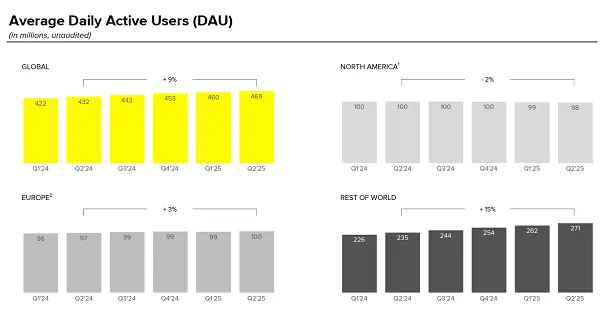
The outlook, combined with rising operating costs, brings headwinds to Snap’s growth and profitability. To compound matters, Snapchat is attempting to challenge serious competition from Apple and Meta in the AR headset market.
However, early reports suggest that its forthcoming AR glasses may fall short of being competitive against the offerings of its technology rivals, making post-margin improvement challenging.
For an open letter celebrating Snapchat’s 14th birthday, founder and CEO Evan Spiegel revealed his vision. We are at a “crucible moment” for the company, Spiegel acknowledges, a turning point that could shape the direction for Snap.
Taking a long view and hoping for the best, Spiegel said Snap is working to manage costs, capitalize on advertising opportunities, and establish business fundamentals that he believes can put Snap “on the verge of greatness” in the next two years.
Snap has ambitious targets in its sight: one billion daily active users, and $6 billion in revenue by the end of 2025. The numbers are within reach, with 932 million monthly active users and expected revenue this year of about $5.5 billion. However, growth momentum in important markets has likely run out of gas.
Strategy to Drive Growth
Snap could have a big play for mid-sized advertisers, an underserved space Spiegel wants to hit. The company claims to have achieved 2,000 new activations this year alone through its business development team, and performance appears to have been boosted with the introduction of improved ad products.
Key ad highlights include:
- App Install Ads giving a 25$ lift in conversions and an 18% increase in unique converters
- User inboxes with Sponsored Snaps generate up to 22% higher conversions and a cost per acquisition nearly 20% lower
- Double-digit visitation lifts in initial tests for Promoted Places
Moreover, Snap’s paid subscription, Snapchat+, is on a roll, having recently reached a 15 million paid accounts milestone, which accounts for over $700 million this year. Additionally, live-streaming features are planned, making it even more attractive.
AR Glasses Future
Snap has spent a decade developing its AR Spectacles, and this round of glasses is designed to change the game, with the first AR-enabled glasses set to launch next year, ahead of Meta and Apple.
According to Spiegel:
“Specs are an enormous business opportunity. One pair of Specs can substitute for many screens. Our operating system, personalized with context and memory, compounds in value over time. A marketplace of digital goods, from spatial Lenses to virtual tools, has near-zero marginal cost and global reach. Specs are how we move beyond the limits of smartphones, beyond red-ocean competition, and into a once-in-a-generation transformation towards human-centered computing.”
However, based on the latest reports, Snap’s AR glasses appear to be a step behind in terms of specs and functionality compared to Meta’s and Apple’s. Snap has an uphill task of making the project a commercial success, especially with the added pressure of cost control at the moment.
The Decisive Moment
Snap could potentially hit a ceiling in expanding its audience if its AR Spectacles fail to gain traction. User growth has stalled in most key markets, and monetization has begun to reach saturation, resulting in a relatively narrow scope of opportunities.
Bringing ads into consumers’ inboxes indicates attempts to broaden revenue sources, but the growth squeeze is fierce. Not advancing AR hardly budges the needle for Snap’s future, which may have a slower runway, particularly with Meta launching its AR glasses in 2027.
Navigating a Challenging Future
Snap does not own AI infrastructure (through partnerships), and any strategic changes are limited by contract. Snap has minimal scaling opportunities outside of AR and advertising as new growth drivers.
Reaching a billion users is challenging, but it’s possible to run a sustainable business at that scale. However, investors’ hopes for ongoing growth will intensify the pressure on Snap.
Bottom Line
Over the next few years, a great deal will depend on whether Snapchat’s AR vision can reignite significant growth. It is a crucible moment, the outcome of which will go a long way towards deciding whether Snap remains a major player or moves into a relatively comfortable but ultimately constrained niche.