All SEO
  SEO News
  SEO Strategy
  Ask An SEO
  Enterprise SEO
  Google Algorithm Updates
  International SEO
  Link Building
  Local SEO
  Mobile SEO
  On-Page SEO
  Technical SEO
  Vertical SEO
  Wordpress for SEO
  Web Dev for SEO
  SaaS SEO
  E-commerce SEO
  AI-Driven SEO
 Meta Is Shutting Down Its Messenger Website


Messenger Web Access Ends in April 2026
Meta is set to bid goodbye to its standalone messenger website. This move is seen as a game-changer in the history of messaging apps.
The Meta Help Centre 2026 statement states that users will now have to use the primary messaging service of Facebook.
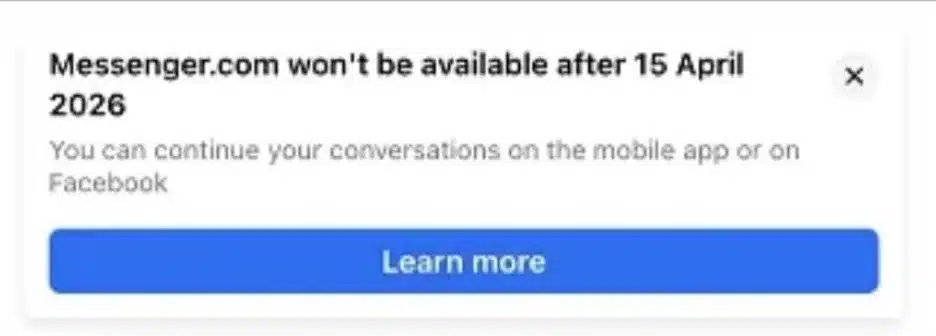
Starting April 2026, the website messenger.com will become inaccessible for messaging purposes. The Messenger desktop application has also been discontinued.
According to Meta, users can send messages through the Facebook web platform at facebook.com/messages. Messenger users who do not have Facebook accounts can send messages through the mobile application, which provides service to millions of users across the globe.
End of Messenger as a Standalone Platform
Messenger started as a separate service with its own web platform and desktop applications, which permitted users to access its features independently from Facebook.
The service developed into a major Meta communication tool during its first ten years of operation because users worldwide sent over 100 billion messages through the platform every day.
However, the company has started to reverse its approach to business. The company ended support for Windows and macOS desktop applications in December 2025, while the web platform shutdown represents a complete implementation of the company’s unification plan.
Analysts state that multiple platforms create additional operational expenses for companies. Studies also show that routing web messaging through Facebook itself minimizes redundancy in security operations, engineering work, and maintenance requirements.
Messaging Integration Plans Fade
Meta spent years developing a system that would combine Messenger, WhatsApp and Instagram Direct into one platform that enabled users to message across different networks while accessing a shared inbox.
The communication system, intended to improve operational efficiency, faced opposition because of government investigations, which highlighted potential security risks.
The system aimed to enhance communication but faced regulatory challenges because critics claimed that service integration would harm competition law enforcement.
Meta no longer treats Messenger as its platform-agnostic layer because the shutdown of Messenger.com shows that Meta is prioritizing mobile-first engagement.
Messaging Remains Core to Engagement
Despite the shutdown of Messenger on the web, messaging is actively used across Meta apps as a core engagement tool.
The company reports that its family of apps, Facebook, Instagram, and WhatsApp, serves over 3 billion daily active users globally, with Messenger alone accounting for billions of active daily conversations.
DataReportal’s 2025 Global Digital Overview research shows that private messaging apps rank among the most popular digital platforms in the world because they attract more daily users than most social media networks.
Meta wants to boost user time spent on its website by directing desktop users to Facebook while they navigate through its entire platform.
The new system creates an easy experience for users because it allows them to use their existing threads without needing to transfer their messages.
A Streamlined Future for Messaging
This move should be seen as a strategic retreat rather than a pragmatic simplification. Meta will provide ongoing Messenger support for mobile users, whom they estimate will use their service at high levels, while they combine all desktop and web messaging functions into Facebook.
The new approach optimizes business processes while using Meta’s messaging system as a primary method to engage users throughout its digital platform.
The closure of Messenger.com by Meta ends the period when users could access Messenger as an independent web-based application.
The 2026 messaging system no longer supports platform expansion. It strives to keep billions of conversations under a single umbrella while boosting user engagement across the company’s apps.