All SEO
  SEO News
  SEO Strategy
  Ask An SEO
  Enterprise SEO
  Google Algorithm Updates
  International SEO
  Link Building
  Local SEO
  Mobile SEO
  On-Page SEO
  Technical SEO
  Vertical SEO
  Wordpress for SEO
  Web Dev for SEO
  SaaS SEO
  E-commerce SEO
  AI-Driven SEO
 Google Removes ‘What People Suggest,’ Expands Health AI Tools

A Short-Lived Experiment Ends
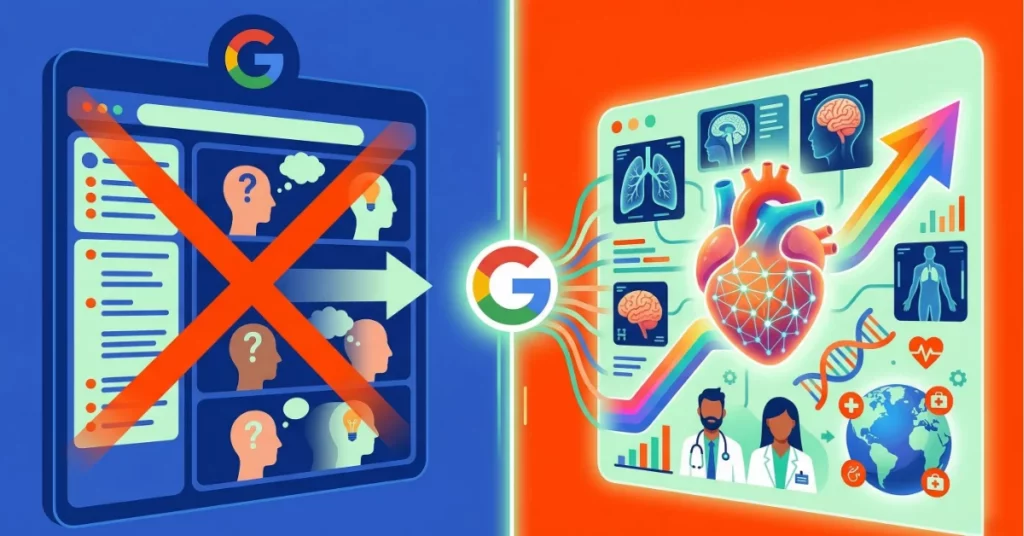
Google has decided to remove its “What People Suggest” feature from search. The tool, which highlighted health-related opinions from online forums, was introduced not too long ago as an experiment. It is now gone.
The update was confirmed during Google’s annual health-focused event, The Check Up. The company says the move is part of a broader effort to keep search results cleaner and less cluttered.
It has also made it clear that the feature wasn’t pulled due to concerns about its quality.
Still, the removal says a lot about how tricky it is to present health information online especially when it comes from everyday users rather than medical experts.
Why It Didn’t Quite Fit
The idea behind “What People Suggest” was simple. People often look beyond clinical answers when dealing with health issues.
They want to know how others felt, what worked for them, and what didn’t.
That thinking shaped the feature. Under the leadership of Karen DeSalvo at the time, Google tried to bring those real-life experiences into search.
But health information is not like restaurant reviews or product feedback. Personal stories can help, but they can also mislead.
Striking the right balance is difficult and this feature may have struggled to do that in a reliable way.
A Clear Shift Toward Video and AI
While Google is stepping away from one idea, it is doubling down on another. Much of its new focus is on YouTube and how AI can improve the way people learn from videos.
Health content on YouTube is already massive, with over a trillion views worldwide. Now, Google is adding an AI-powered “Ask” feature to some of these videos.
This means viewers won’t just watch they can interact. They can ask questions and get answers based on what the video explains. For many users, this could make complicated health topics easier to follow.
Making Information Easier, Not Just Faster
Google is also exploring ways to organise medical research using AI so that it’s easier for non-experts to understand.
The goal is not just to provide information quickly, but to present it in a way that actually makes sense to everyday users.
Dr. Michael Howell, who now leads Google’s health efforts, has pointed out that timing matters just as much as accuracy.
People need the right information at the moment they are searching for it and in a form they can grasp.
There is also a push to support doctors and medical professionals. Through its philanthropic arm, Google is funding new ways to train clinicians to work with AI tools.
A Response to Growing Pressure
These changes come at a time when Google’s health-related AI features are being closely watched. There have been concerns about how reliable AI-generated answers are, especially for sensitive topics.
In recent months, Google has already brought down some AI summaries in search results. Removing “What People Suggest” fits into that pattern. It shows a more cautious approach, at least for now.
What This Means for Users?
The bigger picture is now getting clear. Google is rethinking how health information should appear in search.
There is less room now for loosely sourced, crowd-based input. In its place, the company is putting more weight on structured content like videos, verified information, and tools that guide users rather than overwhelm them.
For users, this could mean fewer mixed signals and a clearer path to understanding health topics. For Google, it is a reminder that when it comes to health, getting it right matters more than trying something new.