Google Maps Introduces ‘Ask Maps’ AI Search to Transform Local Discovery

Gemini-Powered Feature Brings Conversational Search to Maps
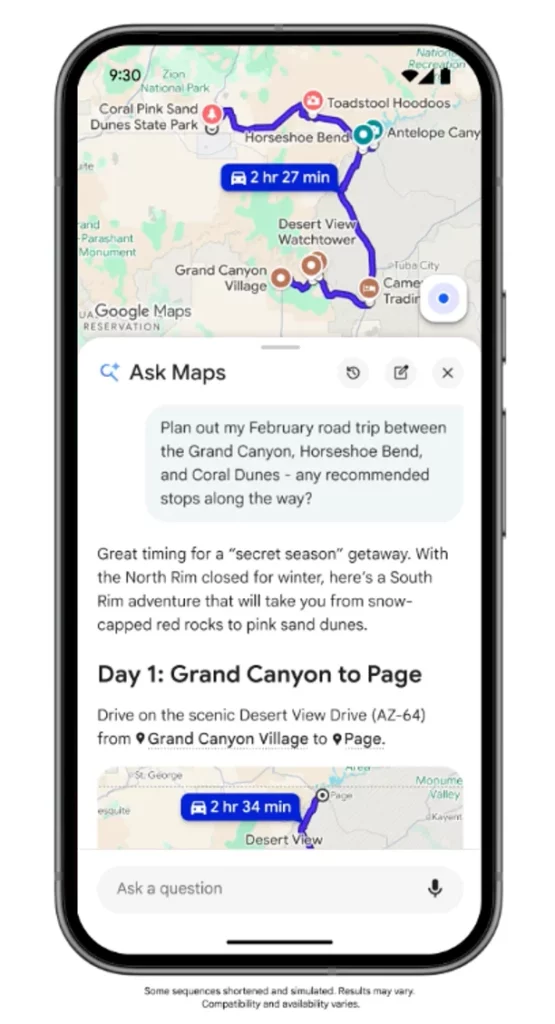
Google Maps has been rolling out a new AI feature called Ask Maps that allows people to search for places using everyday language.
Instead of typing short keywords, users can now ask full questions and receive answers directly on the map.
The feature runs on Google’s Gemini AI model and is designed to make finding places faster and more personal.
The rollout has begun in the United States and India on Android and iOS. A desktop version is expected to follow soon.
Ask Maps changes the way people search within Maps. Rather than typing something basic like “restaurants near me,” users can ask more specific questions.
For example: “Is there a public tennis court with lights where I can play tonight?” or “Where can I charge my phone without waiting in line for coffee?”
Instead of showing a list of links, Maps produces a single response. The answer combines locations, reviews, and useful details and displays them directly on a map.
How Ask Maps Works
The new feature relies on Google Maps’ vast data network. The platform currently lists more than 300 million places worldwide and includes reviews and updates from over 500 million contributors.
When someone asks a question, Gemini scans this data and builds a response. It looks at business listings, user reviews, and location details before presenting a recommendation.
The result is different from a traditional search page. Rather than several blue links, users see a short answer and a visual map highlighting relevant spots.
Vice President and General Manager of Google Maps, the goal is to help people ask practical, real-world questions that maps could not easily answer before.
The conversational format pulls together information that would otherwise require several searches. It makes it easier to find places that match a specific need or situation.
Personalized Results Based on User Activity
Ask Maps also personalizes results using signals from a user’s past activity on Google Maps. Previous searches, saved locations, and preferences can shape the recommendations that appear.
For instance, if someone regularly looks up vegan restaurants, Maps may automatically prioritize plant-based options when suggesting places for dinner.
Once a place is recommended, users can act on it immediately. They can book a table, save the location, share it with friends, or start directions within the app.
These quick actions turn Maps into more than a navigation tool. It becomes part search engine, part trip planner.
Questions Around Advertising and Business Visibility
Google has not said whether Ask Maps will include ads.
Maps already supports advertising formats such as promoted pins and search ads. But company executives have not confirmed whether businesses will eventually be able to pay for visibility in AI-generated recommendations.
For now, Google says Ask Maps pulls information from its places database and user reviews. However, it has not explained exactly how businesses are ranked or selected for the responses.
That leaves some uncertainty for local businesses that rely on Maps to attract customers.
New ‘Immersive Navigation’ Experience
At the same time, Google is introducing a navigation update called Immersive Navigation in the United States.
The update adds a 3D visual view during navigation. Users can see nearby buildings, landscapes, and terrain as they move along their route.
It also introduces clearer voice guidance and route comparisons that show trade-offs such as toll costs versus traffic delays.
When drivers approach their destination, Maps will offer Street View previews, parking suggestions, and highlighted entrances to help them find the correct building more easily.
Immersive Navigation is rolling out on Android and iOS in the U.S. Support for CarPlay, Android Auto, and vehicles with Google built-in will expand in the coming months.
AI Takes a Bigger Role in Google Maps
The launch of Ask Maps is part of Google’s broader push to bring Gemini AI into more products.
The company began integrating Gemini into Maps navigation last year, adding conversational help for drivers and landmark-based directions. Earlier this year, similar features expanded to walking and cycling routes.
Ask Maps goes a step further. It brings AI into the discovery stage of a trip-helping people decide where to go before they start navigating.
As the feature rolls out more widely, its long-term impact will depend on how recommendations are ranked and whether advertising eventually becomes part of the system.