All SEO
  SEO News
  SEO Strategy
  Ask An SEO
  Enterprise SEO
  Google Algorithm Updates
  International SEO
  Link Building
  Local SEO
  Mobile SEO
  On-Page SEO
  Technical SEO
  Vertical SEO
  Wordpress for SEO
  Web Dev for SEO
  SaaS SEO
  E-commerce SEO
  AI-Driven SEO
 Professional AI adoption could unlock up to $4.1 trillion capacity for US


New Workforce Study Highlights Massive Economic Potential
According to a workforce report from LinkedIn, wider adoption of artificial intelligence tools could unlock up to $4.1 trillion in productive capacity for the United States economy.
The report, titled “Skills and AI: The U.S. Workforce Imperative,” shows how businesses can use AI to improve efficiency, automate routine tasks, and drive economic growth.
All this can be achieved, provided the right training systems and policy frameworks are in place.
According to Blake Lawit, LinkedIn’s Chief Global Affairs and Legal Officer, the research underlines how companies and policymakers can work together to ensure the American workforce is prepared for an AI-driven future.
Manufacturing, Education and Real Estate Lead the Way
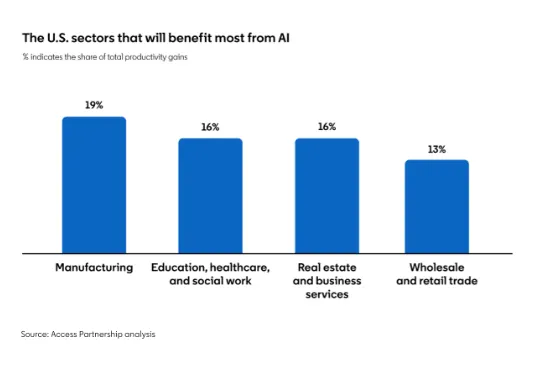
The report identifies manufacturing, education, and real estate as the top three sectors that benefit most from AI adoption.
LinkedIn’s data analysis suggests these industries have significant opportunities to streamline operations and increase productivity via automation and data-driven tools.
Early adopters are already seeing measurable gains. The report states that American businesses using AI tools save an average of 8.7% of working hours per week.
More than half of companies surveyed say AI is helping them automate repetitive tasks and simplify workflows. Nearly 53% of small businesses reported using AI to reduce operational burdens.
These efficiency gains, LinkedIn argues, could go up dramatically if adoption becomes more widespread.
U.S. Falling Behind in Adoption
Despite leading the global AI innovation race, the United States appears to be lagging in practical workplace adoption. Only about half of U.S.
businesses have implemented AI tools roughly 20% lower than adoption levels among Indian businesses.
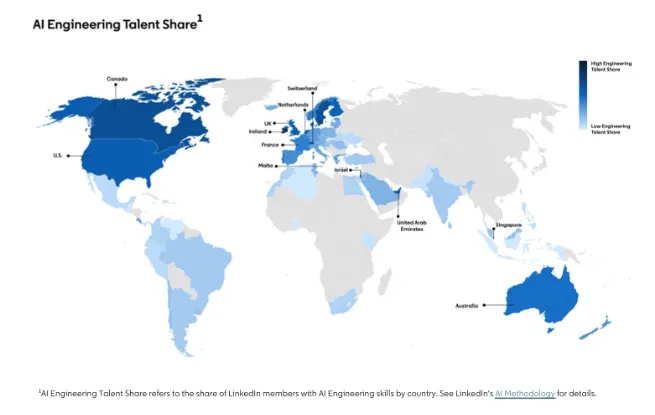
Citing recent findings from Microsoft, LinkedIn adds that just 28% of working-age American adults actively use AI. This could limit the country’s ability to fully capitalize on AI’s productivity potential.
If adoption remains uneven, the U.S. risks falling behind other economies that are integrating AI more rapidly into daily business operations.
Policy and Training Seen as Critical
To close the gap, LinkedIn recommends stronger employer-led upskilling programs focused on AI literacy. The report also urges government agencies to support certification pathways that validate AI competencies.
Higher education institutions are encouraged to expand AI-focused programs. This is needed with public-private partnerships accelerating professional retraining efforts.
One thing is clear from the research- productivity gains depend not just on technology, but on workforce readiness.
Not Everyone Is Convinced
While LinkedIn’s projects optimistically, another research paints a more cautious picture. A recent study published by the National Bureau of Economic Research found that more than 80% of surveyed firms reported little or no impact from AI on employment or productivity in past three years.
Similarly, research referenced in Harvard Business Review suggest that AI can sometimes increase workload pressures rather than reduce them.
These findings raise questions about whether current tools are delivering on their promises or whether businesses need better implementation strategies.
Defining Feature for the U.S. Workforce
LinkedIn’s report ultimately says that AI’s economic potential remains huge, but unrealized. The difference between modest gains and multi-trillion-dollar growth, will depend on coordinated action between businesses, educators and policymakers.
As AI reshapes industries, the next few years will determine whether the U.S. fully harnesses the technology or watches others move ahead.